Kammala Ananthkumar, Benson Meagan, Ganguly Esha, Radnaa Enkhtuya, Kechichian Talar, Richardson Lauren, Menon Ramkumar
Department of Obstetrics & Gynecology, Division of Basic and Translational Research, The University of Texas Medical Branch at Galveston, Galveston, TX 77555, USA.
Life (Basel). 2022 Jan 23;12(2):166. doi: 10.3390/life12020166.
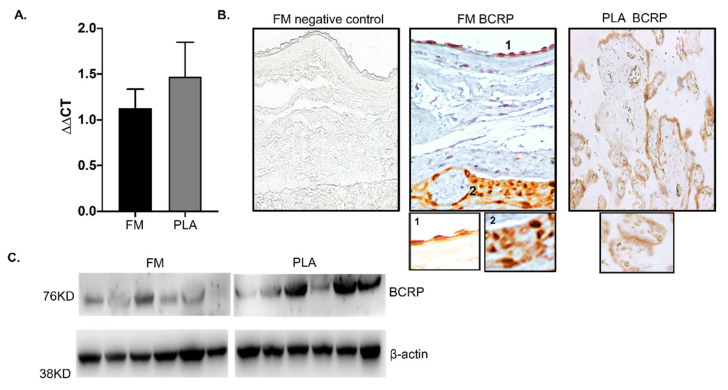
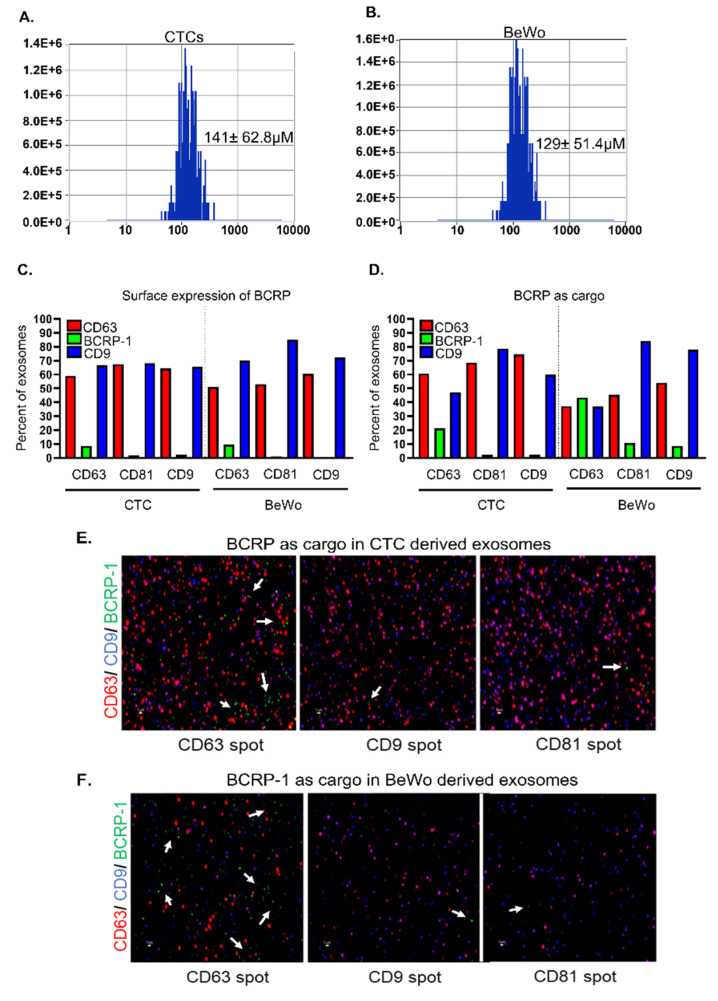
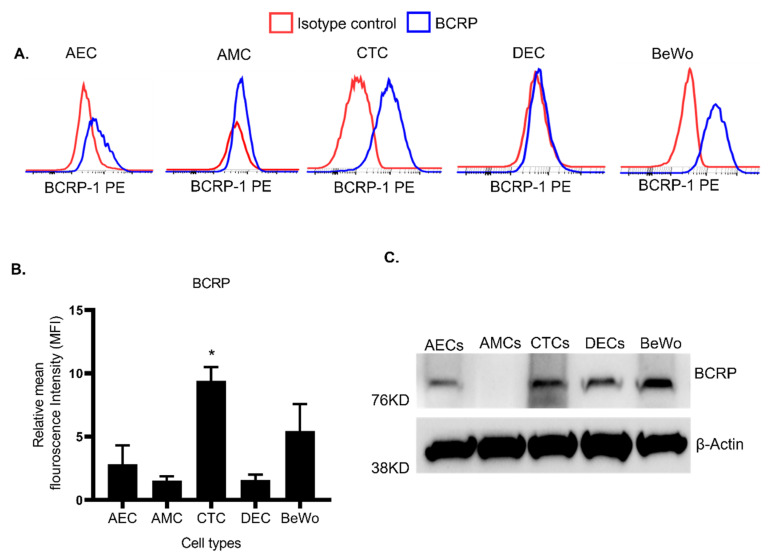
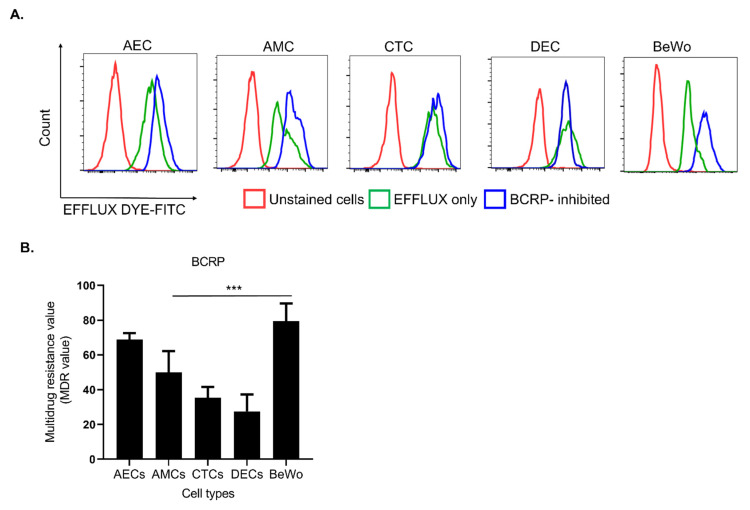
During pregnancy, the placenta is established as a primary organ for drug transport at the maternal-fetal interface. The fetal membranes (FM) also form an interface with maternal tissues; however, their role in drug transport has not been previously investigated. Knowledge of drug transport across this feto-maternal interface along with the placenta can improve new drug development and testing for use during pregnancy. We also hypothesize that extracellular vesicles (exosomes 30-160 nm) released from the FM and placental cells may also contain drug transport proteins and might impact drug trafficking across the feto-maternal interfaces. The objectives were to (1) localize the breast cancer resistance protein (BCRP) in human FM; (2) determine the drug transport function of BCRP in chorion trophoblast cells (CTCs) of the FM; and (3) investigate the presence of BCRP in FM cell-derived exosomes, as a paracrine modifier of the tissue environment for transport functions. The gene and protein expressions of ABCG2/BCRP in FMs were determined by quantitative real-time PCR (qRT-PCR) and western blotting (WB) and were localized by immunohistochemistry (IHC). The surface expression of BCRP in FM cells was determined by flow cytometry. The functional role of BCRP was assessed by an EFFLUX dye multidrug resistance assay. The presence of BCRP in exosomes derived from CTCs and BeWo cells was examined using ExoView. Data derived from CTCs are compared with placental trophoblast cells (BeWo). BCRP is expressed and localized in the fetal membrane, primarily in the chorion trophoblast cell layer and scarcely in the amnion epithelial layer (AEC), and primarily localized on both AEC and CTC cell surfaces. Efflux assay data showed that FM cells have similar drug resistance activity as BeWo cells, suggesting that FM also have drug transportation capabilities. BeWo- and CTC-derived exosomes expressed limited BCRP protein on the surface, so it was predominantly contained in the exosomal lumen. As far as we are aware, this is the first study to report BCRP expression in fetal membrane cells and as cargo in fetal membrane-derived exosomes. We report that fetal membrane cells are capable of drug transportation. Based on these results, investigational drug trials should include the FM and its exosomes as possible drug transportation routes in pregnancy.
在怀孕期间,胎盘成为母胎界面处药物转运的主要器官。胎膜(FM)也与母体组织形成一个界面;然而,其在药物转运中的作用此前尚未得到研究。了解药物在这个胎儿 - 母体界面以及胎盘之间的转运情况,有助于改进孕期新药的研发和测试。我们还推测,胎膜和胎盘细胞释放的细胞外囊泡(30 - 160纳米的外泌体)可能也含有药物转运蛋白,并可能影响药物在胎儿 - 母体界面的转运。本研究的目的是:(1)在人胎膜中定位乳腺癌耐药蛋白(BCRP);(2)确定BCRP在胎膜绒毛滋养层细胞(CTC)中的药物转运功能;(3)研究BCRP在胎膜细胞来源的外泌体中的存在情况,作为组织环境中调节转运功能的旁分泌因子。通过定量实时PCR(qRT-PCR)和蛋白质印迹法(WB)测定胎膜中ABCG2/BCRP的基因和蛋白表达,并通过免疫组织化学(IHC)进行定位。通过流式细胞术测定BCRP在胎膜细胞表面的表达。通过外排染料多药耐药试验评估BCRP的功能作用。使用ExoView检测从CTC和BeWo细胞衍生的外泌体中BCRP的存在情况。将来自CTC的数据与胎盘滋养层细胞(BeWo)进行比较。BCRP在胎膜中表达并定位,主要位于绒毛滋养层细胞层,在羊膜上皮层(AEC)中很少表达,并且主要定位于AEC和CTC细胞表面。外排试验数据表明,胎膜细胞具有与BeWo细胞相似的耐药活性,这表明胎膜也具有药物转运能力。BeWo和CTC衍生的外泌体在表面表达有限的BCRP蛋白,因此它主要包含在外泌体腔中。据我们所知,这是第一项报道BCRP在胎膜细胞中表达以及作为胎膜来源外泌体中的货物的研究。我们报道胎膜细胞具有药物转运能力。基于这些结果,研究性药物试验应将胎膜及其外泌体作为孕期可能的药物转运途径纳入考虑。