Department of Obstetrics and Gynecology and Division of Female Health and Preventive Medicine, Institute of Occupational Medicine, Social Medicine and Environmental Medicine, Goethe-University, Frankfurt, Germany.
Department of Obstetrics and Gynecology, Keck School of Medicine of USC, Los Angeles, California, United States of America.
PLoS One. 2022 Jan 6;17(1):e0261503. doi: 10.1371/journal.pone.0261503. eCollection 2022.
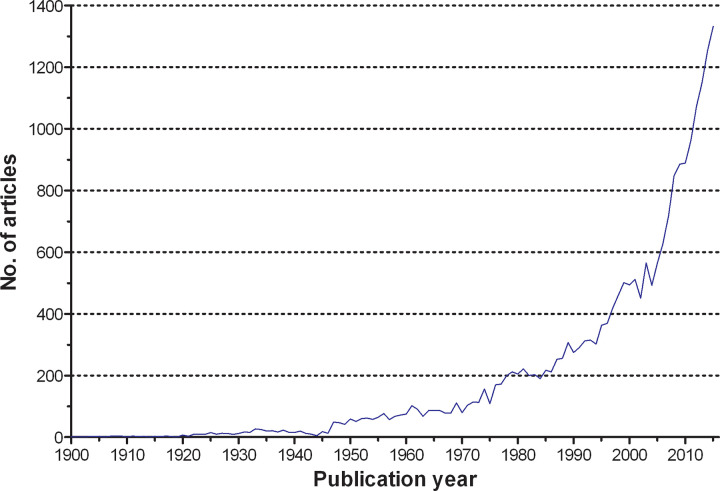
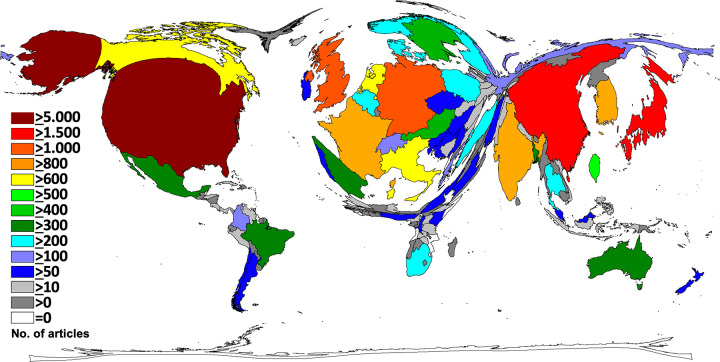
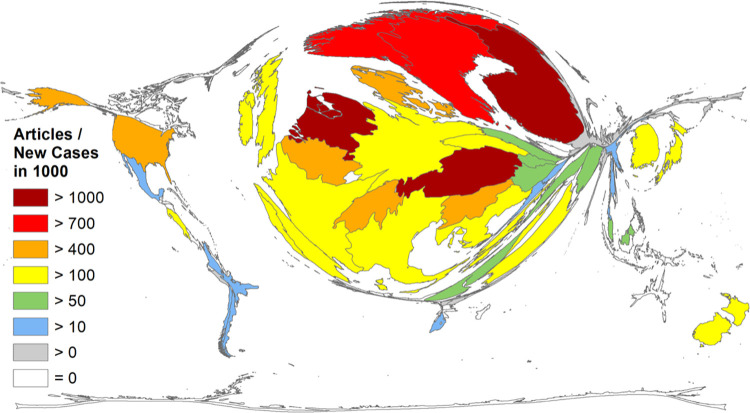
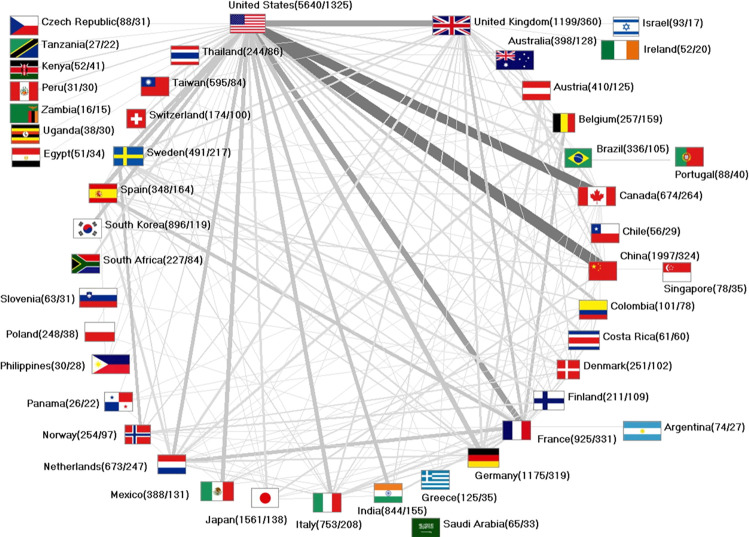
Cervical cancer has caused substantial morbidity and mortality for millions of women over the past decades. While enormous progress has been made in diagnosis, prevention and therapy, the disease is still fatal for many women-especially in low-income countries. Since no detailed studies are available on the worldwide research landscape, we here investigated the global scientific output related to this cancer type by an established protocol. The "New Quality and Quantity Indices in Science" platform assessed all relevant cervical cancer research published in the Web of Science since 1900. A detailed analysis was conducted including country-specific research productivity, indicators for scientific quality, and relation of research activity to socioeconomic and epidemiologic figures. Visualization of data was generated by the use of density equalizing map projections. Our approach identified 22,185 articles specifically related to cervical cancer. From a global viewpoint, the United States of America was the dominating country in absolute numbers, being followed by China and Japan. By contrast, the European countries Sweden, Austria, and Norway were positioned first when the research activity was related to the population number. When the scientific productivity was related to annual cervical cancer cases, Scandinavian countries (Finland #1, Sweden #4, Norway #5, Denmark #7), the Alpine countries Austria (#2) and Switzerland (#6), and the Netherlands (#3) were leading the field. Density equalizing mapping visualized that large parts of Africa and South America were almost invisible regarding the global participation in cervical cancer research. Our data documented that worldwide cervical cancer research activity is continuously increasing but is imbalanced from a global viewpoint. Also, the study indicated that global and public health aspects should be strengthened in cervical carcinoma research in order to empower more countries to take part in international research activities.
在过去几十年中,宫颈癌给全球数以百万计的女性带来了严重的发病率和死亡率。尽管在诊断、预防和治疗方面取得了巨大进展,但该病在许多女性中仍然是致命的,尤其是在低收入国家。由于没有关于全球研究格局的详细研究,我们按照既定方案调查了与这种癌症类型相关的全球科学产出。“新的质量和数量科学指标”平台评估了自 1900 年以来在 Web of Science 上发表的所有相关宫颈癌研究。进行了详细的分析,包括特定国家的研究生产力、科学质量指标以及研究活动与社会经济和流行病学数据的关系。数据的可视化是通过使用密度均衡地图投影生成的。我们的方法确定了 22185 篇专门针对宫颈癌的文章。从全球角度来看,美国在绝对数量上是占主导地位的国家,其次是中国和日本。相比之下,当研究活动与人口数量相关时,欧洲国家瑞典、奥地利和挪威的排名则位居前列。当科学生产力与每年的宫颈癌病例相关时,斯堪的纳维亚国家(芬兰排名第一,瑞典排名第四,挪威排名第五,丹麦排名第七)、阿尔卑斯国家奥地利(排名第二)和瑞士(排名第六)以及荷兰(排名第三)则处于领先地位。密度均衡映射可视化显示,在全球参与宫颈癌研究方面,非洲和南美洲的大部分地区几乎是看不见的。我们的数据表明,全球范围内的宫颈癌研究活动在不断增加,但从全球角度来看,这种研究是不平衡的。此外,该研究表明,为了使更多国家能够参与国际研究活动,应该加强宫颈癌研究的全球和公共卫生方面。