Ke Fei, Yu Xue-Dong, Wang Zi-Hao, Gui Jian-Fang, Zhang Qi-Ya
State Key Laboratory of Freshwater Ecology and Biotechnology, Institute of Hydrobiology, College of Modern Agriculture Sciences, University of Chinese Academy of Sciences, Chinese Academy of Sciences, Wuhan, 430072, China.
The Innovation Academy of Seed Design, Chinese Academy of Sciences, Beijing, 100101, China.
Cell Biosci. 2022 Jan 6;12(1):6. doi: 10.1186/s13578-021-00742-x.
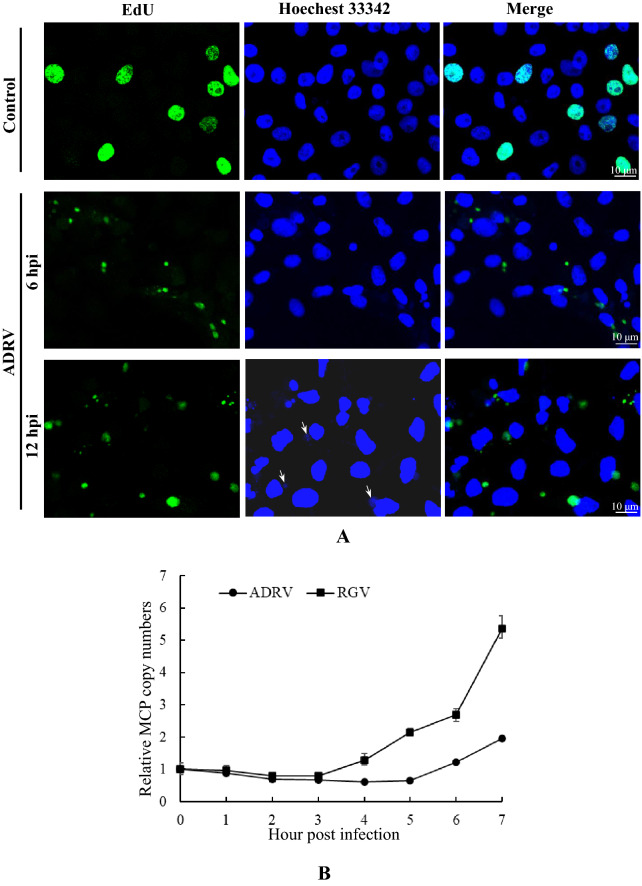
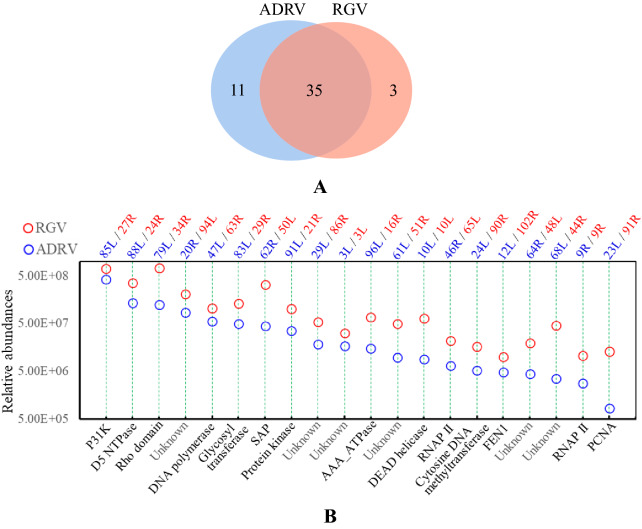
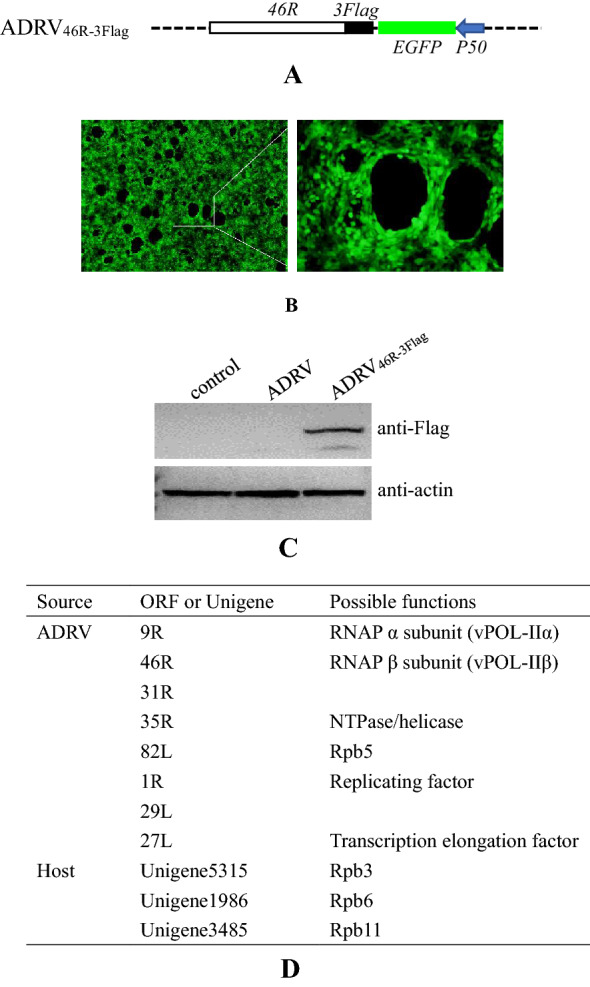
Ranaviruses (family Iridoviridae) are promiscuous pathogens that can infect across species barriers in poikilotherms and can replicate in amphibian and fish cells and even in cultured mammalian cells. However, as nucleocytoplasmic large DNA viruses (NCLDVs), their replication and transcription mechanisms remain largely unknown. Here, we screened and uncovered the replication and transcription machinery of two ranaviruses, Andrias davidianus ranavirus (ADRV) and Rana grylio virus (RGV), by a combination of methods, including the isolation of proteins on nascent DNA, recombinant virus-based affinity, and NanoLuc complementation assay.
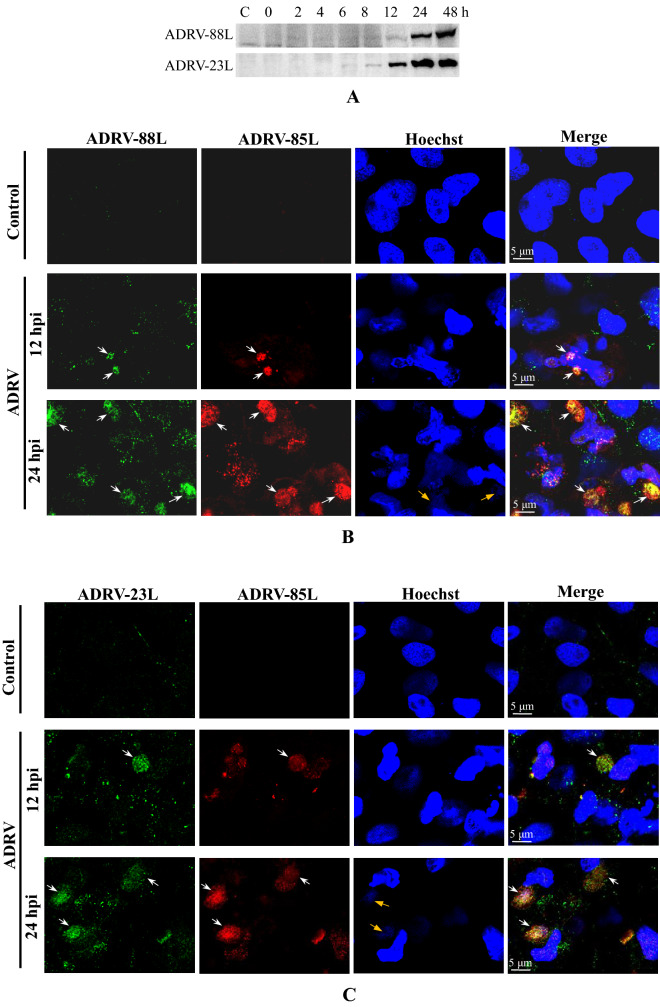
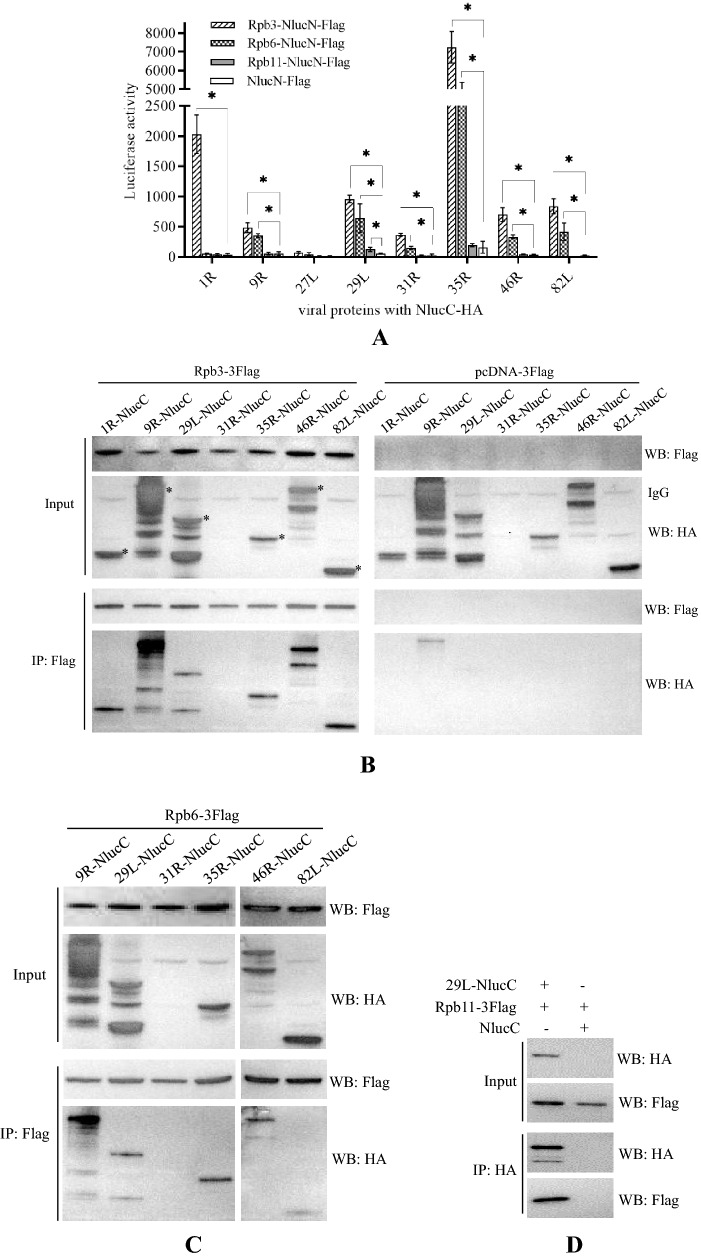
The ranavirus replication and transcription machinery was deeply dissected and identified as a complicated apparatus containing at least 30 viral and 6 host proteins. The viral proteins ADRV-47L/RGV-63R (DNA polymerase, vDPOL), ADRV-23L/RGV-91R (proliferating cell nuclear antigen, vPCNA), ADRV-85L/RGV-27R (single-stranded DNA binding protein, vSSB), ADRV-88L/RGV-24R (vhelicase/primase), etc., constitute the core replisome. Specifically, the core of the transcription complex, the viral RNA polymerase, contain the host RNAPII subunits Rpb3, Rpb6, and Rpb11, which was a first report in NCLDVs. Furthermore, correlations and interactions among these factors in the machinery were described. Significantly, the replisome core protein vDPOL (ADRV-47L) can interact with numerous viral and host proteins and could act as a linker and regulation center in viral DNA replication and transcription. Thus, these results depicted an architecture for ranavirus replication and transcription.
Up to 36 components from ranavirus and their host were found to form viral replisomes and transcription complexes using a series of precise methods, which further constructed an architecture for ranavirus replication and transcription in which vDPOL was a key central factor and various components correlated and cooperated. Therefore, it provides a cornerstone for further understanding the mechanisms of the replication and transcription of ranaviruses which can ensure the efficient production of progeny virus and adaptation to cross-species infection.
蛙病毒(虹彩病毒科)是一种能跨越变温动物物种屏障进行感染的病原体,可在两栖动物和鱼类细胞甚至培养的哺乳动物细胞中复制。然而,作为核质大DNA病毒(NCLDVs),其复制和转录机制仍 largely 未知。在此,我们通过多种方法组合,包括新生DNA上蛋白质的分离、基于重组病毒的亲和性以及纳米荧光素酶互补分析,筛选并揭示了两种蛙病毒,即大鲵蛙病毒(ADRV)和虎纹蛙病毒(RGV)的复制和转录机制。
深入剖析了蛙病毒的复制和转录机制,并确定其为一个包含至少30种病毒蛋白和6种宿主蛋白的复杂装置。病毒蛋白ADRV - 47L/RGV - 63R(DNA聚合酶,vDPOL)、ADRV - 23L/RGV - 91R(增殖细胞核抗原,vPCNA)、ADRV - 85L/RGV - 27R(单链DNA结合蛋白,vSSB)、ADRV - 88L/RGV - 24R(解旋酶/引发酶)等构成了核心复制体。具体而言,转录复合物的核心,即病毒RNA聚合酶,包含宿主RNA聚合酶II亚基Rpb3、Rpb6和Rpb11,这在NCLDVs中是首次报道。此外,还描述了该机制中这些因子之间的相关性和相互作用。值得注意的是,复制体核心蛋白vDPOL(ADRV - 47L)可与众多病毒和宿主蛋白相互作用,并可在病毒DNA复制和转录中充当连接体和调控中心。因此,这些结果描绘了蛙病毒复制和转录的结构。
利用一系列精确方法,发现多达36种来自蛙病毒及其宿主的成分形成病毒复制体和转录复合物,进一步构建了蛙病毒复制和转录的结构,其中vDPOL是关键核心因子,各种成分相互关联并协同作用。因此,它为进一步理解蛙病毒的复制和转录机制奠定了基石,这有助于确保子代病毒的高效产生以及适应跨物种感染。