Xue Rongtao, Wang Ying, Wang Tienan, Lyu Mei, Mo Guiling, Fan Xijie, Li Jianchao, Yen Kuangyu, Yu Shihui, Liu Qifa, Xu Jin
Department of Hematology, Nanfang Hospital, Southern Medical University, Guangzhou, China.
Department of Developmental Biology, School of Basic Medical Sciences, Southern Medical University, Guangzhou, China.
Front Cell Dev Biol. 2021 Dec 21;9:723804. doi: 10.3389/fcell.2021.723804. eCollection 2021.
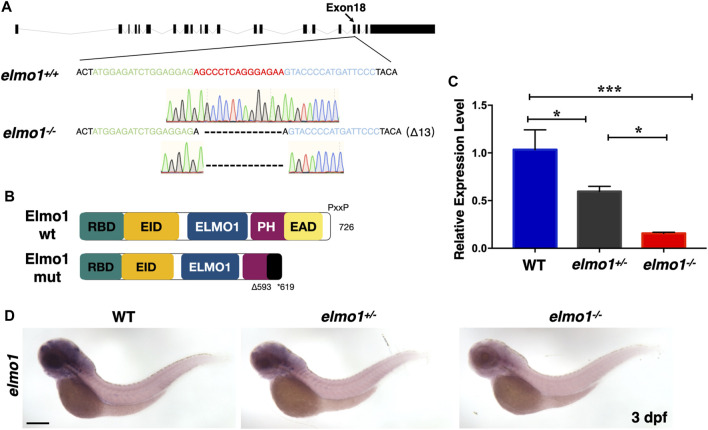
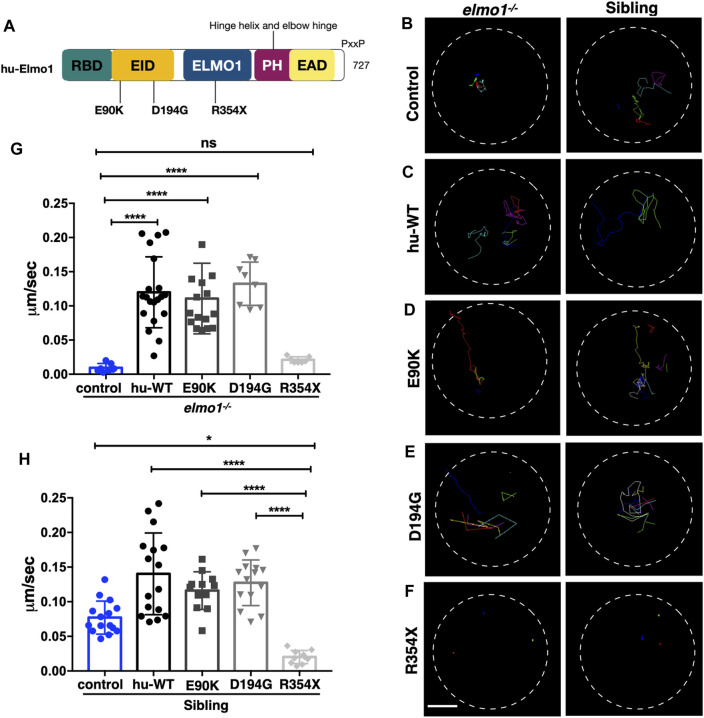
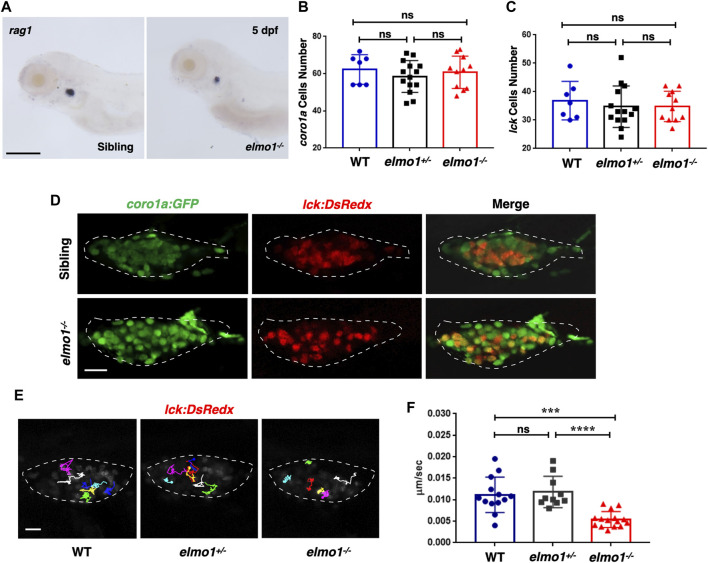
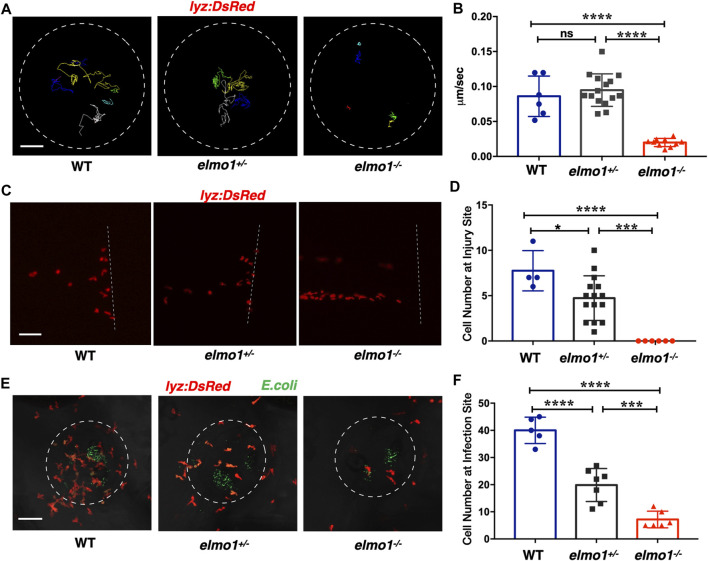
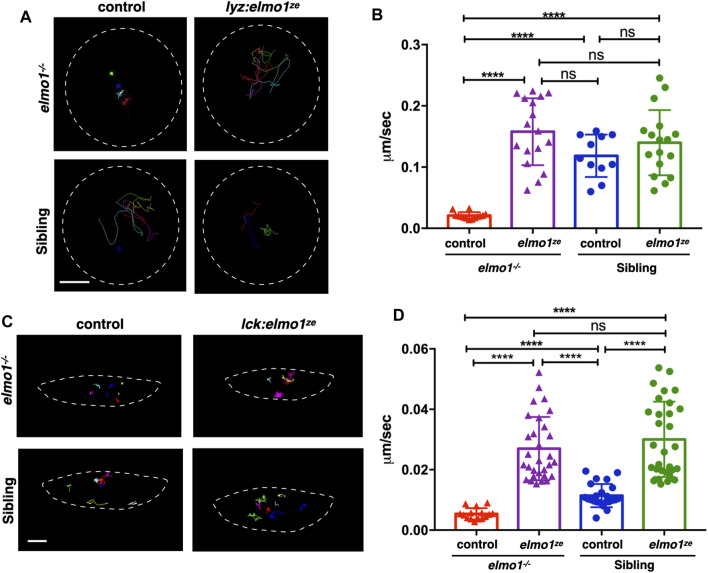
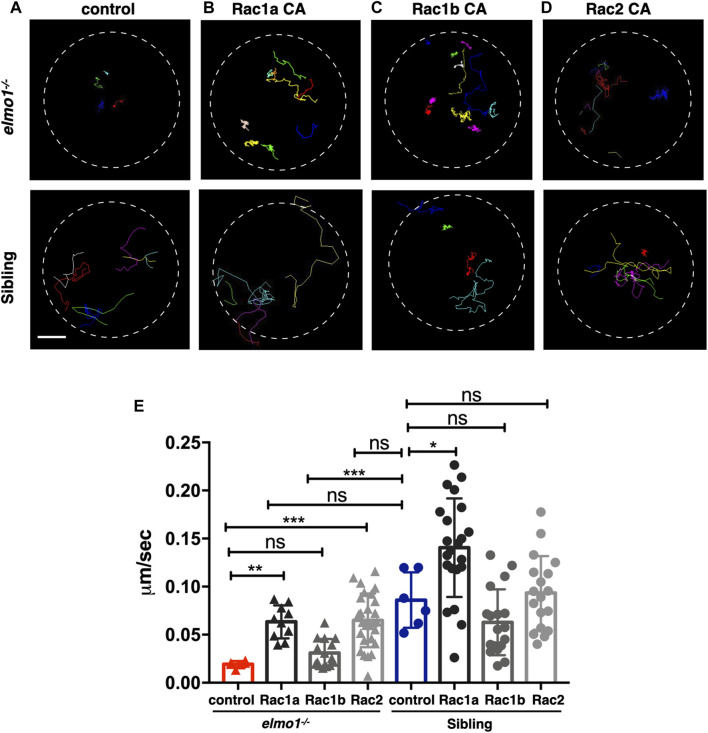
is a gene involved in regulating cell motility through the ELMO1-DOCK2-RAC complex. Contrary to DOCK2 (Dedicator of Cytokinesis 2) deficiency, which has been reported to be associated with immunodeficiency diseases, variants of have been associated with autoimmune diseases, such as diabetes and rheumatoid arthritis (RA). To explore the function of in immune cells and to verify the functions of novel variants , we established a zebrafish mutant model. Live imaging revealed that, similar to mammals, the motility of neutrophils and T-cells was largely attenuated in zebrafish mutants. Consequently, the response of neutrophils to injury or bacterial infection was significantly reduced in the mutants. Furthermore, the reduced mobility of neutrophils could be rescued by the expression of constitutively activated Rac proteins, suggesting that zebrafish mutant functions a conserved mechanism. With this mutant, three novel human variants were transiently and specifically expressed in zebrafish neutrophils. Two variants, p.E90K (c.268G>A) and p.D194G (c.581A>G), could efficiently recover the motility defect of neutrophils in the mutant; however, the p.R354X (c.1060C>T) variant failed to rescue the mutant. Based on those results, we identified that zebrafish plays conserved roles in cell motility, similar to higher vertebrates. Using the transient-expression assay, zebrafish mutants could serve as an effective model for human variant verification .
是一个通过ELMO1-DOCK2-RAC复合体参与调节细胞运动的基因。与据报道与免疫缺陷疾病相关的DOCK2(胞质分裂专用蛋白2)缺陷相反,[该基因名称缺失]的变体与自身免疫性疾病相关,如糖尿病和类风湿性关节炎(RA)。为了探索[该基因名称缺失]在免疫细胞中的功能并验证新型[该基因名称缺失]变体的功能,我们建立了斑马鱼[该基因名称缺失]突变体模型。活体成像显示,与哺乳动物类似,斑马鱼突变体中嗜中性粒细胞和T细胞的运动性大大减弱。因此,突变体中嗜中性粒细胞对损伤或细菌感染的反应显著降低。此外,组成型激活的Rac蛋白的表达可以挽救嗜中性粒细胞运动性的降低,这表明斑马鱼[该基因名称缺失]突变体发挥着保守机制。利用这个突变体,三种新型人类[该基因名称缺失]变体在斑马鱼嗜中性粒细胞中瞬时且特异性地表达。两种变体,p.E90K(c.268G>A)和p.D194G(c.581A>G),可以有效地恢复[该基因名称缺失]突变体中嗜中性粒细胞的运动缺陷;然而,p.R354X(c.1060C>T)变体未能挽救该突变体。基于这些结果,我们确定斑马鱼[该基因名称缺失]在细胞运动中发挥着与高等脊椎动物类似的保守作用。使用瞬时表达分析,斑马鱼[该基因名称缺失]突变体可以作为人类变体验证的有效模型。