Fuentes Zoe Coates, Schwartz Yuri Levin, Robuck Anna R, Walker Douglas I
Department of Environmental Medicine and Public Health, Icahn School of Medicine at Mount Sinai, 1428 Madison Ave, New York, NY USA.
Curr Pollut Rep. 2022;8(1):1-29. doi: 10.1007/s40726-021-00211-6. Epub 2022 Jan 4.
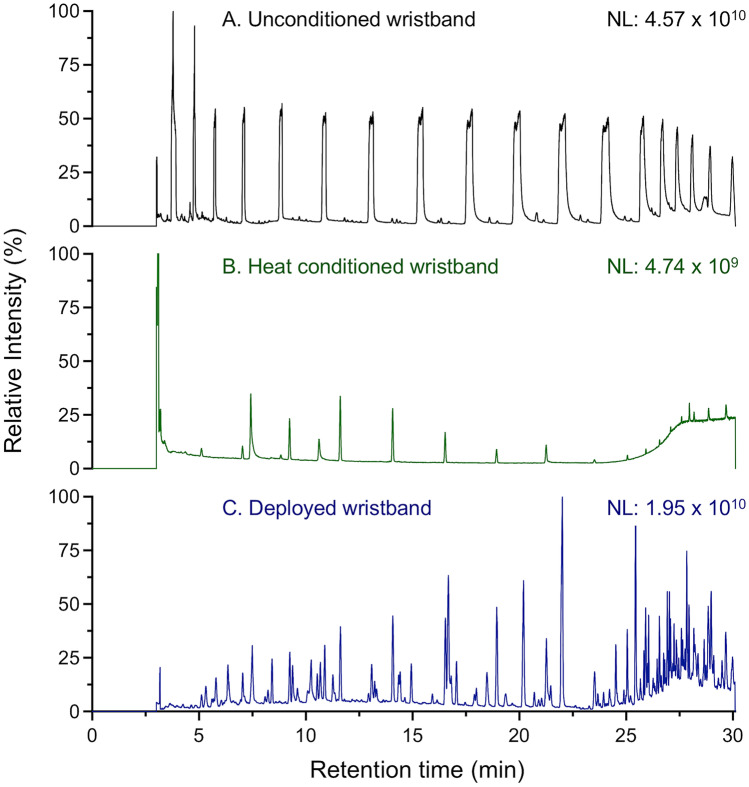
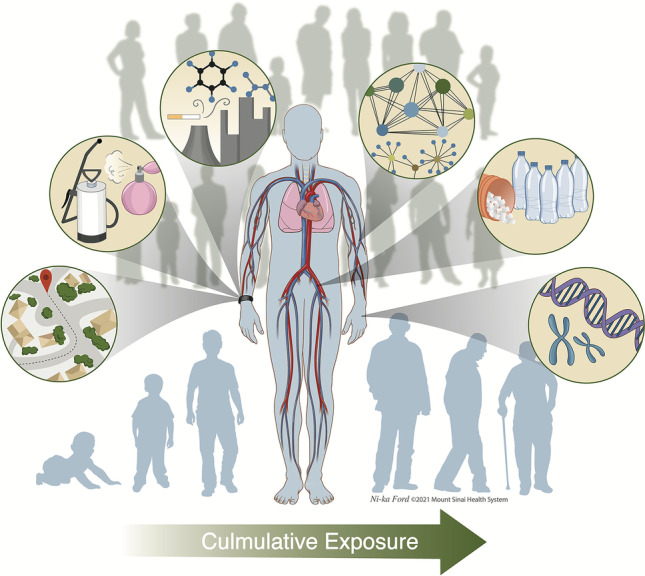
The exposome, which is defined as the cumulative effect of environmental exposures and corresponding biological responses, aims to provide a comprehensive measure for evaluating non-genetic causes of disease. Operationalization of the exposome for environmental health and precision medicine has been limited by the lack of a universal approach for characterizing complex exposures, particularly as they vary temporally and geographically. To overcome these challenges, passive sampling devices (PSDs) provide a key measurement strategy for deep exposome phenotyping, which aims to provide comprehensive chemical assessment using untargeted high-resolution mass spectrometry for exposome-wide association studies. To highlight the advantages of silicone PSDs, we review their use in population studies and evaluate the broad range of applications and chemical classes characterized using these samplers. We assess key aspects of incorporating PSDs within observational studies, including the need to preclean samplers prior to use to remove impurities that interfere with compound detection, analytical considerations, and cost. We close with strategies on how to incorporate measures of the external exposome using PSDs, and their advantages for reducing variability in exposure measures and providing a more thorough accounting of the exposome. Continued development and application of silicone PSDs will facilitate greater understanding of how environmental exposures drive disease risk, while providing a feasible strategy for incorporating untargeted, high-resolution characterization of the external exposome in human studies.
暴露组被定义为环境暴露和相应生物反应的累积效应,旨在提供一种综合方法来评估疾病的非遗传病因。由于缺乏一种通用方法来表征复杂暴露,尤其是这些暴露在时间和地理上存在差异,暴露组在环境卫生和精准医学中的实际应用受到了限制。为了克服这些挑战,被动采样装置(PSD)为深入的暴露组表型分析提供了关键的测量策略,该策略旨在使用非靶向高分辨率质谱对暴露组进行全面化学评估,以开展暴露组全关联研究。为了突出硅胶PSD的优势,我们回顾了它们在人群研究中的应用,并评估了使用这些采样器所表征的广泛应用和化学类别。我们评估了在观察性研究中纳入PSD的关键方面,包括在使用前对采样器进行预清洁以去除干扰化合物检测的杂质的必要性、分析考量和成本。我们最后阐述了如何使用PSD纳入外部暴露组测量的策略,以及它们在降低暴露测量变异性和更全面地描述暴露组方面的优势。硅胶PSD的持续开发和应用将有助于更深入地了解环境暴露如何驱动疾病风险,同时为在人体研究中纳入对外部暴露组的非靶向、高分辨率表征提供一种可行策略。