Zhang Pei, Carlsten Christopher, Chaleckis Romanas, Hanhineva Kati, Huang Mengna, Isobe Tomohiko, Koistinen Ville M, Meister Isabel, Papazian Stefano, Sdougkou Kalliroi, Xie Hongyu, Martin Jonathan W, Rappaport Stephen M, Tsugawa Hiroshi, Walker Douglas I, Woodruff Tracey J, Wright Robert O, Wheelock Craig E
Gunma University Initiative for Advanced Research (GIAR), Gunma University, Maebashi, Gunma 371-8511, Japan.
Division of Physiological Chemistry 2, Department of Medical Biochemistry and Biophysics, Karolinska Institutet, Stockholm SE-171 77, Sweden.
Environ Sci Technol Lett. 2021 Oct 12;8(10):839-852. doi: 10.1021/acs.estlett.1c00648. Epub 2021 Sep 7.
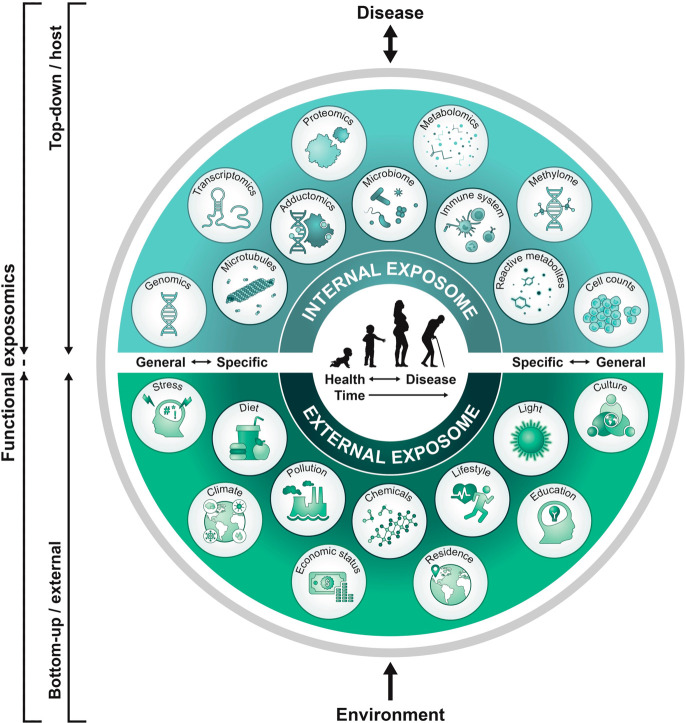
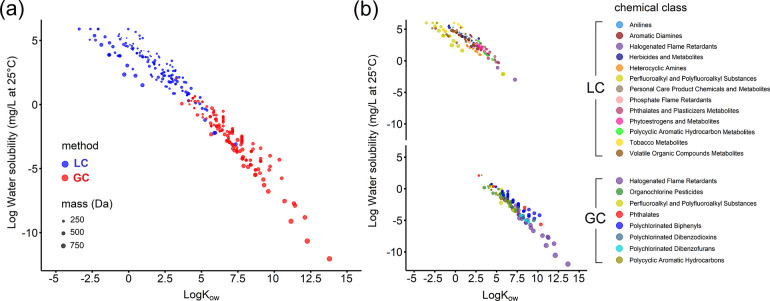
The concept of the exposome was introduced over 15 years ago to reflect the important role that the environment exerts on health and disease. While originally viewed as a call-to-arms to develop more comprehensive exposure assessment methods applicable at the individual level and throughout the life course, the scope of the exposome has now expanded to include the associated biological response. In order to explore these concepts, a workshop was hosted by the Gunma University Initiative for Advanced Research (GIAR, Japan) to discuss the scope of exposomics from an international and multidisciplinary perspective. This Global Perspective is a summary of the discussions with emphasis on (1) top-down, bottom-up, and functional approaches to exposomics, (2) the need for integration and standardization of LC- and GC-based high-resolution mass spectrometry methods for untargeted exposome analyses, (3) the design of an exposomics study, (4) the requirement for open science workflows including mass spectral libraries and public databases, (5) the necessity for large investments in mass spectrometry infrastructure in order to sequence the exposome, and (6) the role of the exposome in precision medicine and nutrition to create personalized environmental exposure profiles. Recommendations are made on key issues to encourage continued advancement and cooperation in exposomics.
暴露组的概念在15年多以前就已提出,以反映环境对健康和疾病所起的重要作用。虽然最初它被视为一种号召,旨在开发适用于个体层面及整个生命历程的更全面的暴露评估方法,但如今暴露组的范围已扩大到包括相关的生物反应。为了探讨这些概念,群马大学高级研究倡议组织(GIAR,日本)主办了一次研讨会,从国际和多学科角度讨论暴露组学的范围。本《全球视角》是这些讨论的总结,重点在于:(1)暴露组学的自上而下、自下而上和功能方法;(2)对基于液相色谱和气相色谱的高分辨率质谱方法进行整合和标准化以用于非靶向暴露组分析的必要性;(3)暴露组学研究的设计;(4)对包括质谱库和公共数据库在内的开放科学工作流程的要求;(5)为了对暴露组进行测序而对质谱基础设施进行大量投资的必要性;以及(6)暴露组在精准医学和营养领域创建个性化环境暴露概况方面的作用。针对关键问题提出了建议,以鼓励暴露组学持续取得进展并开展合作。