Yang Zhou, Yu Guang-Li, Zhu Xiao, Peng Tian-Hong, Lv Yun-Cheng
Clinical Anatomy & Reproductive Medicine Application Institute, Hengyang Medical College, University of South China, Hengyang, Hunan 421001, PR China.
Guangxi Key Laboratory of Diabetic Systems Medicine, Guilin Medical University, Guilin, Guangxi 541199, PR China.
Genes Dis. 2021 Jan 28;9(1):51-61. doi: 10.1016/j.gendis.2021.01.005. eCollection 2022 Jan.
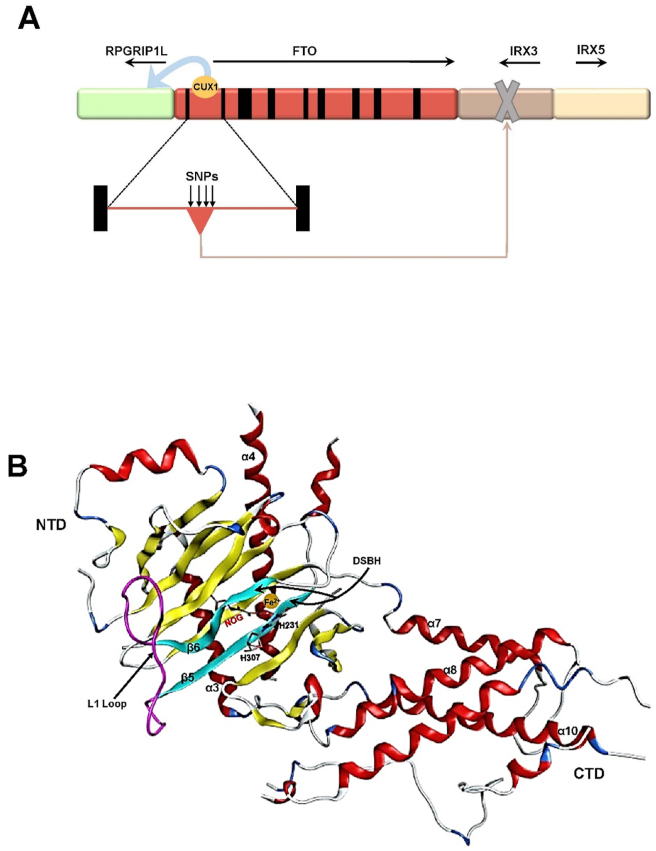
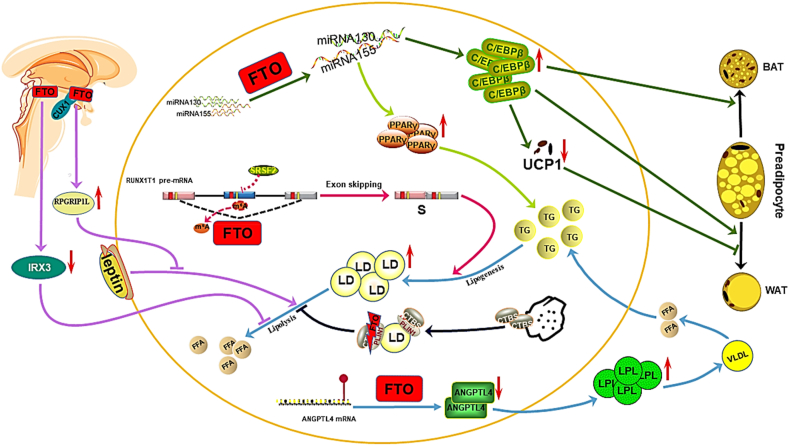
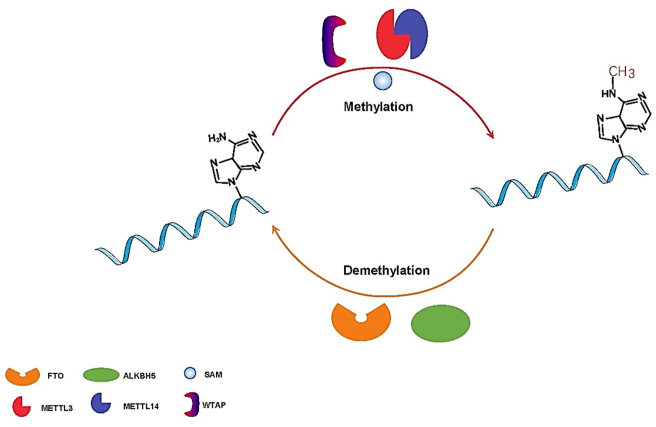
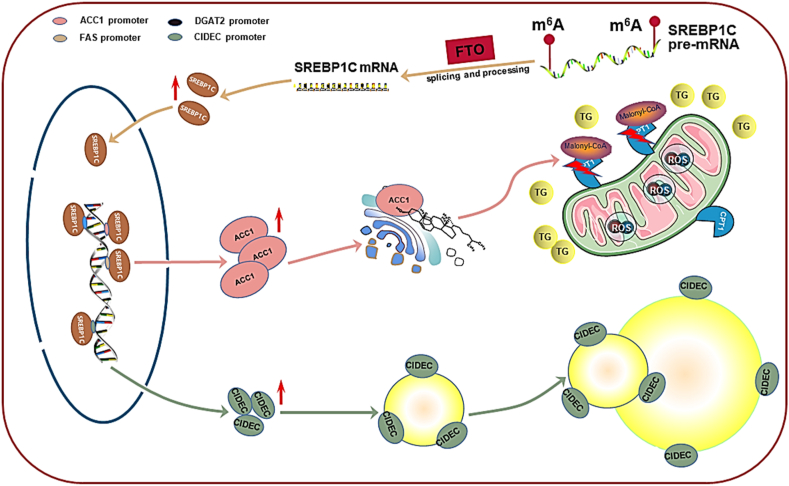
The goal this review is to clarify the effects of the fat mass and obesity-associated protein (FTO) in lipid metabolism regulation and related underlying mechanisms through the FTO-mediated demethylation of mA modification. FTO catalyzes the demethylation of mA to alter the processing, maturation and translation of the mRNAs of lipid-related genes. FTO overexpression in the liver promotes lipogenesis and lipid droplet (LD) enlargement and suppresses CPT-1-mediated fatty acid oxidation via the SREBP1c pathway, promoting excessive lipid storage and nonalcoholic fatty liver diseases (NAFLD). FTO enhances preadipocyte differentiation through the C/EBPβ pathway, and facilitates adipogenesis and fat deposition by altering the alternative splicing of RUNX1T1, the expression of PPARγ and ANGPTL4, and the phosphorylation of PLIN1, whereas it inhibits lipolysis by inhibiting IRX3 expression and the leptin pathway, causing the occurrence and development of obesity. Suppression of the PPARβ/δ and AMPK pathways by FTO-mediated mA demethylation damages lipid utilization in skeletal muscles, leading to the occurrence of diabetic hyperlipidemia. mA demethylation by FTO inhibits macrophage lipid influx by downregulating PPARγ protein expression and accelerates cholesterol efflux by phosphorylating AMPK, thereby impeding foam cell formation and atherosclerosis development. In summary, FTO-mediated mA demethylation modulates the expression of lipid-related genes to regulate lipid metabolism and lipid disorder diseases.
本综述的目的是通过FTO介导的mA修饰去甲基化作用,阐明脂肪量与肥胖相关蛋白(FTO)在脂质代谢调节中的作用及相关潜在机制。FTO催化mA的去甲基化,以改变脂质相关基因mRNA的加工、成熟和翻译。肝脏中FTO的过表达通过SREBP1c途径促进脂肪生成和脂滴增大,并抑制CPT-1介导的脂肪酸氧化,从而促进脂质过度储存和非酒精性脂肪性肝病(NAFLD)。FTO通过C/EBPβ途径增强前脂肪细胞分化,并通过改变RUNX1T1的可变剪接、PPARγ和ANGPTL4的表达以及PLIN1的磷酸化来促进脂肪生成和脂肪沉积,而它通过抑制IRX3表达和瘦素途径抑制脂肪分解,导致肥胖的发生和发展。FTO介导的mA去甲基化对PPARβ/δ和AMPK途径的抑制损害了骨骼肌中的脂质利用,导致糖尿病高脂血症的发生。FTO介导的mA去甲基化通过下调PPARγ蛋白表达抑制巨噬细胞脂质内流,并通过使AMPK磷酸化加速胆固醇外流,从而阻碍泡沫细胞形成和动脉粥样硬化发展。总之,FTO介导的mA去甲基化调节脂质相关基因的表达,以调节脂质代谢和脂质紊乱疾病。