Li Shuainan, Ma Wenya, Cai Benzhi
Department of Pharmacy at The Second Affiliated Hospital, and Department of Pharmacology at College of Pharmacy (The Key Laboratory of Cardiovascular Medicine Research, Ministry of Education), Harbin Medical University, Harbin, 150086, China.
Institute of Clinical Pharmacy, the Heilongjiang Key Laboratory of Drug Research, Harbin Medical University, Harbin, 150086, China.
Mol Biomed. 2021 Nov 5;2(1):34. doi: 10.1186/s43556-021-00047-y.
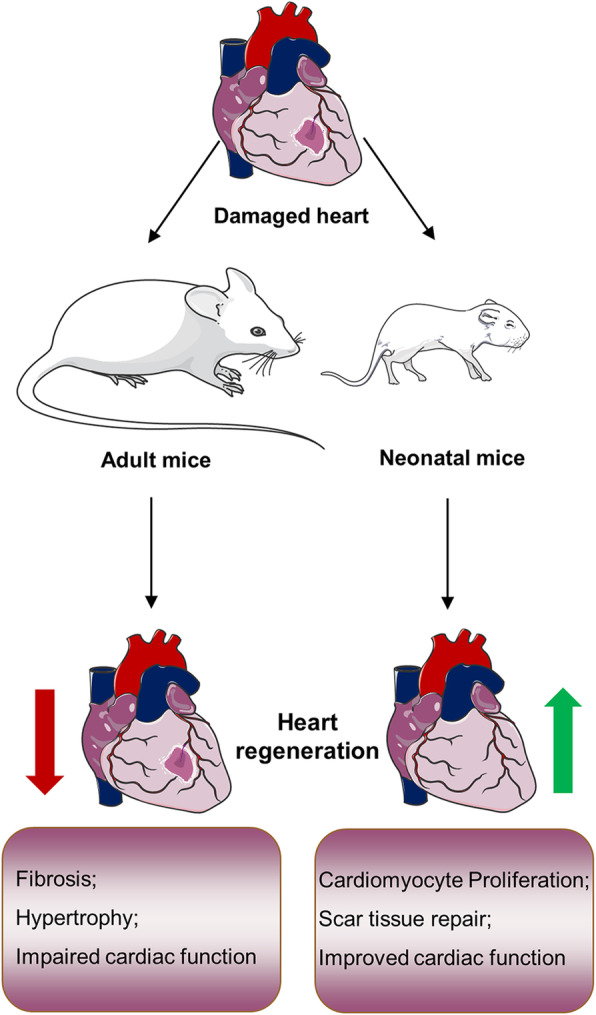
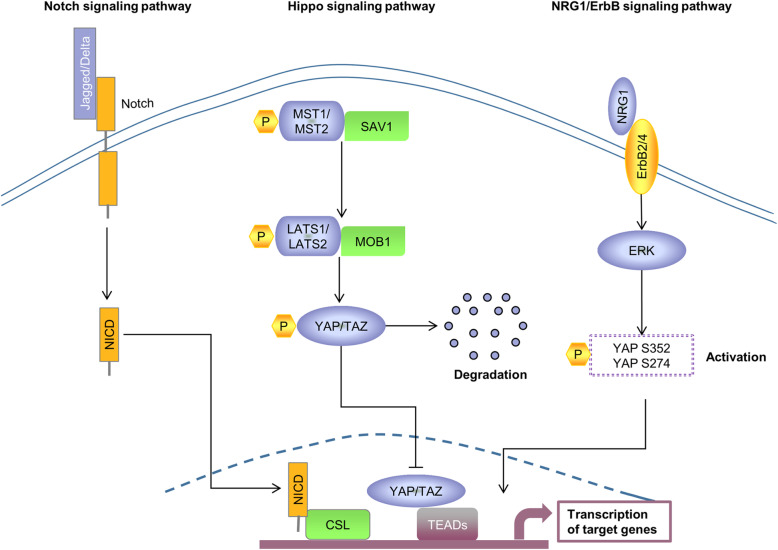
Cardiovascular diseases such as myocardial infarction (MI) is a major contributor to human mortality and morbidity. The mammalian adult heart almost loses its plasticity to appreciably regenerate new cardiomyocytes after injuries, such as MI and heart failure. The neonatal heart exhibits robust proliferative capacity when exposed to varying forms of myocardial damage. The ability of the neonatal heart to repair the injury and prevent pathological left ventricular remodeling leads to preserved or improved cardiac function. Therefore, promoting cardiomyocyte proliferation after injuries to reinitiate the process of cardiomyocyte regeneration, and suppress heart failure and other serious cardiovascular problems have become the primary goal of many researchers. Here, we review recent studies in this field and summarize the factors that act upon the proliferation of cardiomyocytes and cardiac repair after injury and discuss the new possibilities for potential clinical treatment strategies for cardiovascular diseases.
心血管疾病,如心肌梗死(MI),是导致人类死亡和发病的主要因素。成年哺乳动物的心脏在遭受诸如心肌梗死和心力衰竭等损伤后,几乎失去了显著再生新心肌细胞的可塑性。新生儿心脏在受到不同形式的心肌损伤时,表现出强大的增殖能力。新生儿心脏修复损伤和预防病理性左心室重塑的能力可维持或改善心脏功能。因此,促进损伤后心肌细胞增殖以重新启动心肌细胞再生过程,抑制心力衰竭和其他严重心血管问题,已成为许多研究人员的首要目标。在此,我们综述了该领域的最新研究,总结了影响损伤后心肌细胞增殖和心脏修复的因素,并探讨了心血管疾病潜在临床治疗策略的新可能性。