Tellios Vasiliki, Maksoud Matthew J E, Lu Wei-Yang
Graduate Program of Neuroscience, The University of Western Ontario, London, ON, Canada.
Molecular Medicine Group, Robarts Research Institute, London, ON, Canada.
Glia. 2022 May;70(5):858-874. doi: 10.1002/glia.24143. Epub 2022 Jan 10.
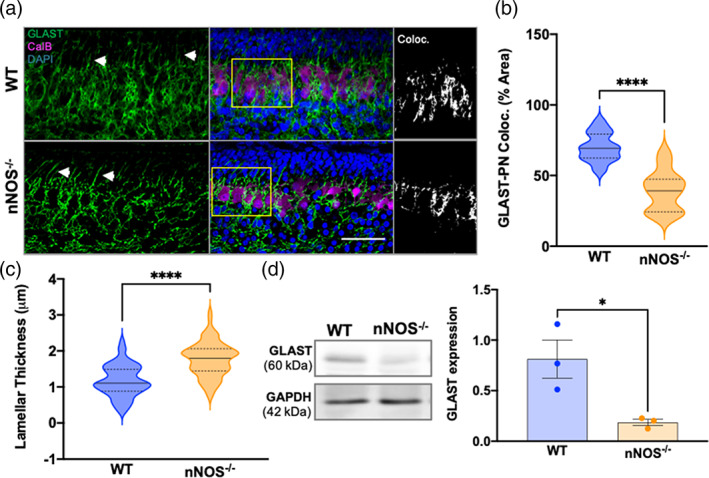
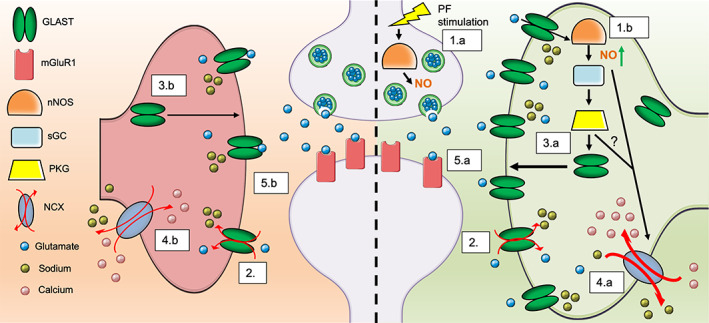
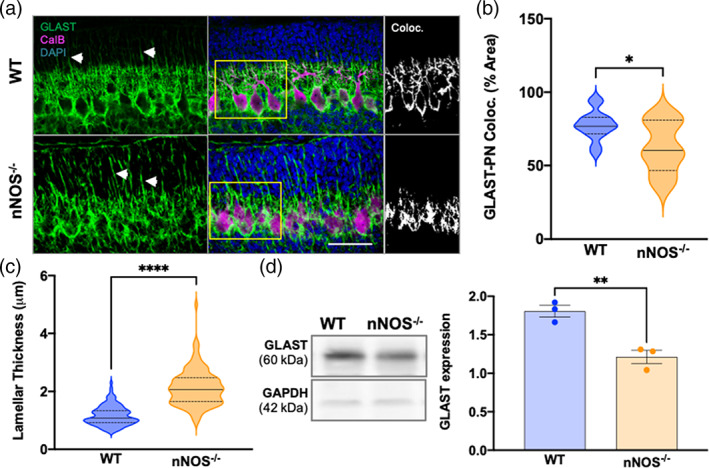
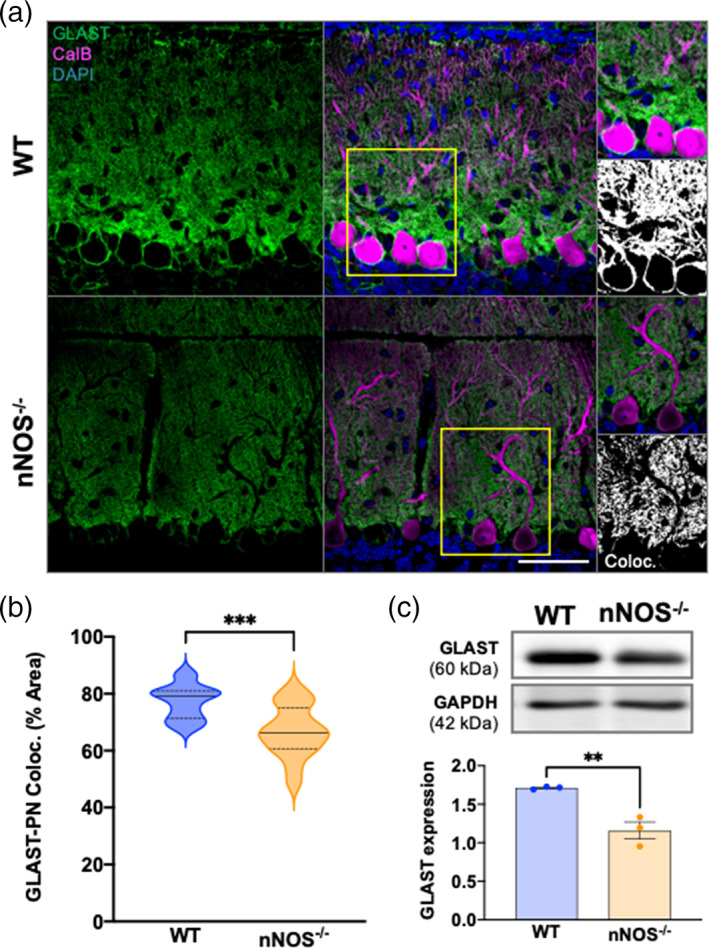
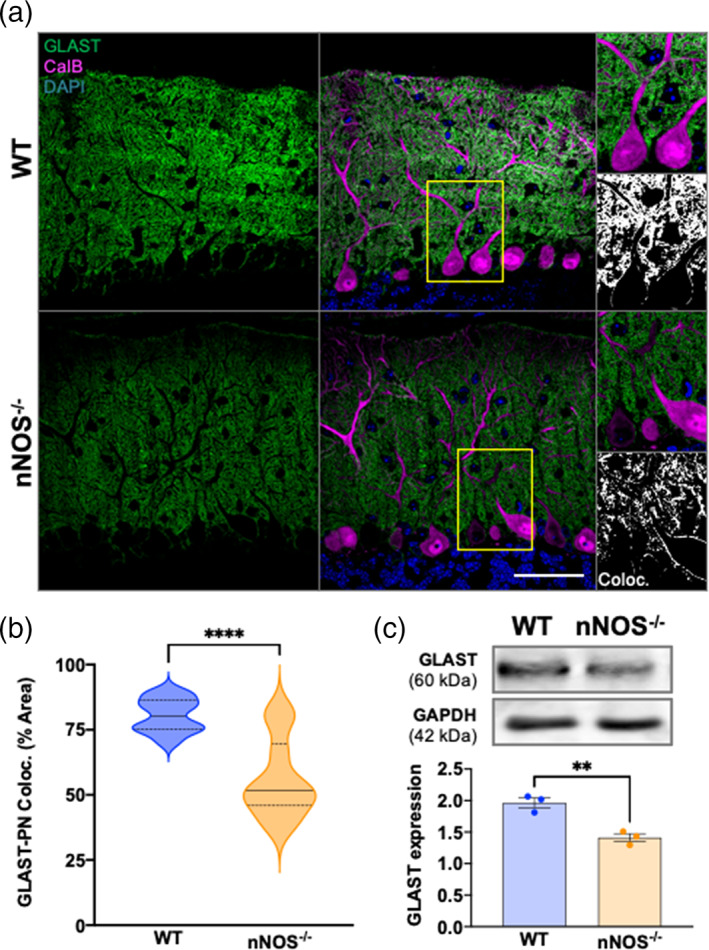
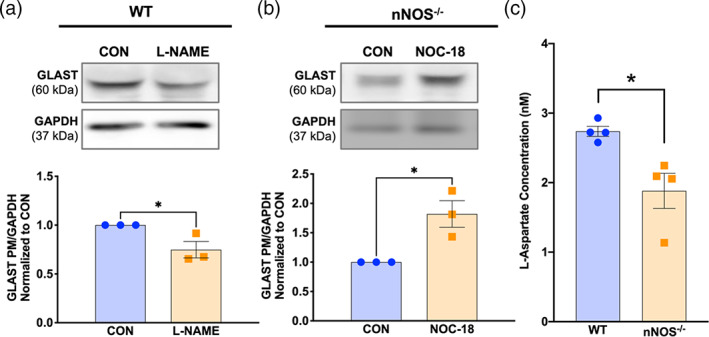
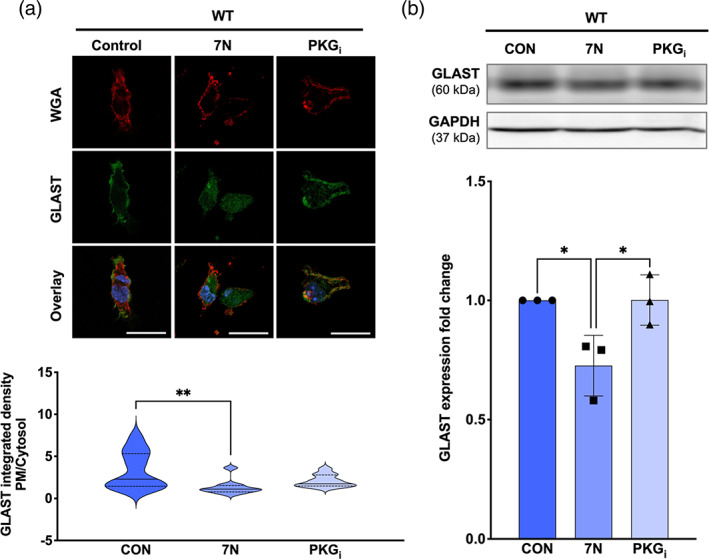
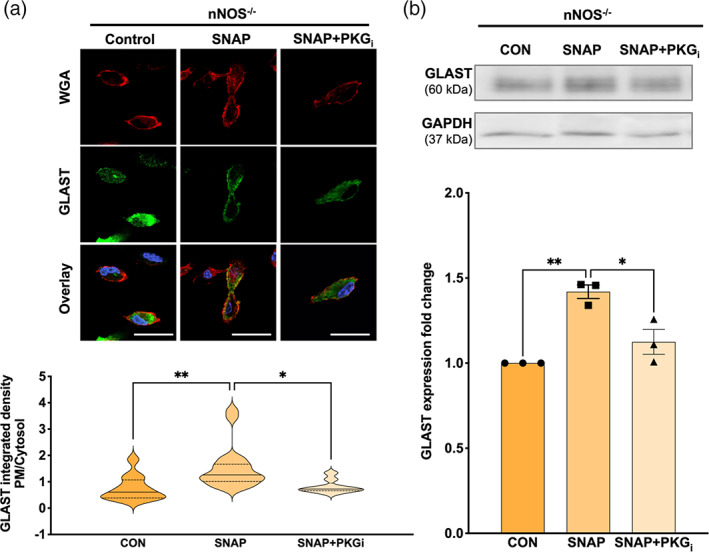
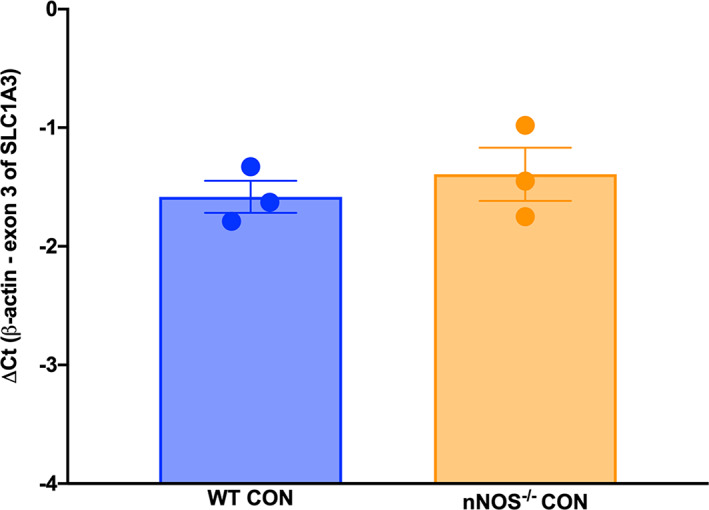
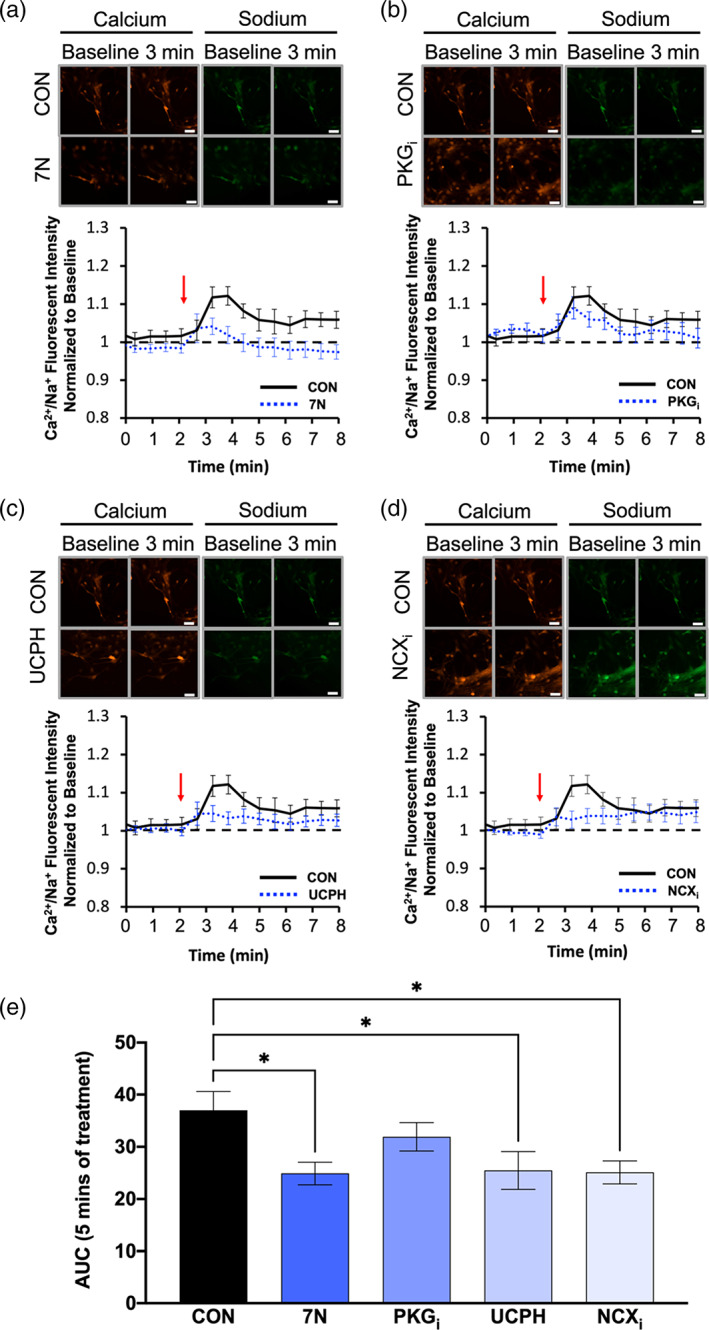
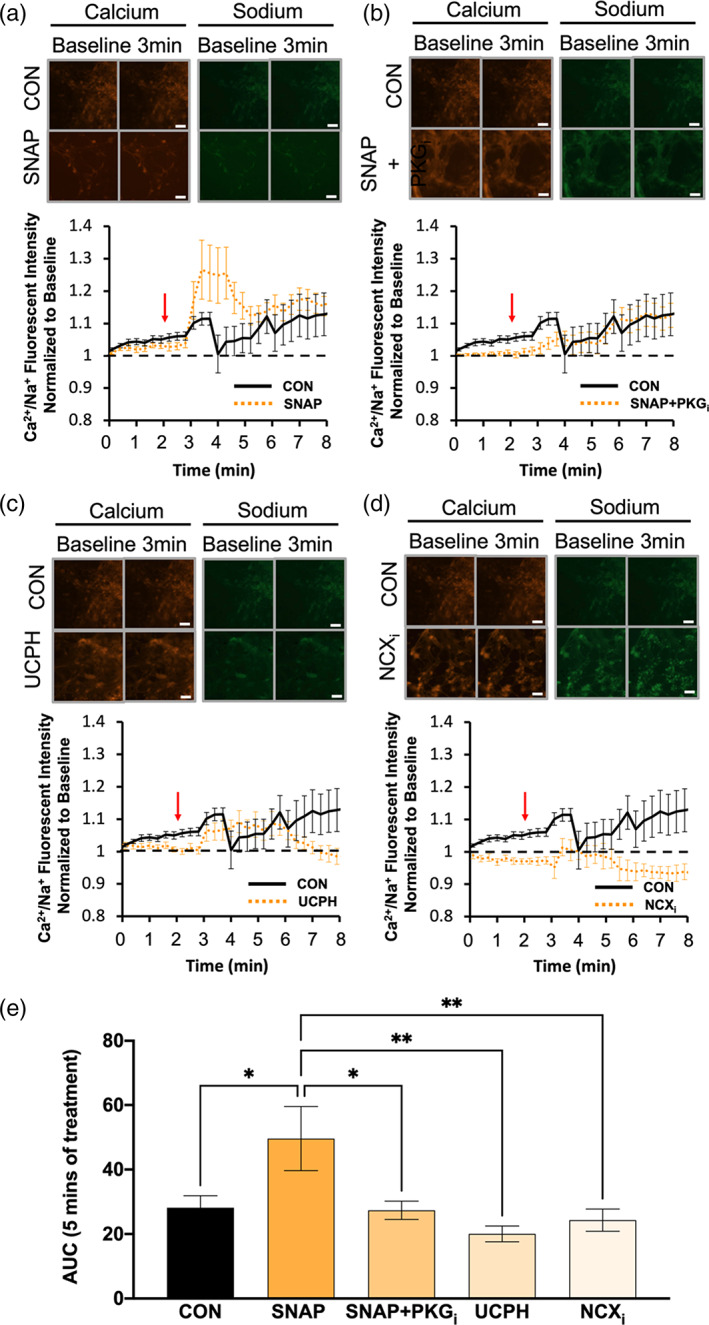
Bergmann glia (BG) predominantly use glutamate/aspartate transporters (GLAST) for glutamate uptake in the cerebellum. Recently, nitric oxide (NO) treatment has been shown to upregulate GLAST function and increase glutamate uptake in vitro. We previously discovered that neuronal nitric oxide synthase knockout (nNOS ) mice displayed structural and functional neuronal abnormalities in the cerebellum during development, in addition to previously reported motor deficits. Although these developmental deficits have been identified in the nNOS cerebellum, it is unknown whether BG morphology and GLAST expression are also affected in the absence of nNOS in vivo. This study is the first to characterize BG morphology and GLAST expression during development in nNOS mice using immunohistochemistry and western blotting across postnatal development. Results showed that BG in nNOS mice exhibited abnormal morphology and decreased GLAST expression compared with wildtype (WT) mice across postnatal development. Treating ex vivo WT cerebellar slices with the NOS inhibitor L-NAME decreased GLAST expression while treating nNOS slices with the slow-release NO-donor NOC-18 increased GLAST expression when compared with their respective controls. In addition, treating primary BG isolated from WT mice with the selective nNOS inhibitor 7N decreased the membrane expression of GLAST and influx of Ca /Na , while treating nNOS BG with SNAP increased the membrane expression of GLAST and Ca /Na influx. Moreover, the effects of SNAP on GLAST expression and Ca /Na influx in nNOS BG were significantly reduced by a PKG inhibitor. Together, these results reveal a novel role for nNOS/NO signaling in BG development, regulated by a PKG-mediated mechanism.
伯格曼胶质细胞(BG)在小脑主要利用谷氨酸/天冬氨酸转运体(GLAST)摄取谷氨酸。最近研究表明,一氧化氮(NO)处理可上调GLAST功能并增加体外谷氨酸摄取。我们先前发现,神经元型一氧化氮合酶基因敲除(nNOS)小鼠在发育过程中小脑出现结构和功能上的神经元异常,此外还有先前报道的运动功能缺陷。尽管在nNOS小鼠小脑中已发现这些发育缺陷,但在体内缺乏nNOS时BG形态和GLAST表达是否也受影响尚不清楚。本研究首次利用免疫组织化学和蛋白质印迹法对出生后发育阶段的nNOS小鼠BG形态和GLAST表达进行特征分析。结果显示,与野生型(WT)小鼠相比,nNOS小鼠在出生后发育阶段BG呈现异常形态且GLAST表达降低。与各自对照组相比,用一氧化氮合酶抑制剂L-NAME处理离体WT小脑切片会降低GLAST表达,而用缓释NO供体NOC-18处理nNOS切片则会增加GLAST表达。此外,用选择性nNOS抑制剂7N处理从WT小鼠分离的原代BG会降低GLAST的膜表达以及Ca²⁺/Na⁺内流,而用SNAP处理nNOS BG会增加GLAST的膜表达以及Ca²⁺/Na⁺内流。此外,PKG抑制剂可显著降低SNAP对nNOS BG中GLAST表达和Ca²⁺/Na⁺内流的影响。总之,这些结果揭示了nNOS/NO信号在BG发育中的新作用,该作用由PKG介导的机制调控。