Theory Department, Laboratory for Cheminformatics, National Institute of Chemistry, 1000 Ljubljana, Slovenia.
Jožef Stefan International Postgraduate School, 1000 Ljubljana, Slovenia.
Int J Mol Sci. 2021 Dec 29;23(1):362. doi: 10.3390/ijms23010362.
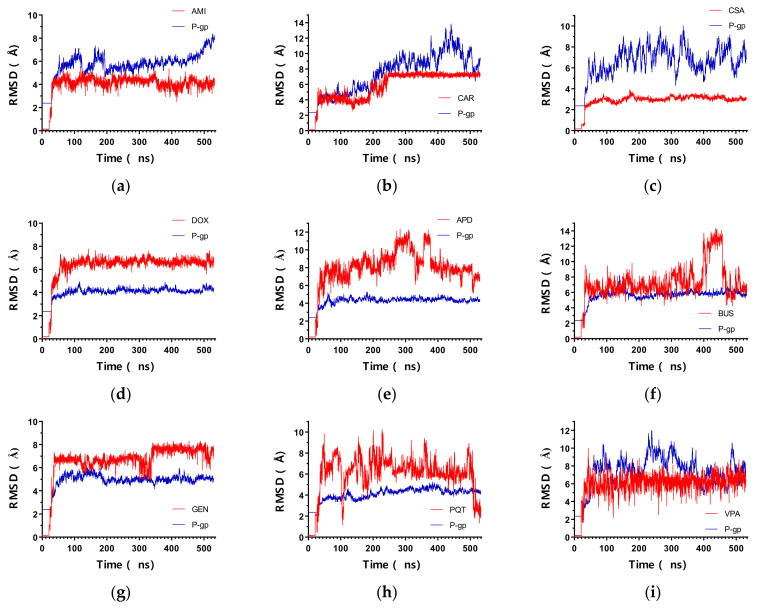
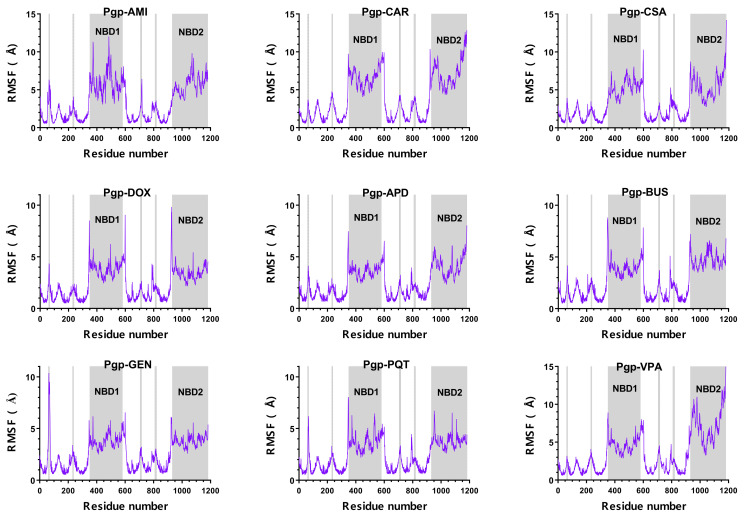
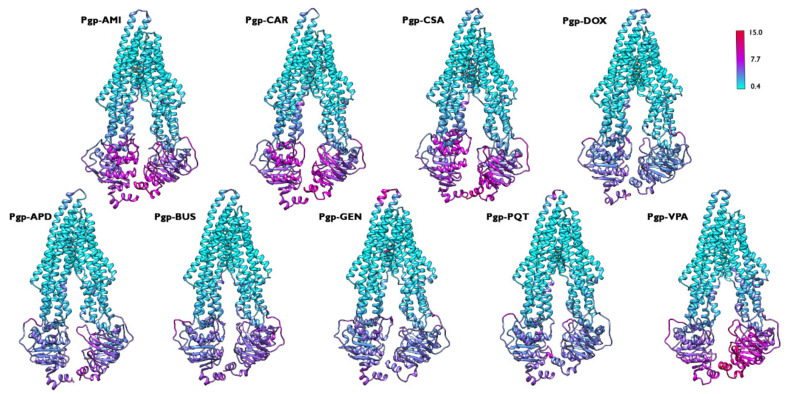
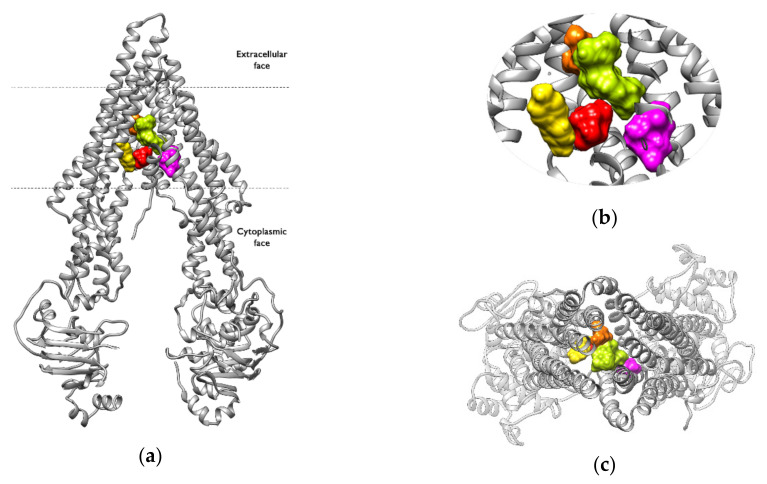
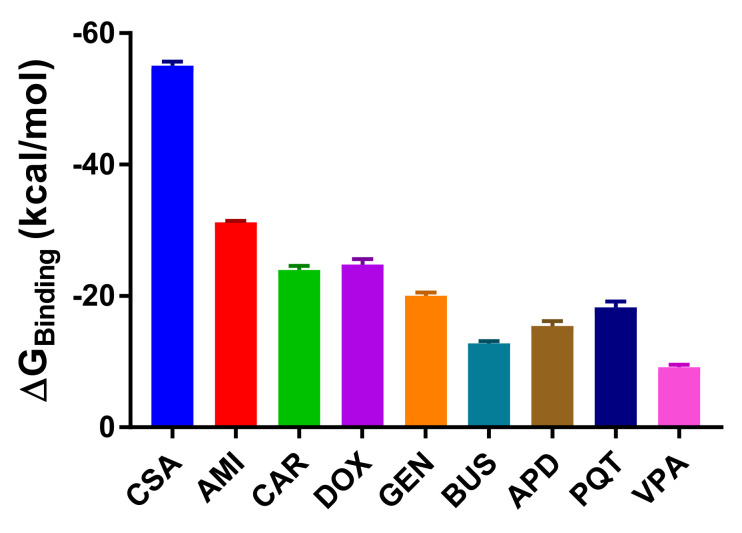
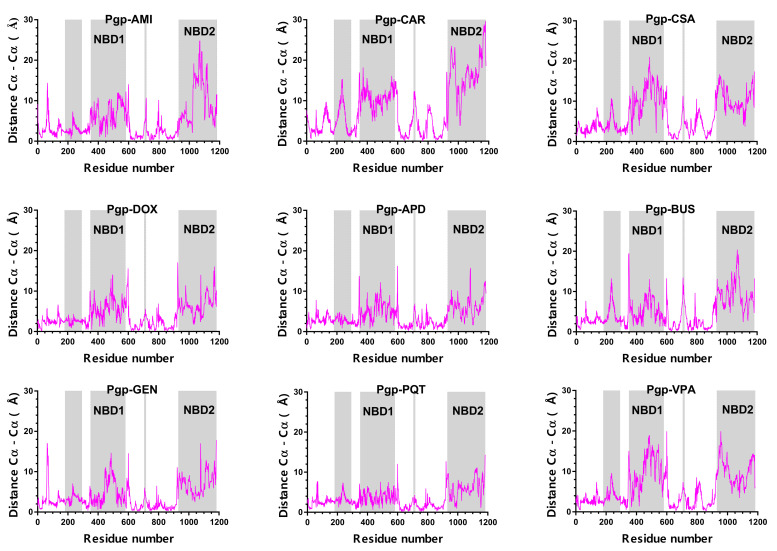
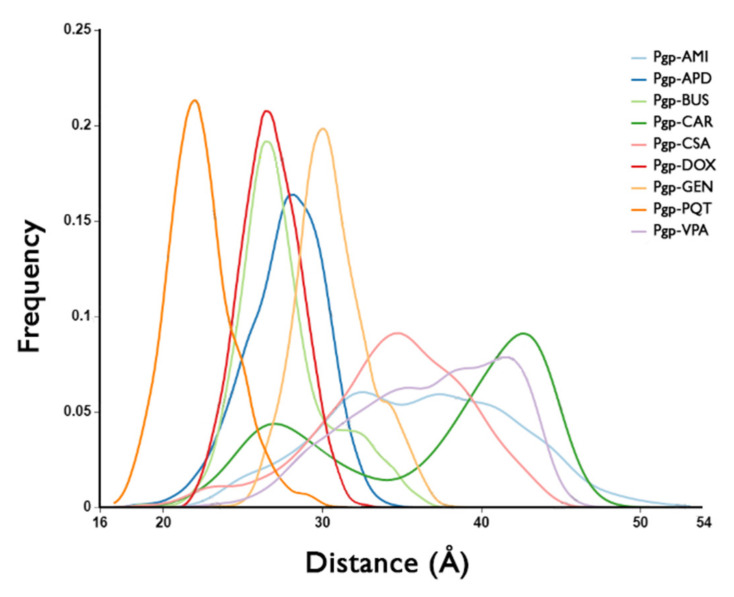
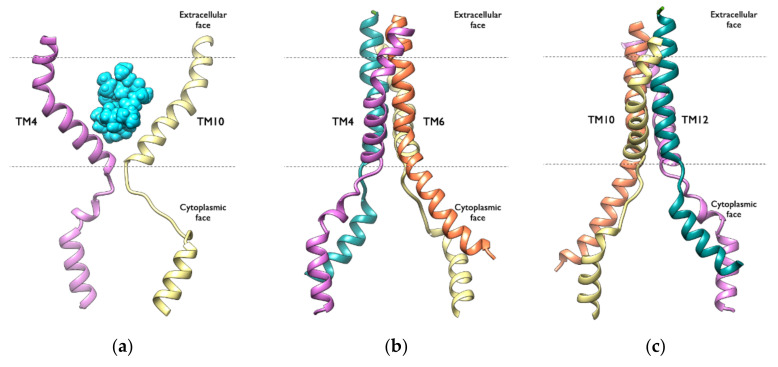
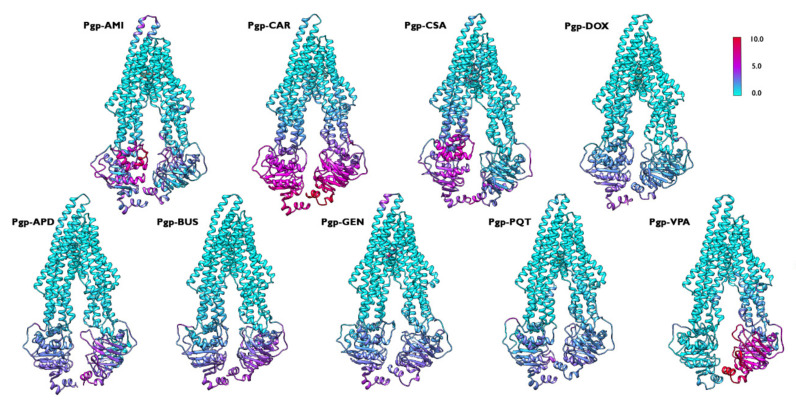
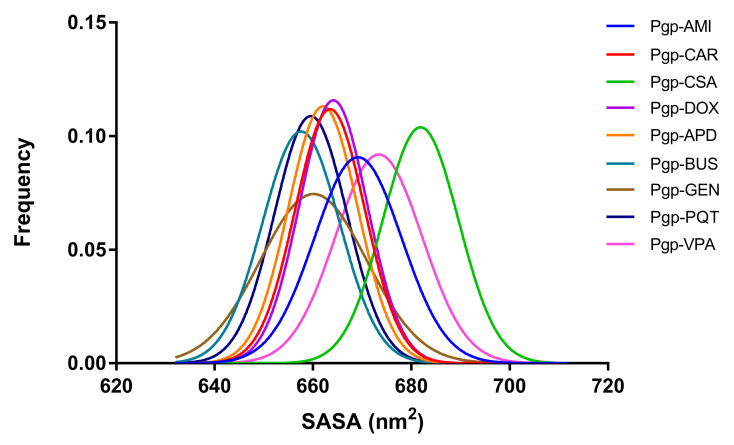
P-Glycoprotein (P-gp) is a transmembrane protein belonging to the ATP binding cassette superfamily of transporters, and it is a xenobiotic efflux pump that limits intracellular drug accumulation by pumping compounds out of cells. P-gp contributes to a reduction in toxicity, and has broad substrate specificity. It is involved in the failure of many cancer and antiviral chemotherapies due to the phenomenon of multidrug resistance (MDR), in which the membrane transporter removes chemotherapeutic drugs from target cells. Understanding the details of the ligand-P-gp interaction is therefore critical for the development of drugs that can overcome the MDR phenomenon, for the early identification of P-gp substrates that will help us to obtain a more effective prediction of toxicity, and for the subsequent outdesign of substrate properties if needed. In this work, a series of molecular dynamics (MD) simulations of human P-gp (P-gp) in an explicit membrane-and-water environment were performed to investigate the effects of binding different compounds on the conformational dynamics of P-gp. The results revealed significant differences in the behaviour of P-gp in the presence of active and non-active compounds within the binding pocket, as different patterns of movement were identified that could be correlated with conformational changes leading to the activation of the translocation mechanism. The predicted ligand-P-gp interactions are in good agreement with the available experimental data, as well as the estimation of the binding-free energies of the studied complexes, demonstrating the validity of the results derived from the MD simulations.
P-糖蛋白(P-gp)是一种跨膜蛋白,属于 ATP 结合盒转运蛋白超家族,是一种外源性排出泵,通过将化合物泵出细胞来限制细胞内药物积累。P-gp 有助于降低毒性,并且具有广泛的底物特异性。由于多药耐药(MDR)现象,它参与了许多癌症和抗病毒化疗的失败,其中膜转运蛋白将化疗药物从靶细胞中去除。因此,了解配体-P-gp 相互作用的细节对于开发能够克服 MDR 现象的药物、早期识别有助于我们更有效地预测毒性的 P-gp 底物以及随后根据需要重新设计底物特性至关重要。在这项工作中,在明确的膜和水环境中对人 P-糖蛋白(P-gp)进行了一系列分子动力学(MD)模拟,以研究结合不同化合物对 P-gp 构象动力学的影响。结果表明,在结合口袋中存在活性和非活性化合物时,P-gp 的行为存在显著差异,因为鉴定出不同的运动模式,这些模式可以与导致易位机制激活的构象变化相关联。预测的配体-P-gp 相互作用与可用的实验数据以及研究复合物的结合自由能估计值非常吻合,证明了从 MD 模拟中得出的结果的有效性。