Department of Electronics and Computer Engineering, Pulchowk Campus, Tribhuvan University, Kathmandu 19758, Nepal.
Cyber Security and Wireless Networking Innovations Lab, EECS Department, Howard University, Washington, DC 20059, USA.
Sensors (Basel). 2021 Dec 26;22(1):143. doi: 10.3390/s22010143.
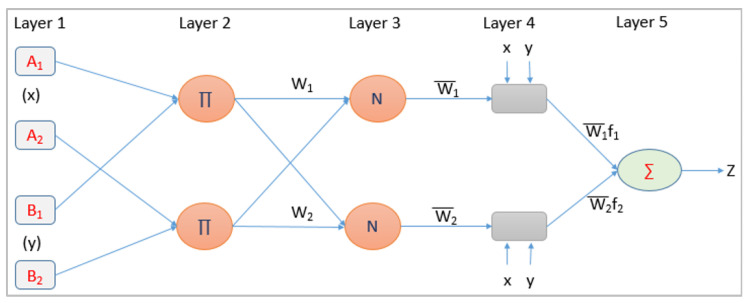
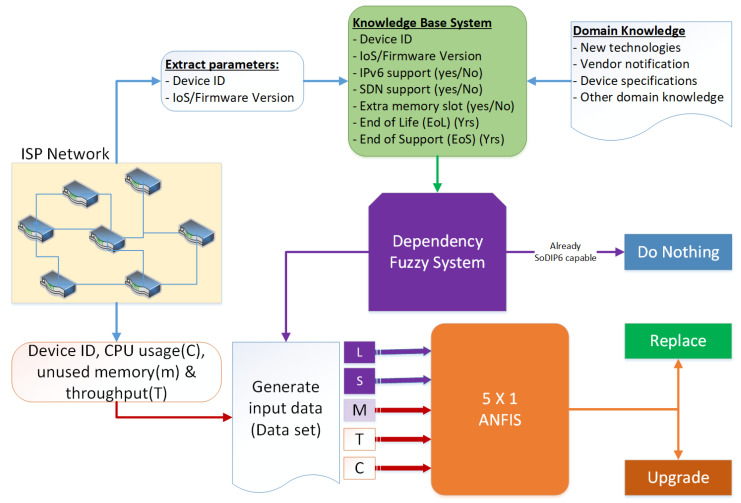
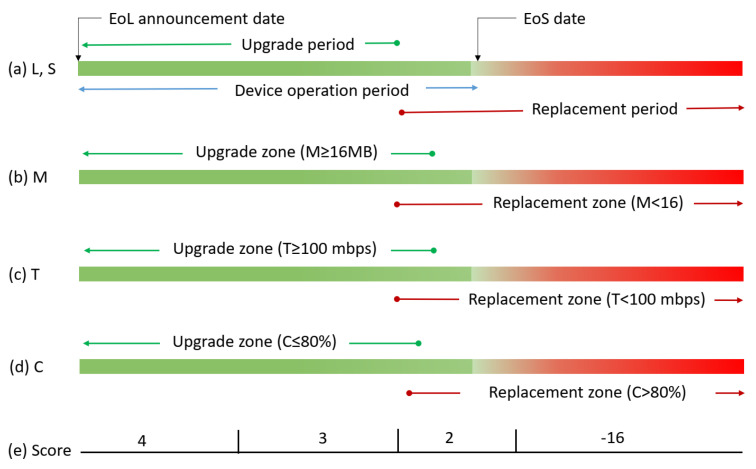
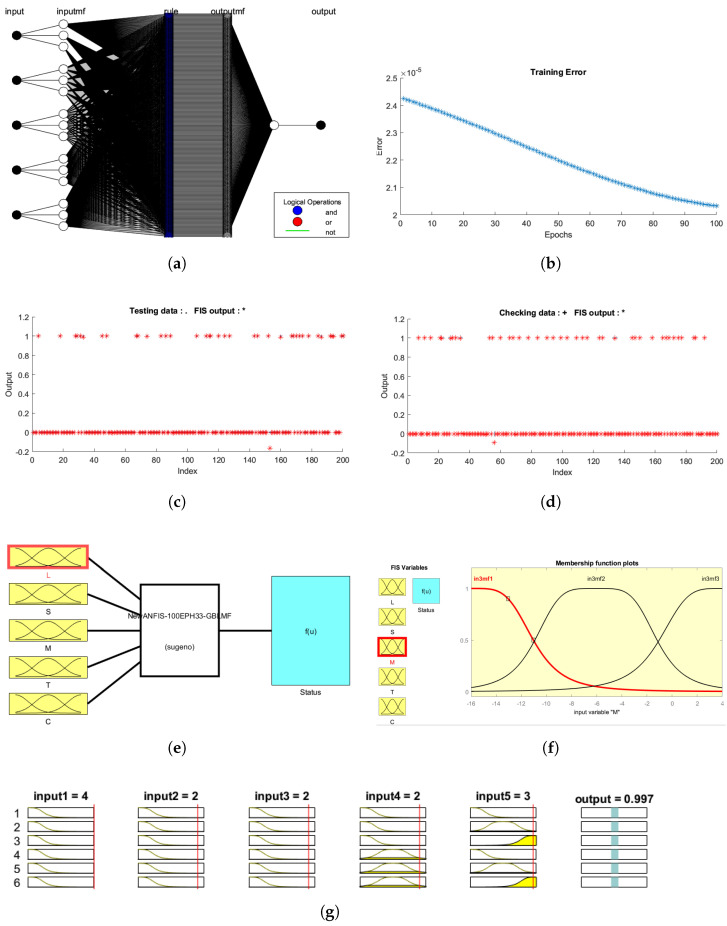
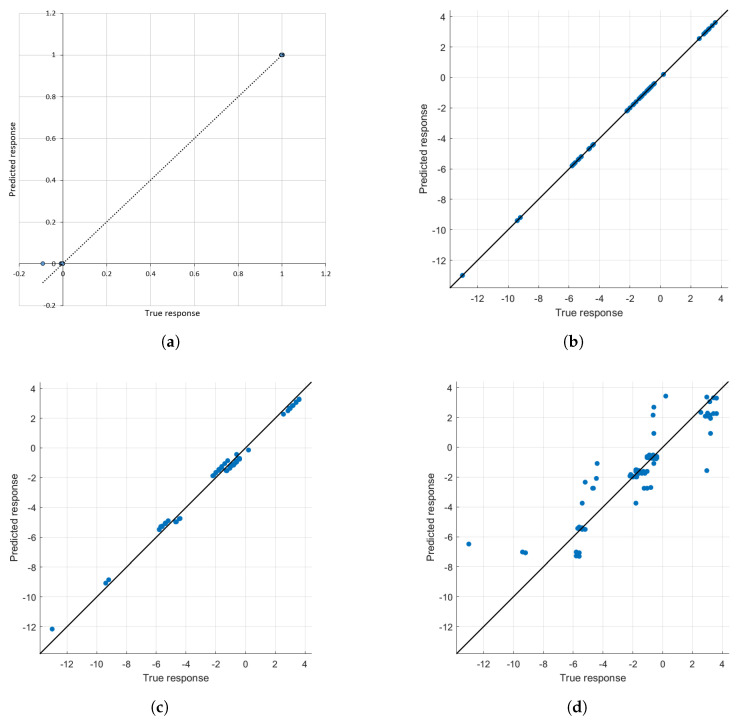
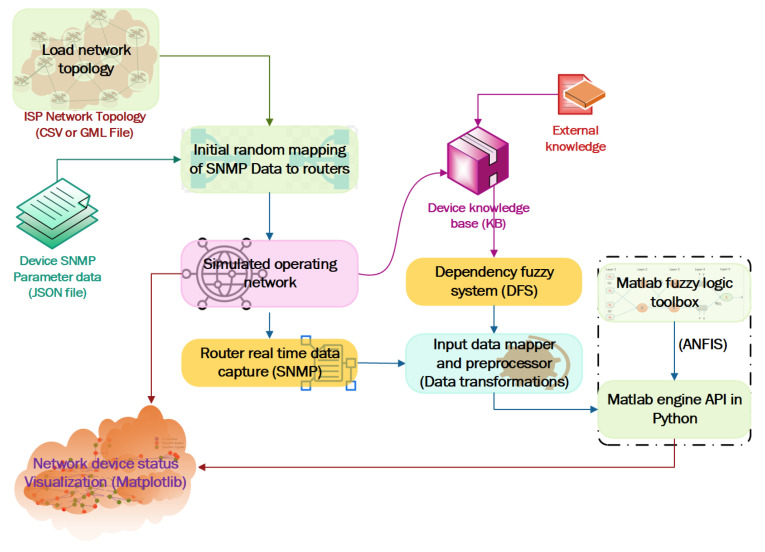
Internet and telecom service providers worldwide are facing financial sustainability issues in migrating their existing legacy IPv4 networking system due to backward compatibility issues with the latest generation networking paradigms viz. Internet protocol version 6 (IPv6) and software-defined networking (SDN). Bench marking of existing networking devices is required to identify their status whether the existing running devices are upgradable or need replacement to make them operable with SDN and IPv6 networking so that internet and telecom service providers can properly plan their network migration to optimize capital and operational expenditures for future sustainability. In this paper, we implement "adaptive neuro fuzzy inference system (ANFIS)", a well-known intelligent approach for network device status identification to classify whether a network device is upgradable or requires replacement. Similarly, we establish a knowledge base (KB) system to store the information of device internetwork operating system (IoS)/firmware version, its SDN, and IPv6 support with end-of-life and end-of-support. For input to ANFIS, device performance metrics such as average CPU utilization, throughput, and memory capacity are retrieved and mapped with data from KB. We run the experiment with other well-known classification methods, for example, support vector machine (SVM), fine tree, and liner regression to compare performance results with ANFIS. The comparative results show that the ANFIS-based classification approach is more accurate and optimal than other methods. For service providers with a large number of network devices, this approach assists them to properly classify the device and make a decision for the smooth transitioning to SDN-enabled IPv6 networks.
全球的互联网和电信服务提供商在将其现有的传统 IPv4 网络系统迁移到最新一代网络范例(即互联网协议第 6 版 (IPv6) 和软件定义网络 (SDN))时,面临着财务可持续性问题,这是由于向后兼容性问题所致。需要对现有网络设备进行基准测试,以确定其状态,即现有运行设备是否可升级,或者是否需要更换,以使它们能够与 SDN 和 IPv6 网络一起运行,以便互联网和电信服务提供商能够正确规划其网络迁移,优化资本和运营支出以实现未来的可持续性。在本文中,我们实现了“自适应神经模糊推理系统 (ANFIS)”,这是一种用于网络设备状态识别的知名智能方法,用于对网络设备是否可升级或需要更换进行分类。同样,我们建立了知识库 (KB) 系统来存储设备互联操作系统 (IoS)/固件版本、其 SDN 和 IPv6 支持的信息,以及设备的生命周期和支持结束日期。对于 ANFIS 的输入,我们检索设备性能指标,如平均 CPU 利用率、吞吐量和内存容量,并将其与 KB 中的数据进行映射。我们使用其他知名分类方法(例如支持向量机 (SVM)、精细树和线性回归)运行实验,以将性能结果与 ANFIS 进行比较。比较结果表明,基于 ANFIS 的分类方法比其他方法更准确和更优。对于拥有大量网络设备的服务提供商,这种方法可以帮助他们正确地对设备进行分类,并做出决策,以顺利过渡到支持 SDN 的 IPv6 网络。