García Arteaga Verónica, Demand Victoria, Kern Karolin, Strube Andrea, Szardenings Michael, Muranyi Isabel, Eisner Peter, Schweiggert-Weisz Ute
Fraunhofer Institute for Process Engineering and Packaging IVV, 85354 Freising, Germany.
Center of Life and Food Sciences Weihenstephan, Technical University of Munich, 85354 Freising, Germany.
Foods. 2022 Jan 4;11(1):118. doi: 10.3390/foods11010118.
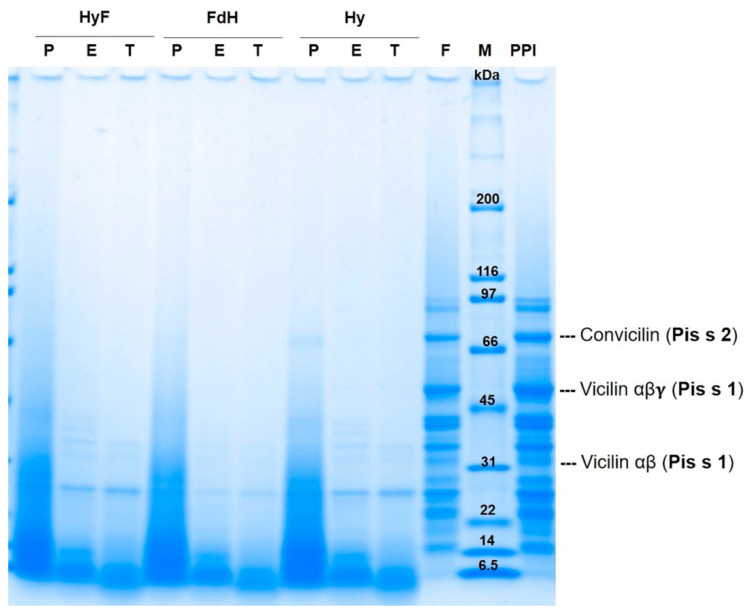
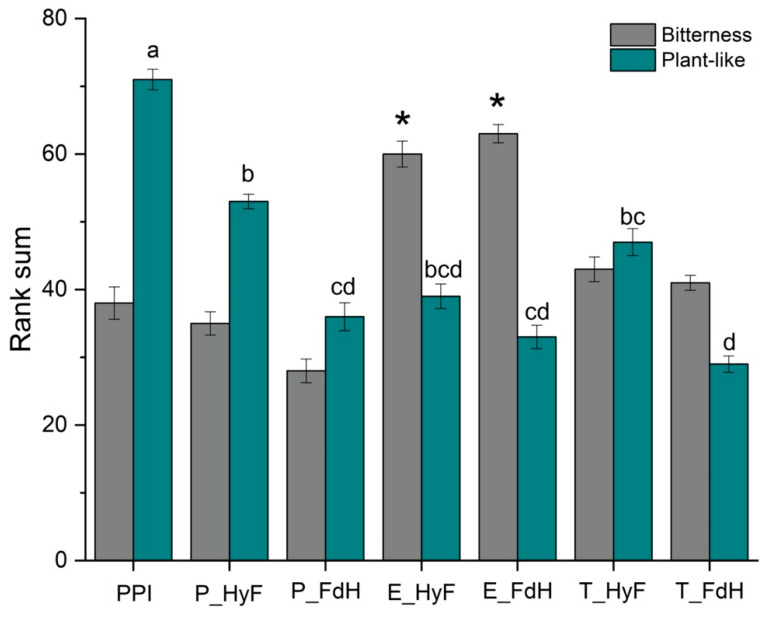
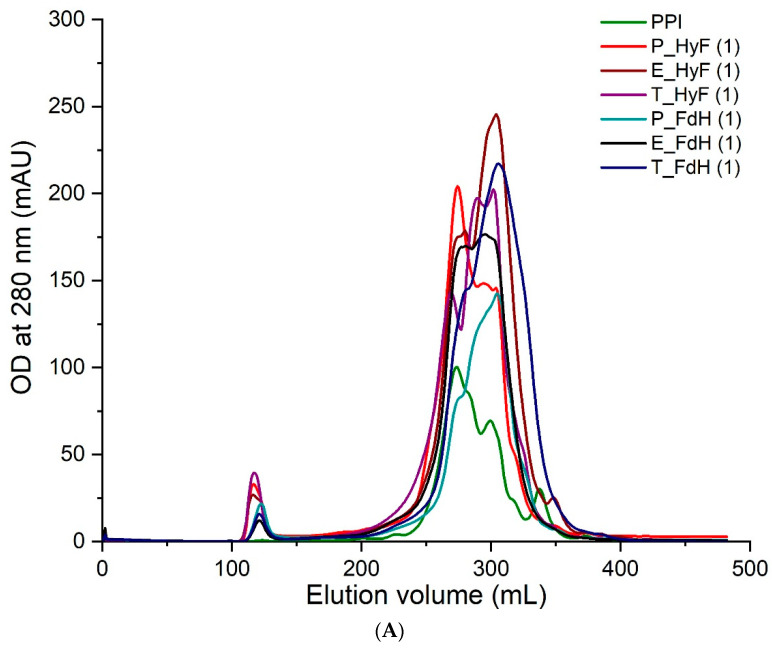
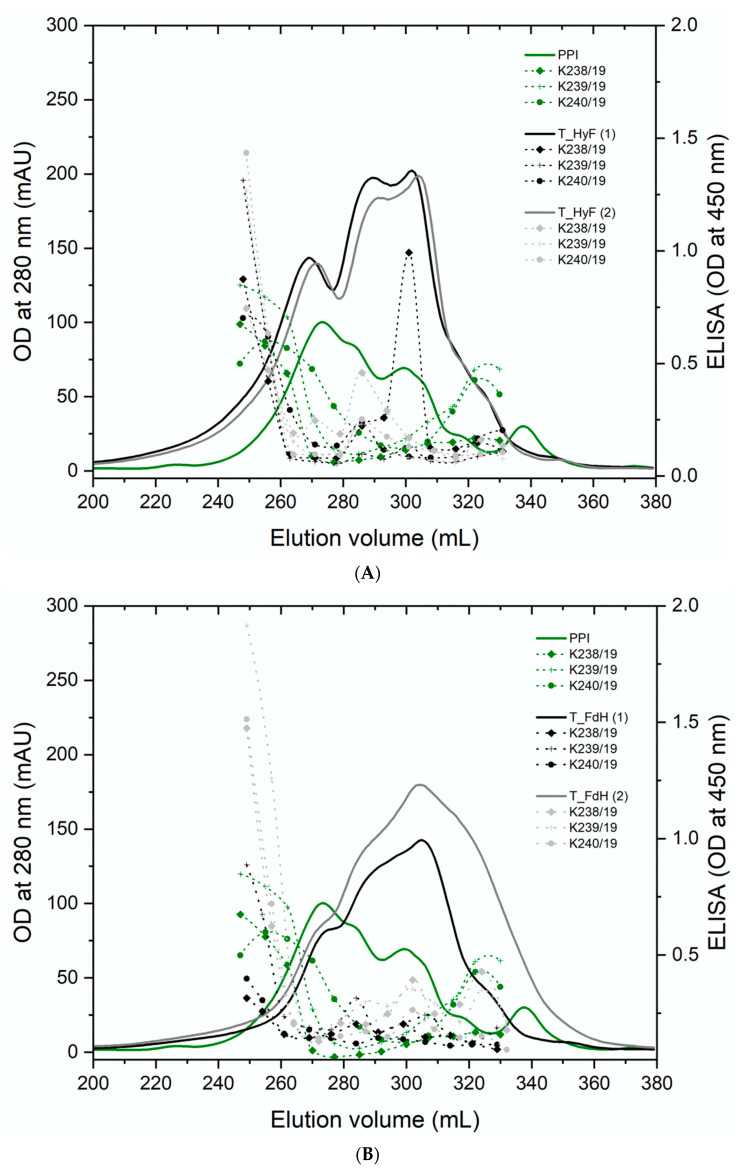
Combinations of enzymatic hydrolysis using different proteolytic enzymes (papain, Esperase, trypsin) and lactic fermentation with were used to alter potential pea allergens, the functional properties and sensory profile of pea protein isolate (PPI). The order in which the treatments were performed had a major impact on the changes in the properties of the pea protein isolate; the highest changes were seen with the combination of fermentation followed by enzymatic hydrolysis. SDS-PAGE, gel filtration, and ELISA results showed changes in the protein molecular weight and a reduced immunogenicity of treated samples. Treated samples showed significantly increased protein solubility at pH 4.5 (31.19-66.55%) and at pH 7.0 (47.37-74.95%), compared to the untreated PPI (6.98% and 40.26%, respectively). The foaming capacity was significantly increased (1190-2575%) compared to the untreated PPI (840%). The treated PPI showed reduced pea characteristic off-flavors, where only the treatment with Esperase significantly increased the bitterness. The results from this study suggest that the combination of enzymatic hydrolysis and lactic fermentation is a promising method to be used in the food industry to produce pea protein ingredients with higher functionality and a highly neutral taste. A reduced detection signal of polyclonal rabbit anti-pea-antibodies against the processed protein preparations in ELISA furthermore might indicate a decreased immunological reaction after consumption.
使用不同的蛋白水解酶(木瓜蛋白酶、埃斯帕酶、胰蛋白酶)进行酶解,并结合乳酸发酵,以改变潜在的豌豆过敏原、豌豆分离蛋白(PPI)的功能特性和感官特性。处理顺序对豌豆分离蛋白的性质变化有重大影响;发酵后进行酶解的组合变化最大。SDS-PAGE、凝胶过滤和ELISA结果显示,处理后的样品蛋白质分子量发生变化,免疫原性降低。与未处理的PPI相比(分别为6.98%和40.26%),处理后的样品在pH 4.5(31.19 - 66.55%)和pH 7.0(47.37 - 74.95%)时蛋白质溶解度显著增加。与未处理的PPI(840%)相比,起泡能力显著提高(1190 - 2575%)。处理后的PPI豌豆特征性异味减少,只有用埃斯帕酶处理显著增加了苦味。本研究结果表明,酶解和乳酸发酵相结合是食品工业中一种很有前景的方法,可用于生产具有更高功能性和高度中性味道的豌豆蛋白成分。此外,ELISA中针对加工后蛋白质制剂的兔抗豌豆多克隆抗体检测信号降低,可能表明食用后免疫反应降低。