Alnuwaysir Ridha I S, Hoes Martijn F, van Veldhuisen Dirk J, van der Meer Peter, Grote Beverborg Niels
Department of Cardiology, University Medical Center Groningen, University of Groningen, P.O. Box 30.001, 9700 RB Groningen, The Netherlands.
J Clin Med. 2021 Dec 27;11(1):125. doi: 10.3390/jcm11010125.
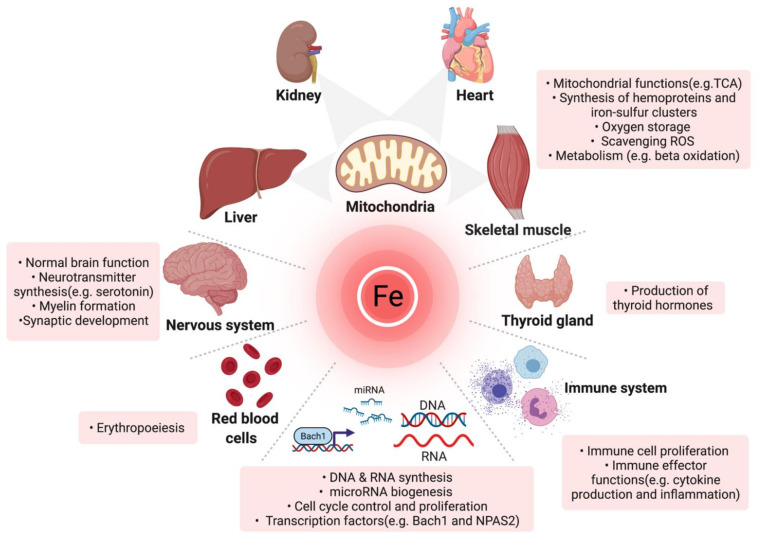
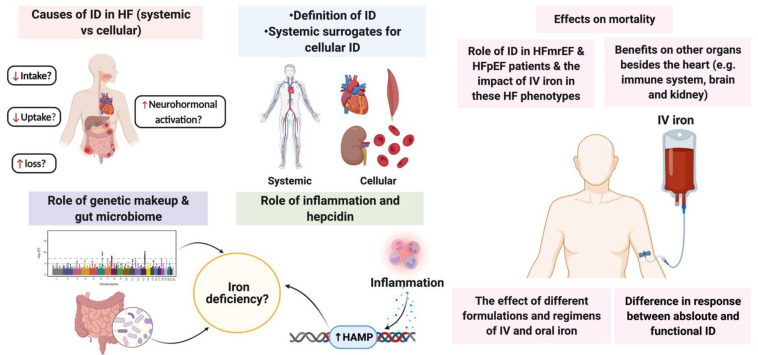
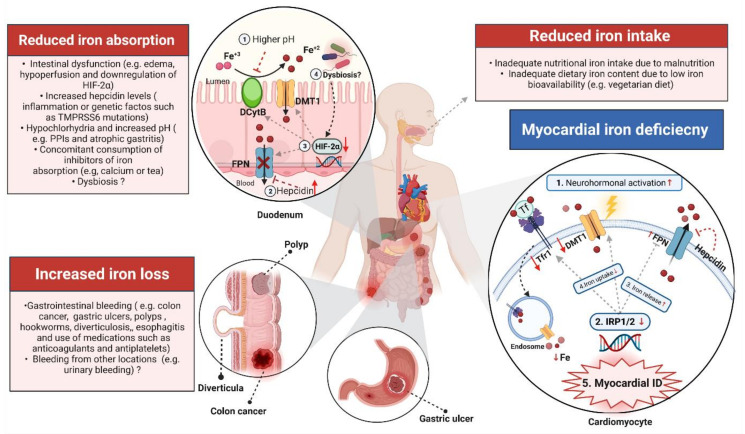
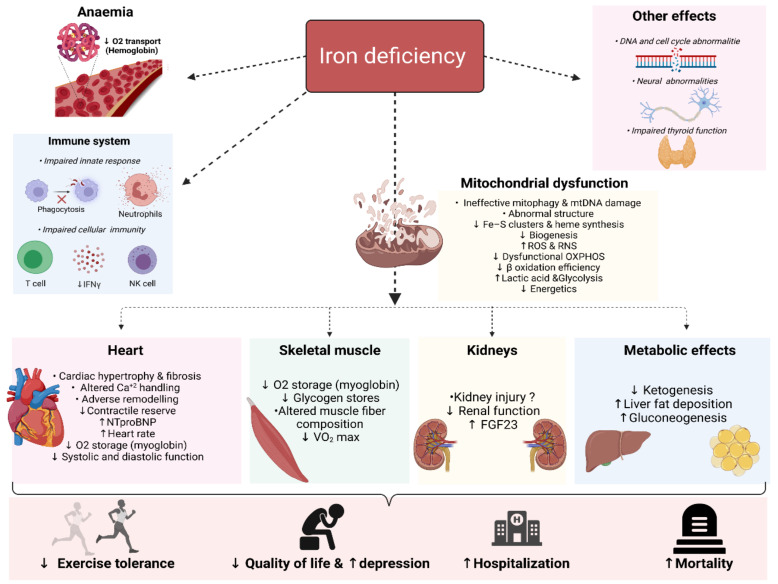
Iron is an essential micronutrient for a myriad of physiological processes in the body beyond erythropoiesis. Iron deficiency (ID) is a common comorbidity in patients with heart failure (HF), with a prevalence reaching up to 59% even in non-anaemic patients. ID impairs exercise capacity, reduces the quality of life, increases hospitalisation rate and mortality risk regardless of anaemia. Intravenously correcting ID has emerged as a promising treatment in HF as it has been shown to alleviate symptoms, improve quality of life and exercise capacity and reduce hospitalisations. However, the pathophysiology of ID in HF remains poorly characterised. Recognition of ID in HF triggered more research with the aim to explain how correcting ID improves HF status as well as the underlying causes of ID in the first place. In the past few years, significant progress has been made in understanding iron homeostasis by characterising the role of the iron-regulating hormone hepcidin, the effects of ID on skeletal and cardiac myocytes, kidneys and the immune system. In this review, we summarise the current knowledge and recent advances in the pathophysiology of ID in heart failure, the deleterious systemic and cellular consequences of ID.
铁是人体除红细胞生成之外众多生理过程所必需的微量营养素。缺铁(ID)是心力衰竭(HF)患者常见的合并症,即使在非贫血患者中,患病率也高达59%。缺铁会损害运动能力,降低生活质量,增加住院率和死亡风险,无论患者是否贫血。静脉补铁已成为心力衰竭一种有前景的治疗方法,因为它已被证明可缓解症状、改善生活质量和运动能力并减少住院次数。然而,心力衰竭中铁缺乏的病理生理学仍未得到充分描述。心力衰竭中铁缺乏的发现引发了更多研究,旨在解释纠正缺铁如何改善心力衰竭状况以及缺铁的根本原因。在过去几年中,通过描述铁调节激素铁调素的作用、缺铁对骨骼肌和心肌细胞、肾脏及免疫系统的影响,在理解铁稳态方面取得了重大进展。在本综述中,我们总结了目前关于心力衰竭中铁缺乏病理生理学的知识和最新进展,以及缺铁对全身和细胞的有害影响。