Zhao Haoyang, Jin Kangyu, Jiang Chaonan, Pan Fen, Wu Jing, Luan Honglin, Zhao Zhiyong, Chen Jingkai, Mou Tingting, Wang Zheng, Lu Jing, Lu Shaojia, Hu Shaohua, Xu Yi, Huang Manli
Department of Psychiatry, the First Affiliated Hospital, Zhejiang University School of Medicine, Hangzhou, 310003, China.
The Key Laboratory of Mental Disorder Management in Zhejiang Province, Hangzhou, 310003, China.
Transl Psychiatry. 2022 Jan 10;12(1):8. doi: 10.1038/s41398-021-01769-x.
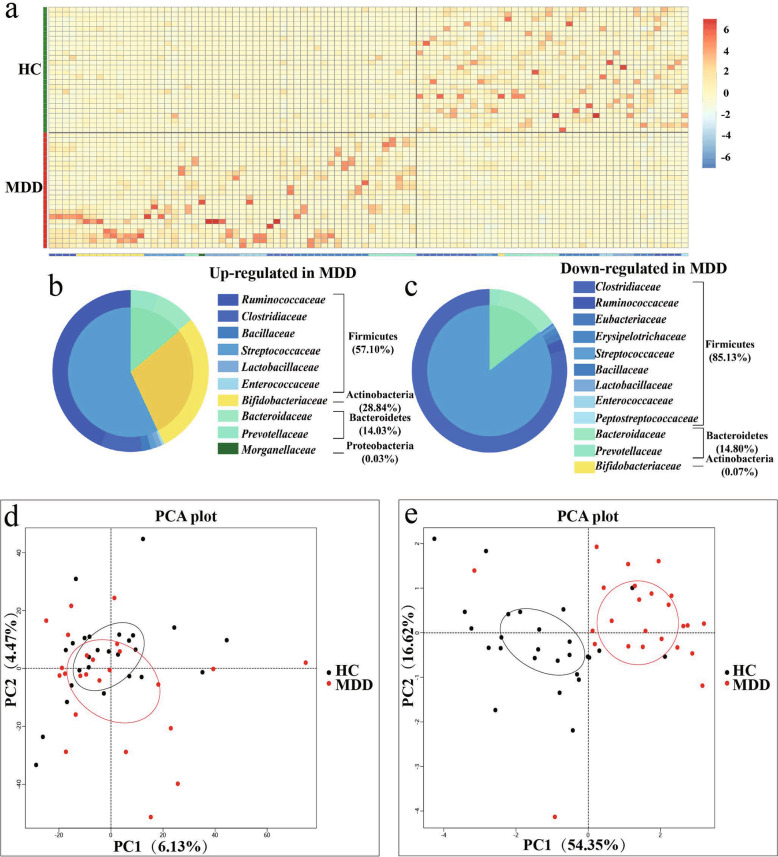
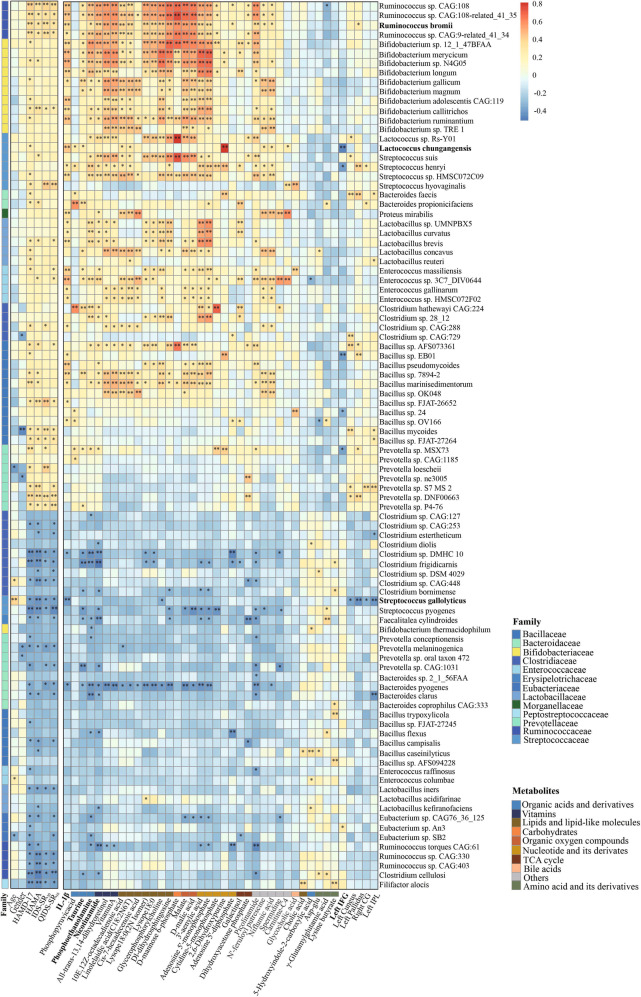
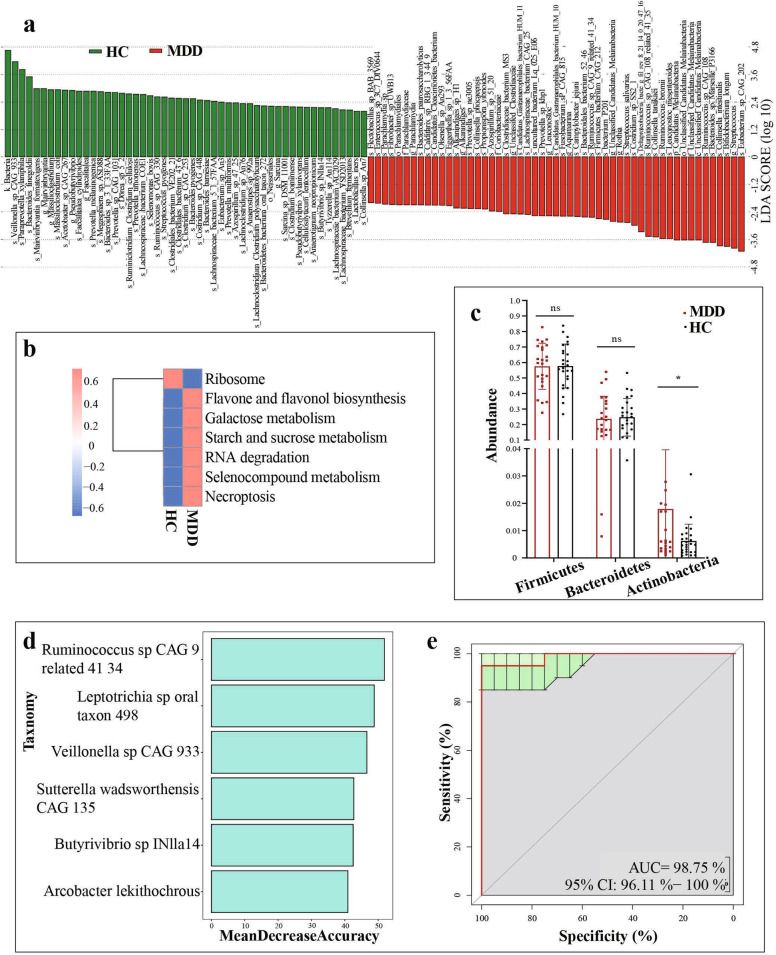
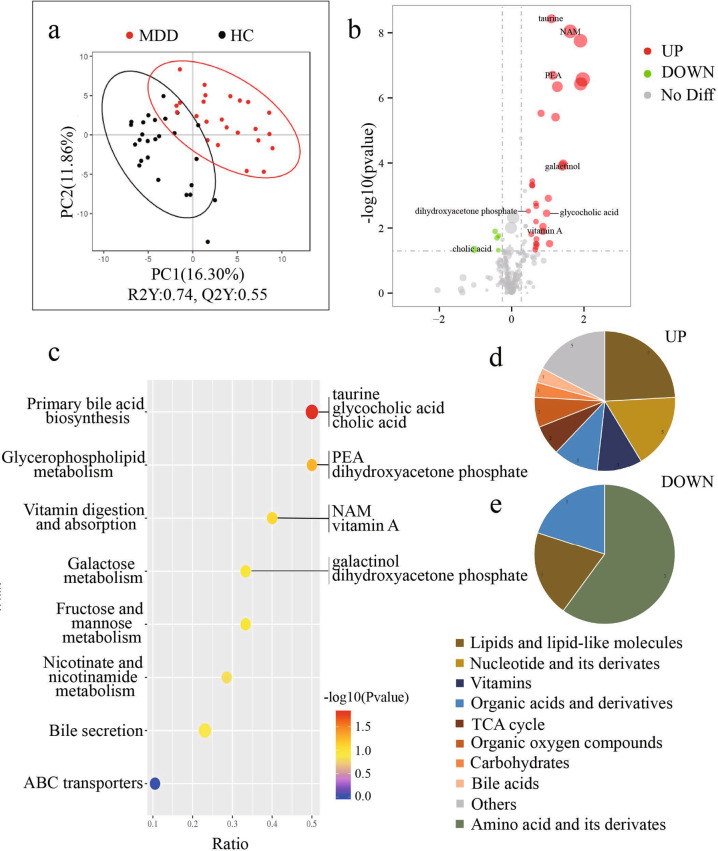
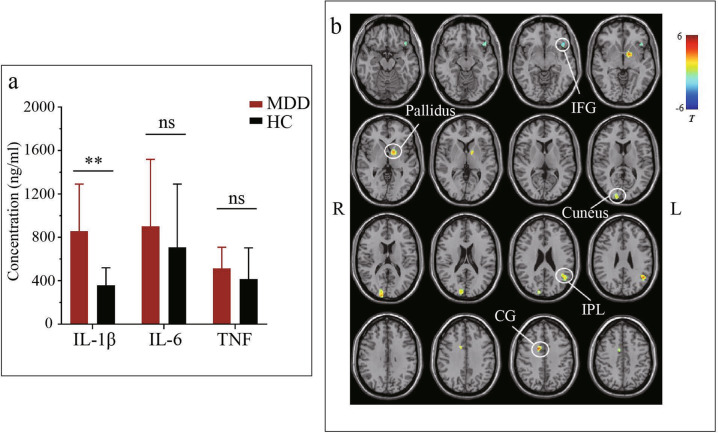
The pathophysiology of major depressive disorder (MDD) remains obscure. Recently, the microbiota-gut-brain (MGB) axis's role in MDD has an increasing attention. However, the specific mechanism of the multi-level effects of gut microbiota on host metabolism, immunity, and brain structure is unclear. Multi-omics approaches based on the analysis of different body fluids and tissues using a variety of analytical platforms have the potential to provide a deeper understanding of MGB axis disorders. Therefore, the data of metagenomics, metabolomic, inflammatory factors, and MRI scanning are collected from the two groups including 24 drug-naïve MDD patients and 26 healthy controls (HCs). Then, the correlation analysis is performed in all omics. The results confirmed that there are many markedly altered differences, such as elevated Actinobacteria abundance, plasma IL-1β concentration, lipid, vitamin, and carbohydrate metabolism disorder, and diminished grey matter volume (GMV) of inferior frontal gyrus (IFG) in the MDD patients. Notably, three kinds of discriminative bacteria, Ruminococcus bromii, Lactococcus chungangensis, and Streptococcus gallolyticus have an extensive correlation with metabolome, immunology, GMV, and clinical symptoms. All three microbiota are closely related to IL-1β and lipids (as an example, phosphoethanolamine (PEA)). Besides, Lactococcus chungangensis is negatively related to the GMV of left IFG. Overall, this study demonstrate that the effects of gut microbiome exert in MDD is multifactorial.
重度抑郁症(MDD)的病理生理学仍不清楚。最近,微生物群-肠道-脑(MGB)轴在MDD中的作用越来越受到关注。然而,肠道微生物群对宿主代谢、免疫和脑结构的多层次影响的具体机制尚不清楚。基于使用各种分析平台对不同体液和组织进行分析的多组学方法,有可能更深入地了解MGB轴紊乱。因此,从两组中收集了宏基因组学、代谢组学、炎症因子和MRI扫描数据,其中一组包括24名未服用过药物的MDD患者,另一组包括26名健康对照(HC)。然后,对所有组学进行相关性分析。结果证实,MDD患者存在许多明显改变的差异,如放线菌丰度升高、血浆IL-1β浓度升高、脂质、维生素和碳水化合物代谢紊乱,以及额下回(IFG)灰质体积(GMV)减小。值得注意的是,三种具有鉴别性的细菌,即嗜热栖瘤胃球菌、春岗乳球菌和解脲链球菌与代谢组、免疫学、GMV和临床症状有广泛的相关性。所有这三种微生物群都与IL-1β和脂质密切相关(例如磷酸乙醇胺(PEA))。此外,春岗乳球菌与左侧IFG的GMV呈负相关。总体而言,本研究表明肠道微生物群在MDD中的作用是多因素的。