Laboratory for Mineralized Tissues, Center for Translational and Clinical Research, University of Zagreb School of Medicine, Zagreb, Croatia.
Cardiovascular Biology, International Centre for Genetic Engineering and Biotechnology, Trieste, Italy.
Nat Commun. 2022 Jan 10;13(1):81. doi: 10.1038/s41467-021-27622-9.
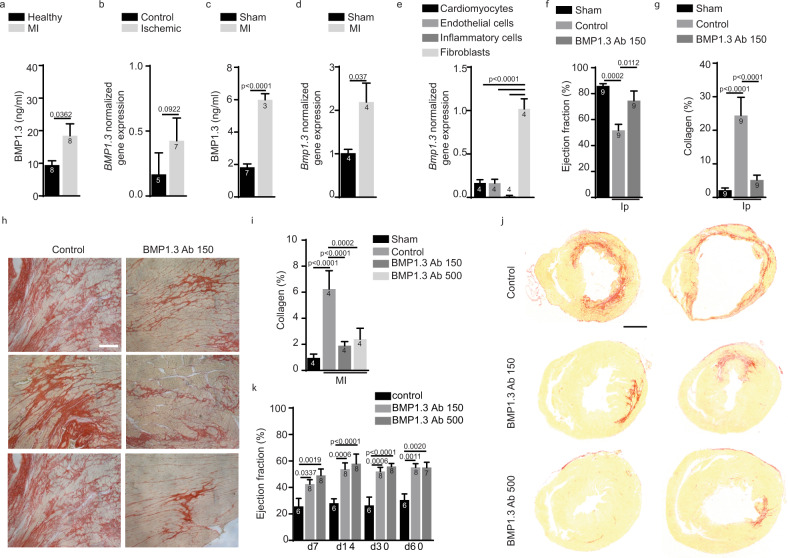
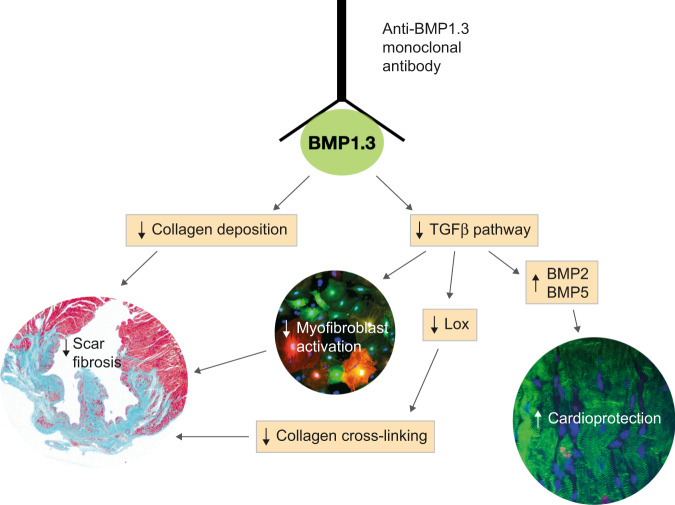
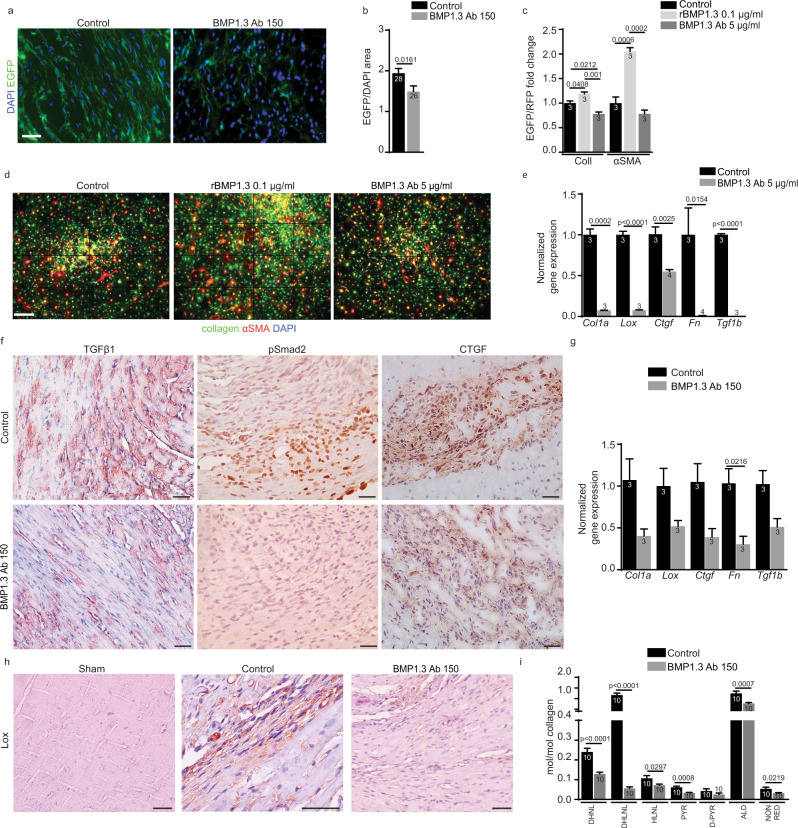
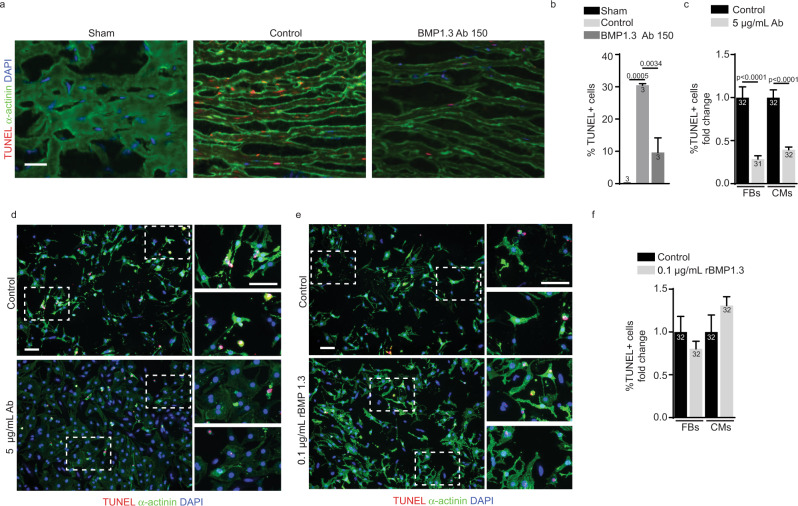
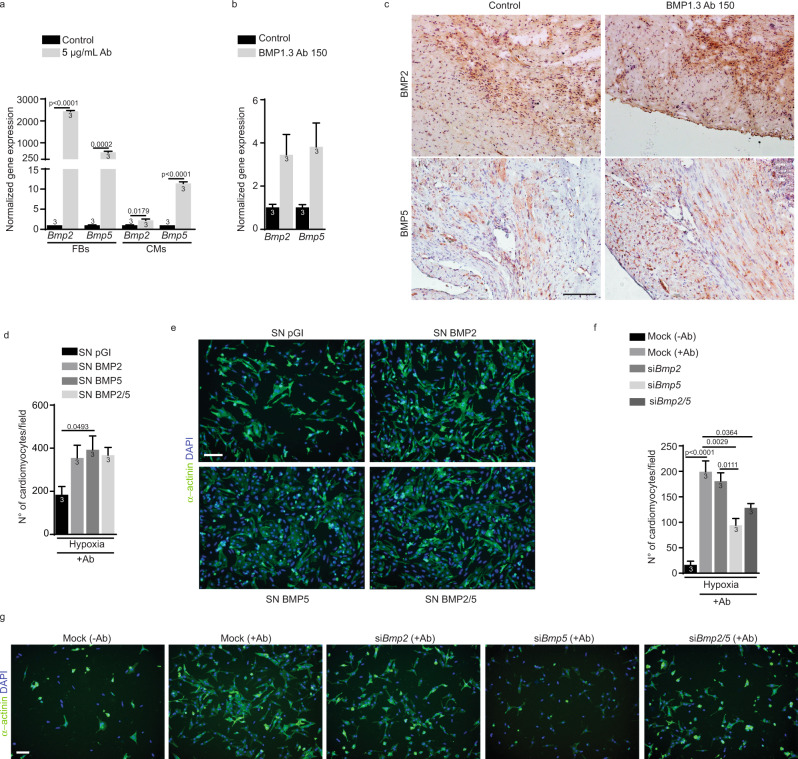
Despite the high prevalence of ischemic heart diseases worldwide, no antibody-based treatment currently exists. Starting from the evidence that a specific isoform of the Bone Morphogenetic Protein 1 (BMP1.3) is particularly elevated in both patients and animal models of myocardial infarction, here we assess whether its inhibition by a specific monoclonal antibody reduces cardiac fibrosis. We find that this treatment reduces collagen deposition and cross-linking, paralleled by enhanced cardiomyocyte survival, both in vivo and in primary cultures of cardiac cells. Mechanistically, we show that the anti-BMP1.3 monoclonal antibody inhibits Transforming Growth Factor β pathway, thus reducing myofibroblast activation and inducing cardioprotection through BMP5. Collectively, these data support the therapeutic use of anti-BMP1.3 antibodies to prevent cardiomyocyte apoptosis, reduce collagen deposition and preserve cardiac function after ischemia.
尽管全球缺血性心脏病的患病率很高,但目前尚无基于抗体的治疗方法。本研究从特定骨形态发生蛋白 1(BMP1.3)同工型在心肌梗死患者和动物模型中均显著升高的证据出发,评估其特异性单克隆抗体抑制作用是否可减少心肌纤维化。研究发现,这种治疗方法可减少胶原沉积和交联,同时在体内和心脏细胞原代培养物中增强心肌细胞存活。从机制上讲,研究表明抗 BMP1.3 单克隆抗体抑制转化生长因子-β通路,从而减少成肌纤维细胞的激活,并通过 BMP5 诱导心脏保护。总之,这些数据支持使用抗 BMP1.3 抗体进行治疗,以预防心肌细胞凋亡、减少胶原沉积并在缺血后保持心脏功能。