Centro Nacional de Biotecnología (CNB-CSIC), Madrid, Spain.
Department of Biomedicine, University of Bergen, Bergen, Norway.
Nat Commun. 2022 Jan 10;13(1):74. doi: 10.1038/s41467-021-27657-y.
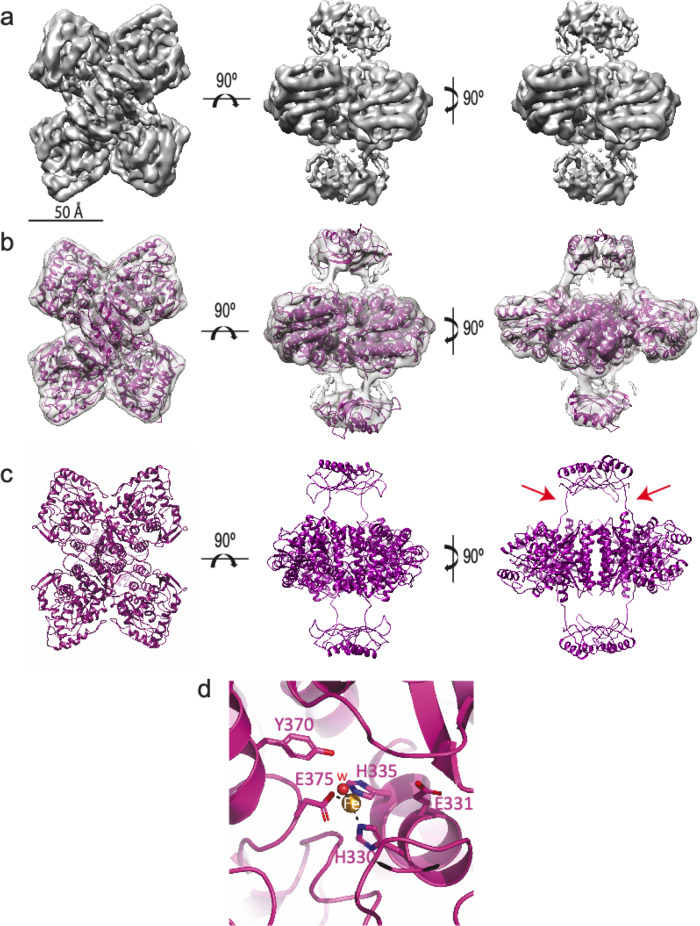
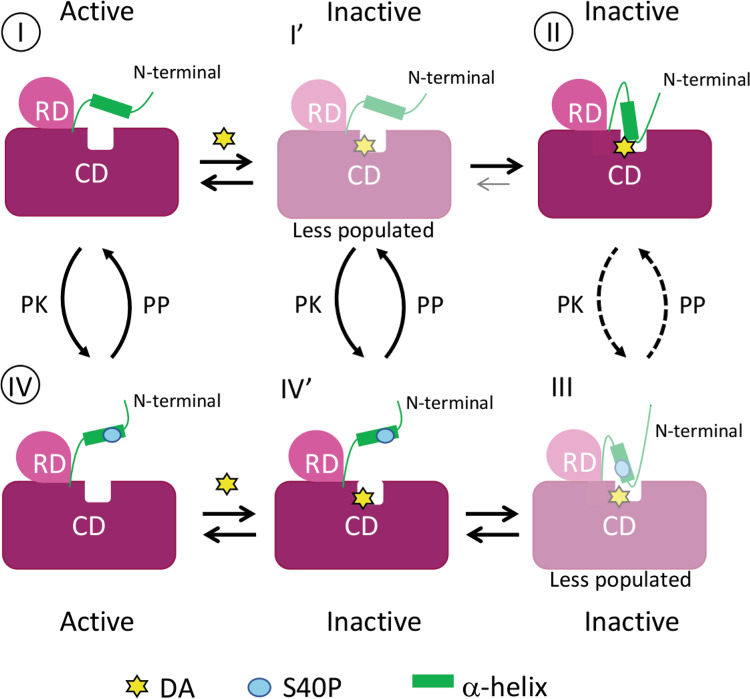
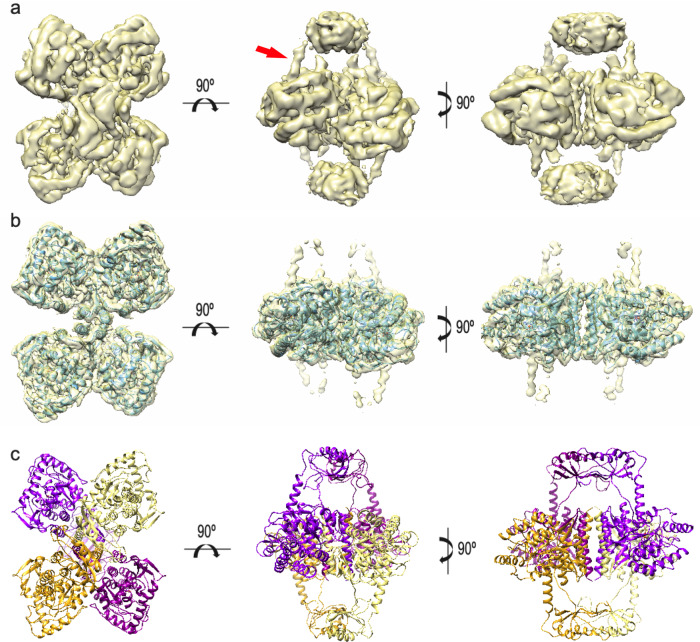
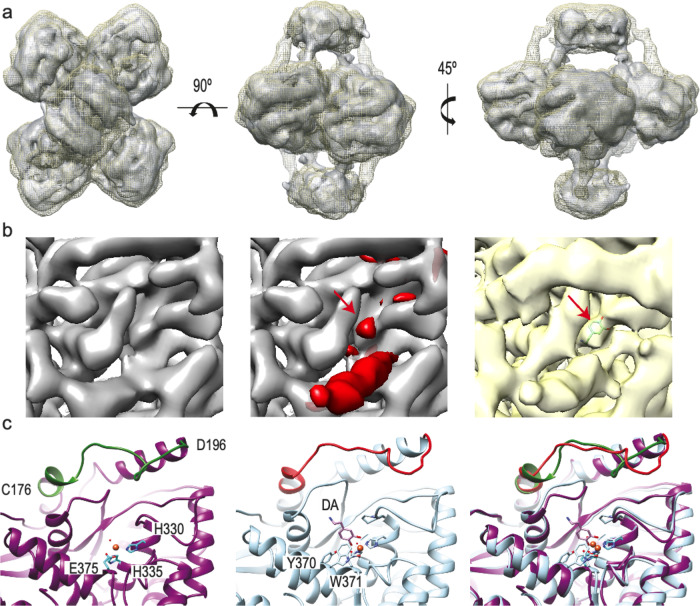
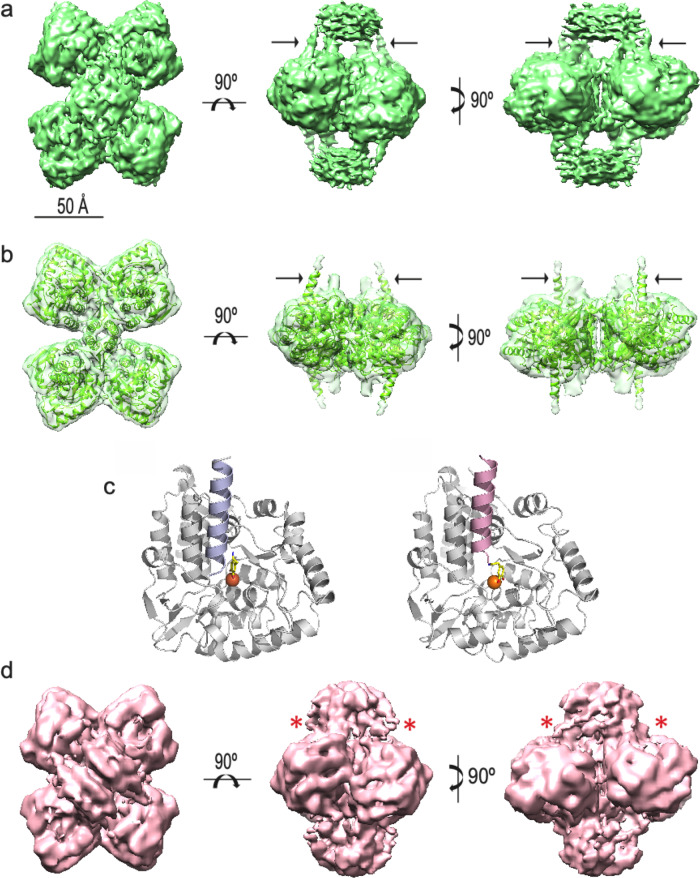
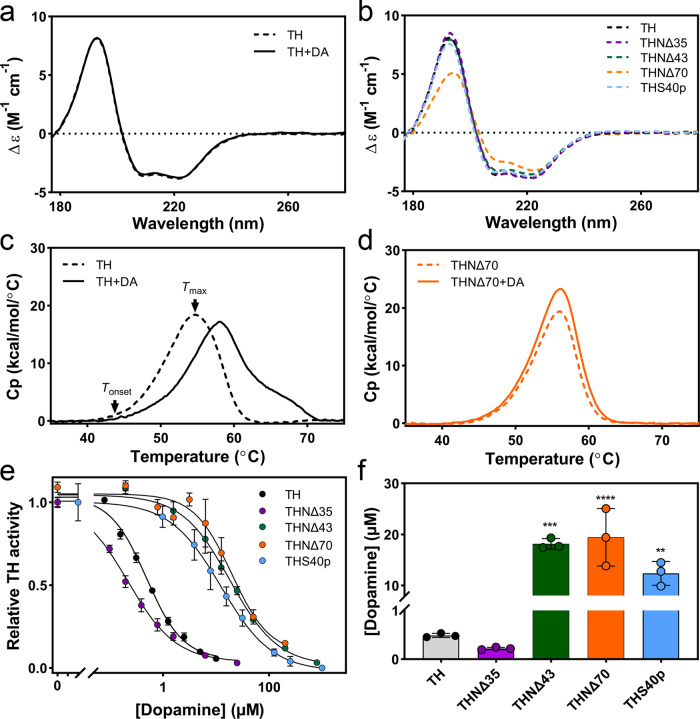
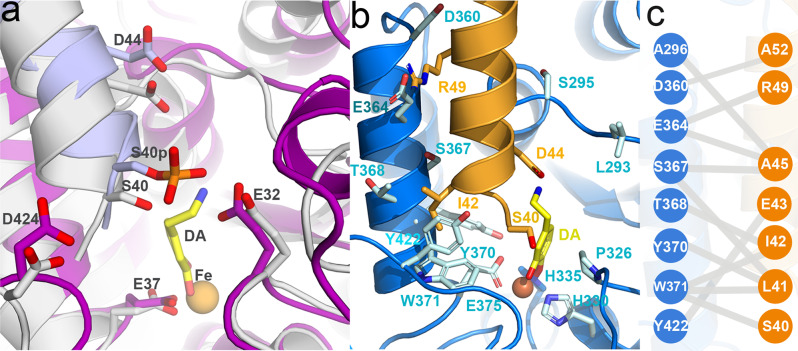
Tyrosine hydroxylase (TH) catalyzes the rate-limiting step in the biosynthesis of dopamine (DA) and other catecholamines, and its dysfunction leads to DA deficiency and parkinsonisms. Inhibition by catecholamines and reactivation by S40 phosphorylation are key regulatory mechanisms of TH activity and conformational stability. We used Cryo-EM to determine the structures of full-length human TH without and with DA, and the structure of S40 phosphorylated TH, complemented with biophysical and biochemical characterizations and molecular dynamics simulations. TH presents a tetrameric structure with dimerized regulatory domains that are separated 15 Å from the catalytic domains. Upon DA binding, a 20-residue α-helix in the flexible N-terminal tail of the regulatory domain is fixed in the active site, blocking it, while S40-phosphorylation forces its egress. The structures reveal the molecular basis of the inhibitory and stabilizing effects of DA and its counteraction by S40-phosphorylation, key regulatory mechanisms for homeostasis of DA and TH.
酪氨酸羟化酶(TH)催化多巴胺(DA)和其他儿茶酚胺生物合成的限速步骤,其功能障碍导致 DA 缺乏和帕金森病。儿茶酚胺的抑制和 S40 磷酸化的再激活是 TH 活性和构象稳定性的关键调节机制。我们使用 Cryo-EM 确定了没有和有 DA 的全长人 TH 的结构,以及 S40 磷酸化 TH 的结构,并辅以生物物理和生化特性以及分子动力学模拟。TH 呈现四聚体结构,其调节域二聚化,与催化域分离 15Å。在 DA 结合后,调节域的柔性 N 端尾部的 20 残基α-螺旋固定在活性位点,阻断它,而 S40 磷酸化则迫使它离开。这些结构揭示了 DA 的抑制和稳定作用及其与 S40 磷酸化的拮抗作用的分子基础,这是 DA 和 TH 内稳态的关键调节机制。