Department of Pulmonary and Critical Care Medicine, NHC Key Laboratory of Respiratory Diseases, Key Site of National Clinical Research Center for Respiratory Disease, Wuhan Clinical Medical Research Center for Chronic Airway Diseases, Tongji Hospital, Tongji Medical College, Huazhong University of Science and Technology, 1095 Jiefang Ave, Wuhan, 430030, China.
Department of Pulmonary and Critical Care Medicine, Center of Respiratory Medicine, National Center for Respiratory Medicine, Institute of Respiratory Medicine, Chinese Academy of Medical Sciences, National Clinical Research Center for Respiratory Diseases, China-Japan Friendship Hospital, 100029, Beijing, China.
Nat Commun. 2022 Jan 10;13(1):114. doi: 10.1038/s41467-021-27684-9.
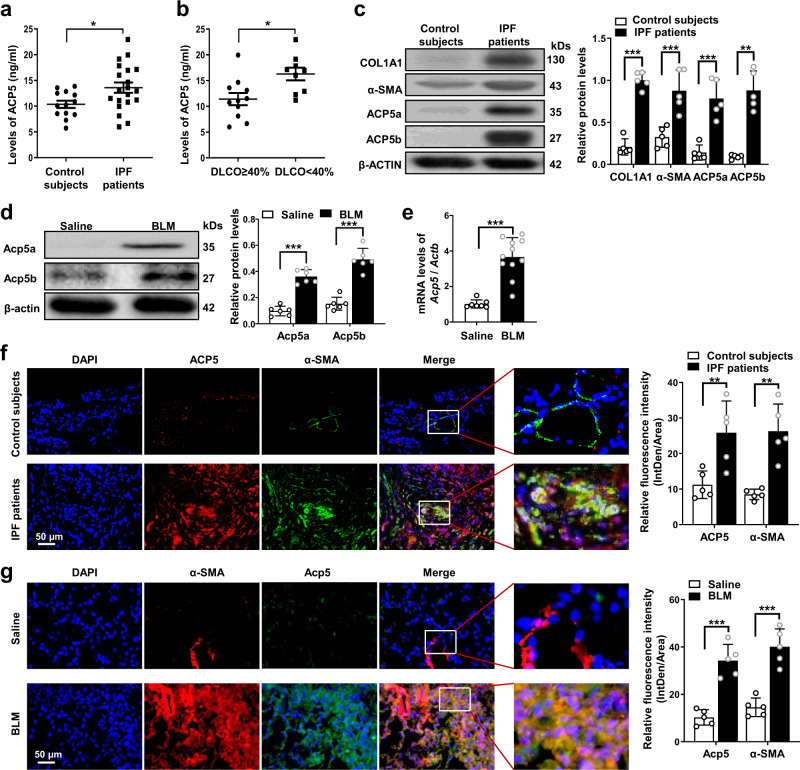
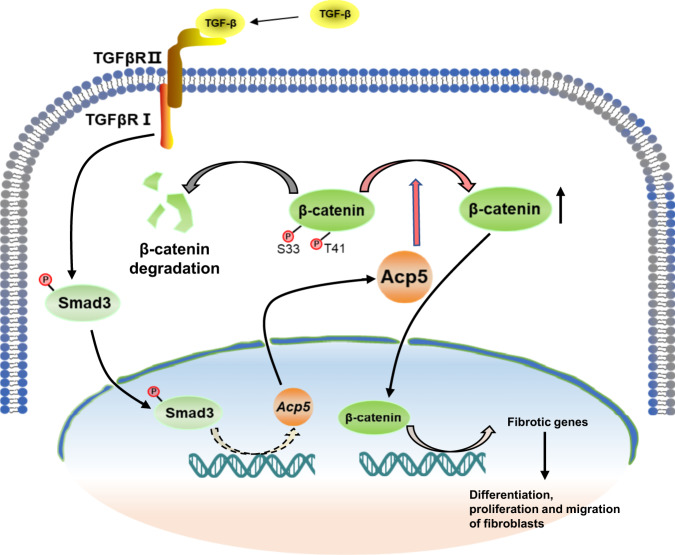
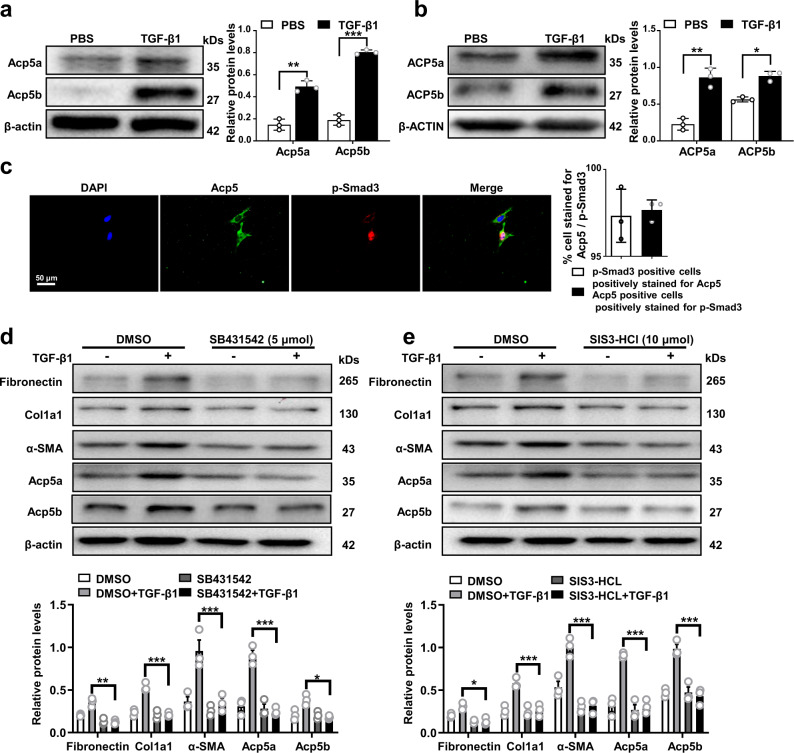
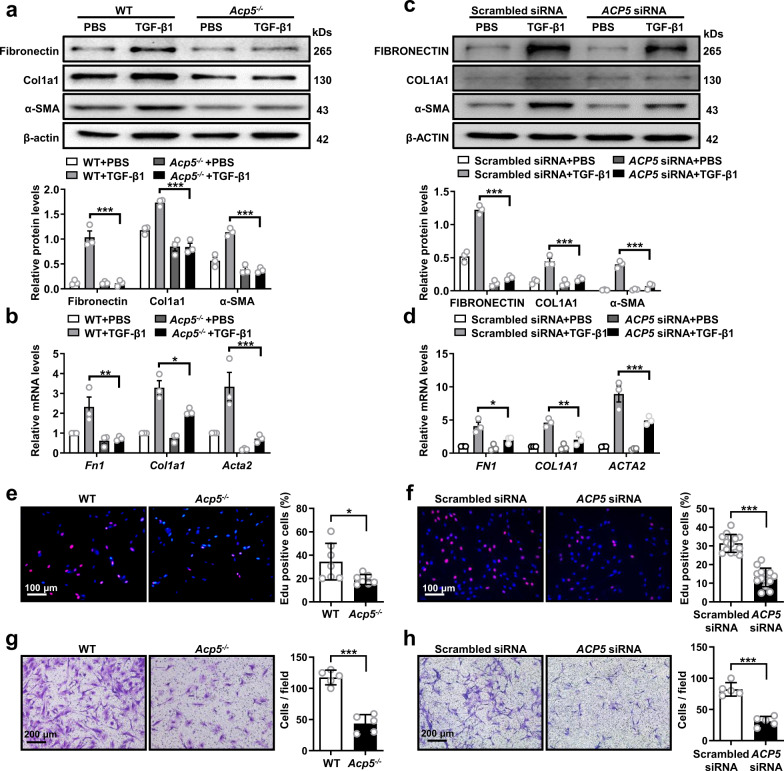
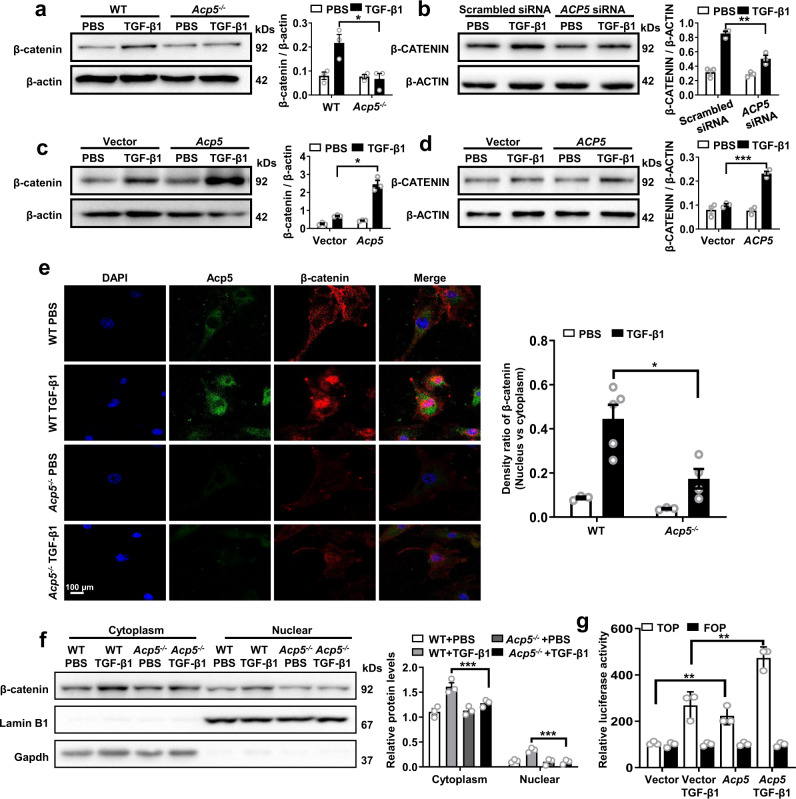
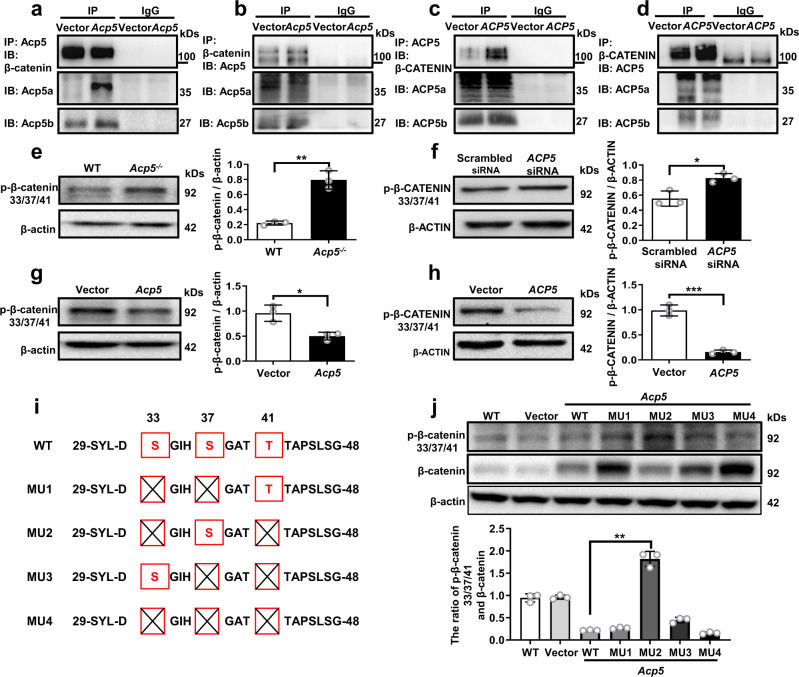
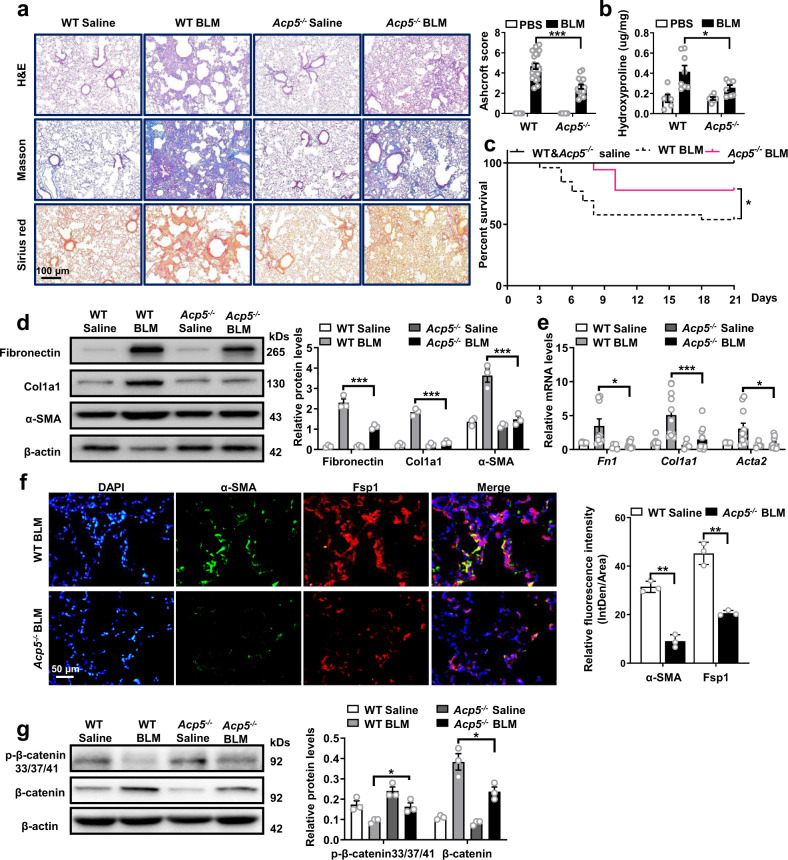
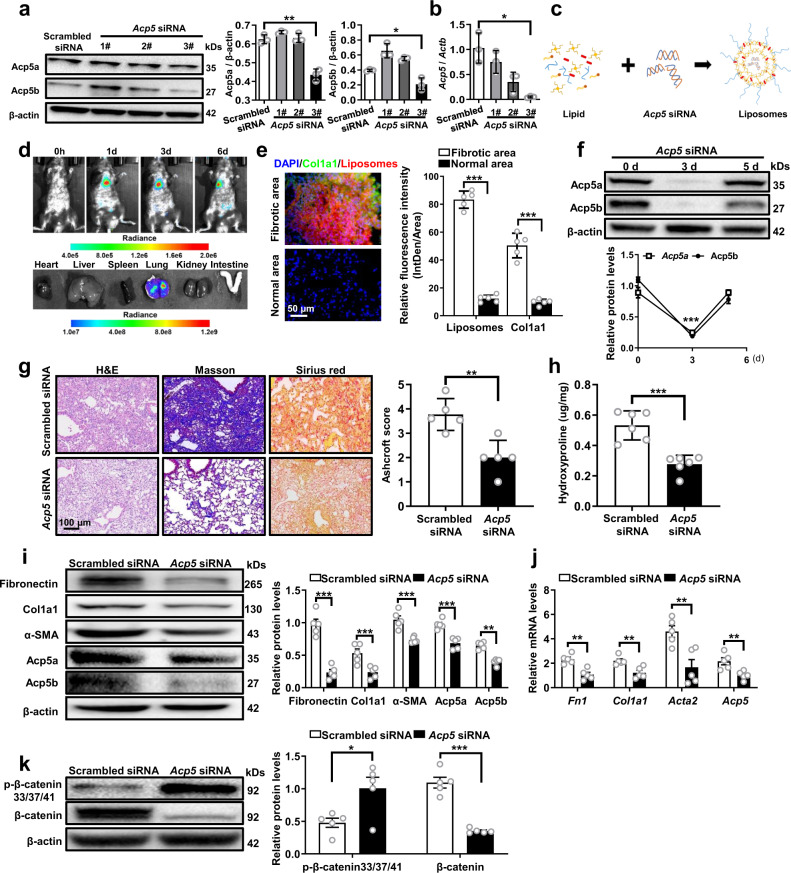
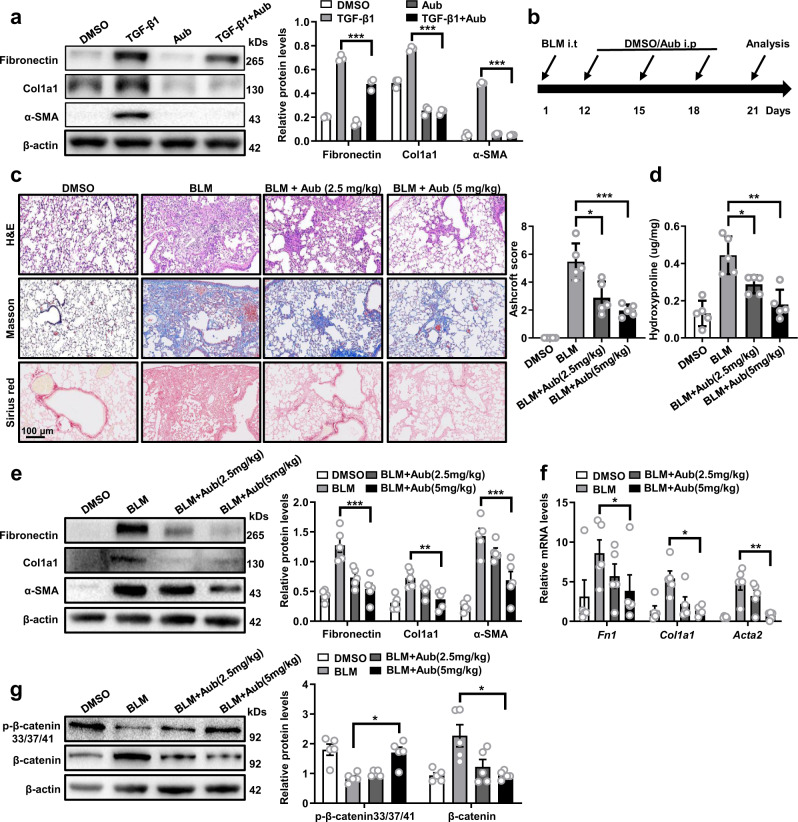
Idiopathic pulmonary fibrosis (IPF) is a fatal interstitial lung disease with limited therapeutic options. Tartrate-resistant acid phosphatase 5 (ACP5) performs a variety of functions. However, its role in IPF remains unclear. Here, we demonstrate that the levels of ACP5 are increased in IPF patient samples and mice with bleomycin (BLM)-induced pulmonary fibrosis. In particular, higher levels of ACP5 are present in the sera of IPF patients with a diffusing capacity of the lungs for carbonmonoxide (DLCO) less than 40% of the predicted value. Additionally, Acp5 deficiency protects mice from BLM-induced lung injury and fibrosis coupled with a significant reduction of fibroblast differentiation and proliferation. Mechanistic studies reveal that Acp5 is upregulated by transforming growth factor-β1 (TGF-β1) in a TGF-β receptor 1 (TGFβR1)/Smad family member 3 (Smad3)-dependent manner, after which Acp5 dephosphorylates p-β-catenin at serine 33 and threonine 41, inhibiting the degradation of β-catenin and subsequently enhancing β-catenin signaling in the nucleus, which promotes the differentiation, proliferation and migration of fibroblast. More importantly, the treatment of mice with Acp5 siRNA-loaded liposomes or Acp5 inhibitor reverses established lung fibrosis. In conclusions, Acp5 is involved in the initiation and progression of pulmonary fibrosis and strategies aimed at silencing or suppressing Acp5 could be considered as potential therapeutic approaches against pulmonary fibrosis.
特发性肺纤维化(IPF)是一种致命的间质性肺疾病,治疗选择有限。酸性磷酸酶 5(ACP5)具有多种功能。然而,其在 IPF 中的作用尚不清楚。在这里,我们证明 ACP5 的水平在 IPF 患者样本和博来霉素(BLM)诱导的肺纤维化小鼠中增加。特别是,在弥散量低于预测值的 40%的 IPF 患者血清中,ACP5 的水平更高。此外,Acp5 缺乏可保护小鼠免受 BLM 诱导的肺损伤和纤维化,同时显著减少成纤维细胞分化和增殖。机制研究表明,Acp5 在 TGF-β1(TGF-β1)的作用下被上调,这是一种 TGF-β 受体 1(TGFβR1)/Smad 家族成员 3(Smad3)依赖性方式,之后 Acp5 将 p-β-catenin 磷酸化丝氨酸 33 和苏氨酸 41 去磷酸化,抑制 β-catenin 的降解,随后增强核内的 β-catenin 信号,促进成纤维细胞的分化、增殖和迁移。更重要的是,用 Acp5 siRNA 负载的脂质体或 Acp5 抑制剂治疗可逆转已建立的肺纤维化。总之,Acp5 参与了肺纤维化的发生和发展,针对沉默或抑制 Acp5 的策略可被视为治疗肺纤维化的潜在方法。