Beijing Advanced Innovation Center for Structural Biology, Beijing Frontier Research Center for Biological Structure, MOE Key Laboratory of Bioorganic Phosphorus Chemistry & Chemical Biology, School of Pharmaceutical Sciences, Tsinghua University, Beijing, 100084, China.
Tsinghua-Peking Center for Life Sciences, Beijing, 100084, China.
Nat Commun. 2022 Jan 10;13(1):105. doi: 10.1038/s41467-021-27670-1.
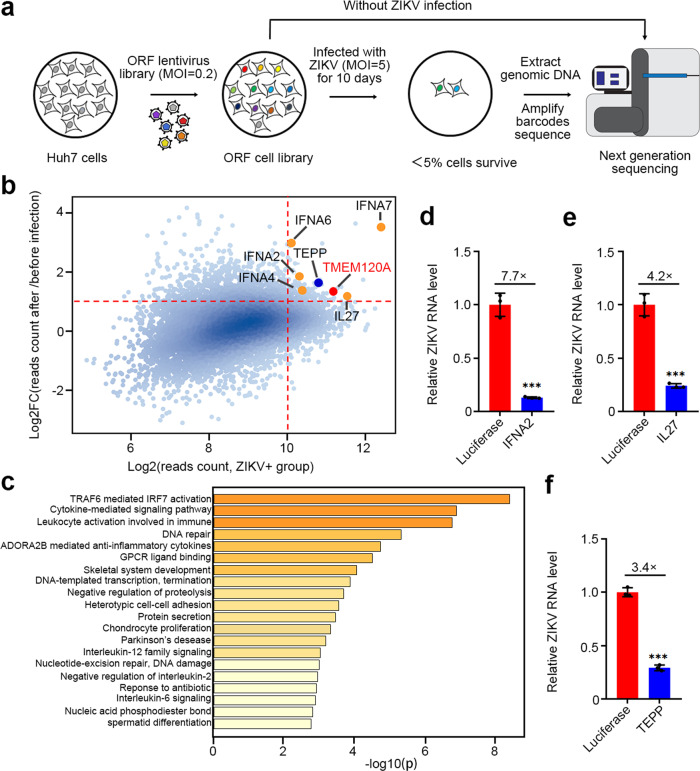
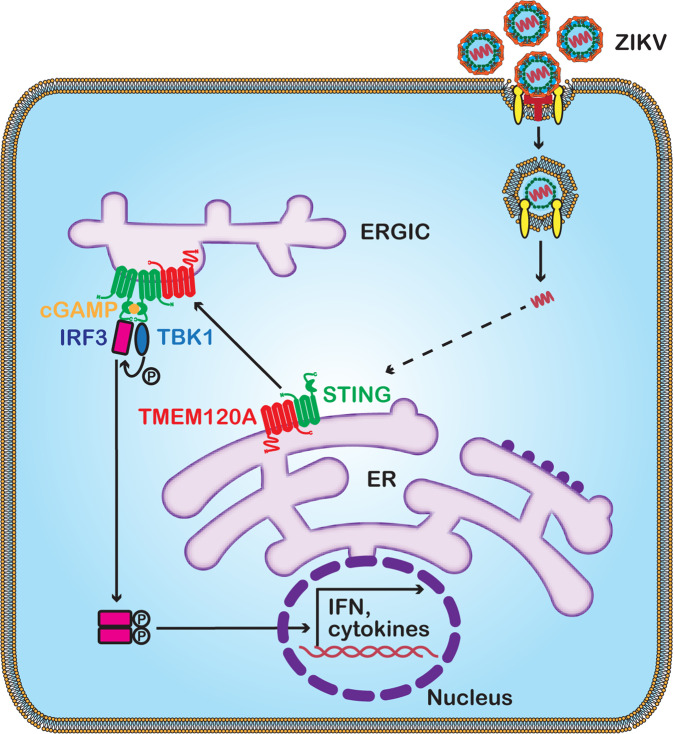
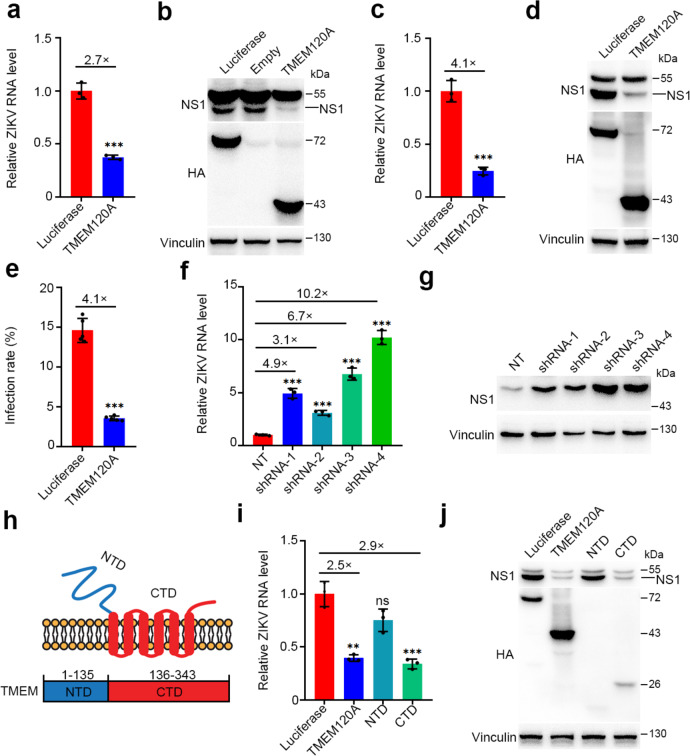
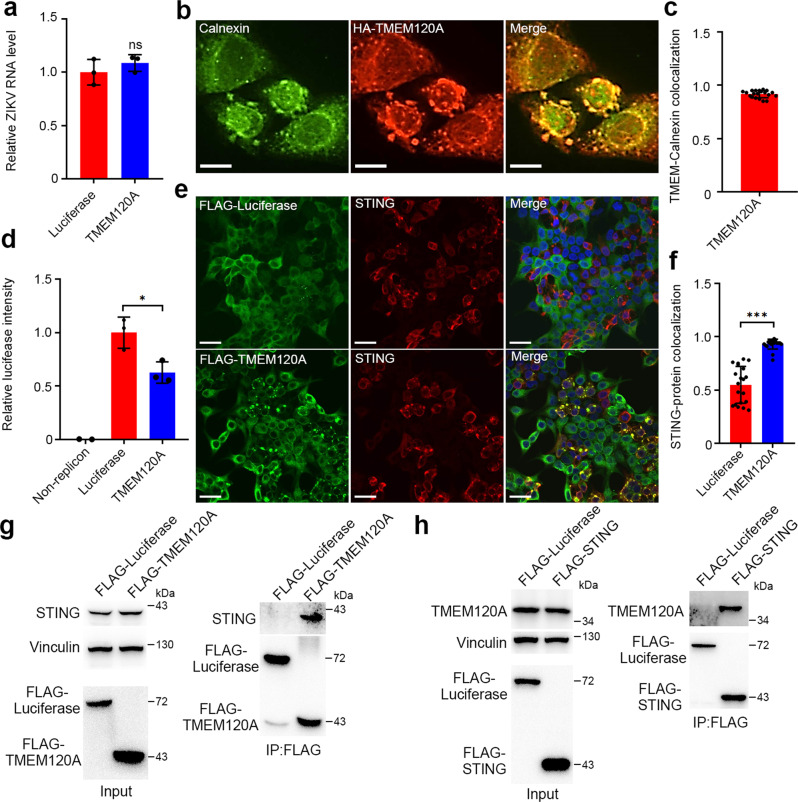
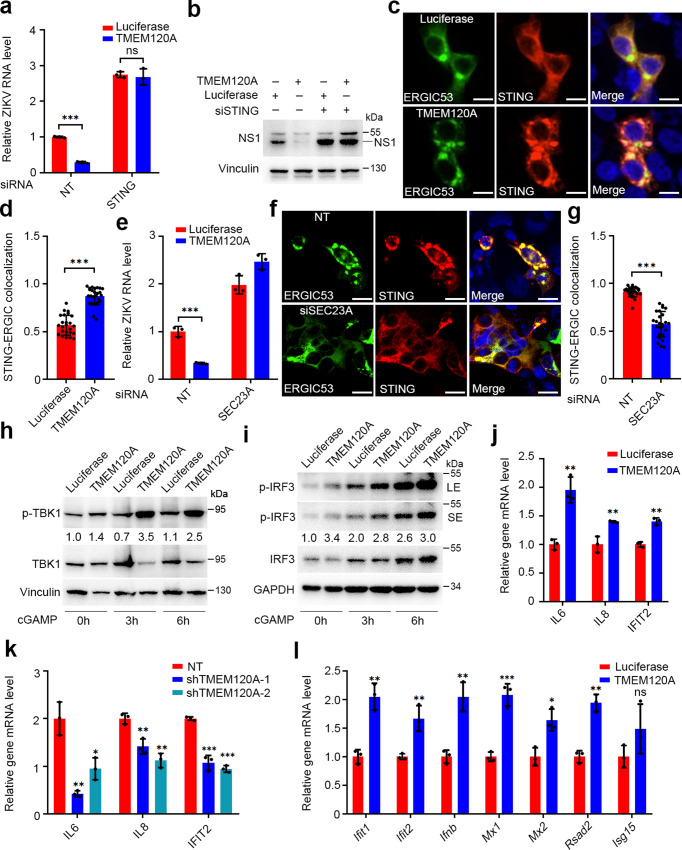
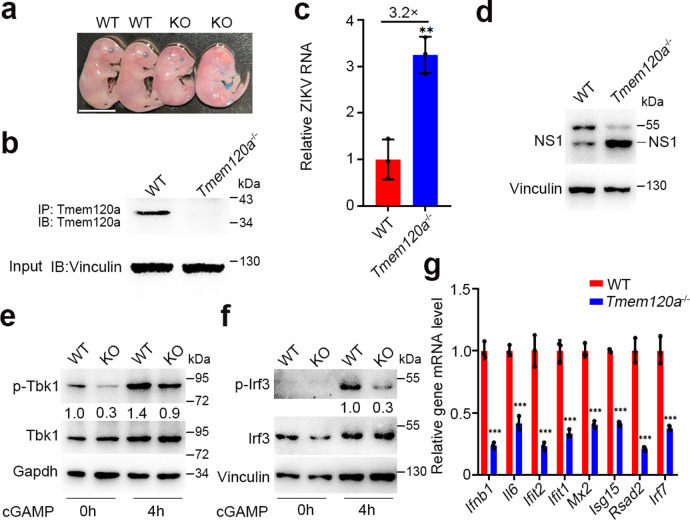
Zika virus (ZIKV) infection can be associated with neurological pathologies, such as microcephaly in newborns and Guillain-Barre syndrome in adults. Effective therapeutics are currently not available. As such, a comprehensive understanding of virus-host interactions may guide the development of medications for ZIKV. Here we report a human genome-wide overexpression screen to identify host factors that regulate ZIKV infection and find TMEM120A as a ZIKV restriction factor. TMEM120A overexpression significantly inhibits ZIKV replication, while TMEM120A knockdown increases ZIKV infection in cell lines. Moreover, Tmem120a knockout in mice facilitates ZIKV infection in primary mouse embryonic fibroblasts (MEF) cells. Mechanistically, the antiviral activity of TMEM120A is dependent on STING, as TMEM120A interacts with STING, promotes the translocation of STING from the endoplasmic reticulum (ER) to ER-Golgi intermediate compartment (ERGIC) and enhances the phosphorylation of downstream TBK1 and IRF3, resulting in the expression of multiple antiviral cytokines and interferon-stimulated genes. In summary, our gain-of-function screening identifies TMEM120A as a key activator of the antiviral signaling of STING.
寨卡病毒(ZIKV)感染可引起新生儿小头畸形和成人吉兰-巴雷综合征等神经病变。目前尚无有效的治疗方法。因此,全面了解病毒-宿主相互作用可能有助于开发治疗寨卡病毒的药物。在这里,我们进行了一项人类全基因组过表达筛选,以鉴定调控寨卡病毒感染的宿主因子,并发现 TMEM120A 是寨卡病毒的限制因子。TMEM120A 的过表达显著抑制寨卡病毒的复制,而 TMEM120A 的敲低则增加细胞系中的寨卡病毒感染。此外,Tmem120a 在小鼠中的敲除促进了原代小鼠胚胎成纤维细胞(MEF)中的寨卡病毒感染。在机制上,TMEM120A 的抗病毒活性依赖于 STING,因为 TMEM120A 与 STING 相互作用,促进 STING 从内质网(ER)易位到内质网-高尔基中间区(ERGIC),并增强下游 TBK1 和 IRF3 的磷酸化,从而导致多种抗病毒细胞因子和干扰素刺激基因的表达。总之,我们的功能获得性筛选鉴定出 TMEM120A 是 STING 抗病毒信号的关键激活剂。