Institute of Botany, Department of Invasion Ecology, Czech Academy of Sciences, 25243, Průhonice, Czech Republic.
Department of Ecology, Faculty of Science, Charles University, Viničná 7, 12844, Prague, Czech Republic.
Sci Rep. 2022 Jan 10;12(1):338. doi: 10.1038/s41598-021-02870-3.
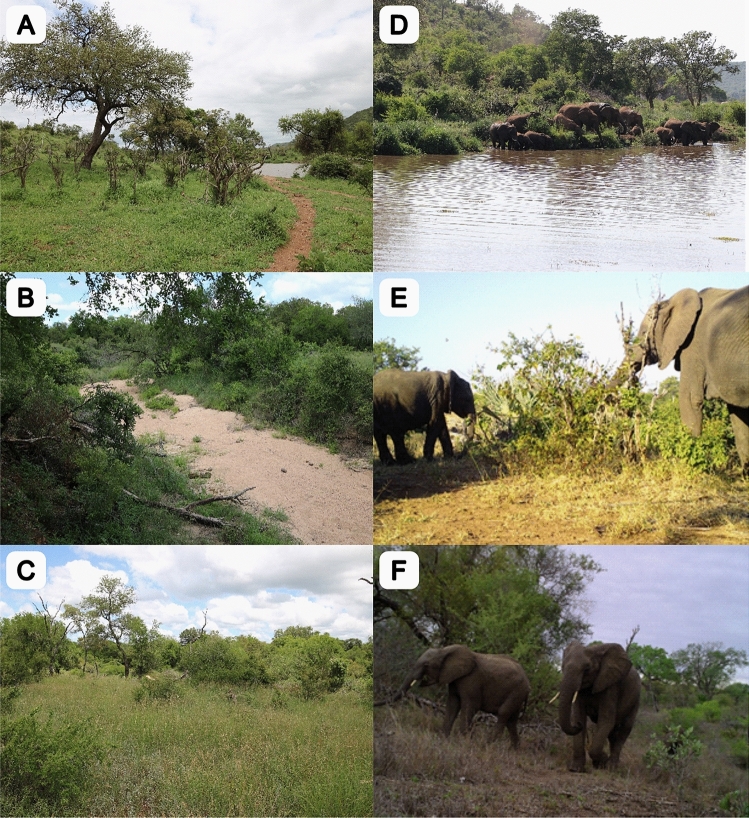
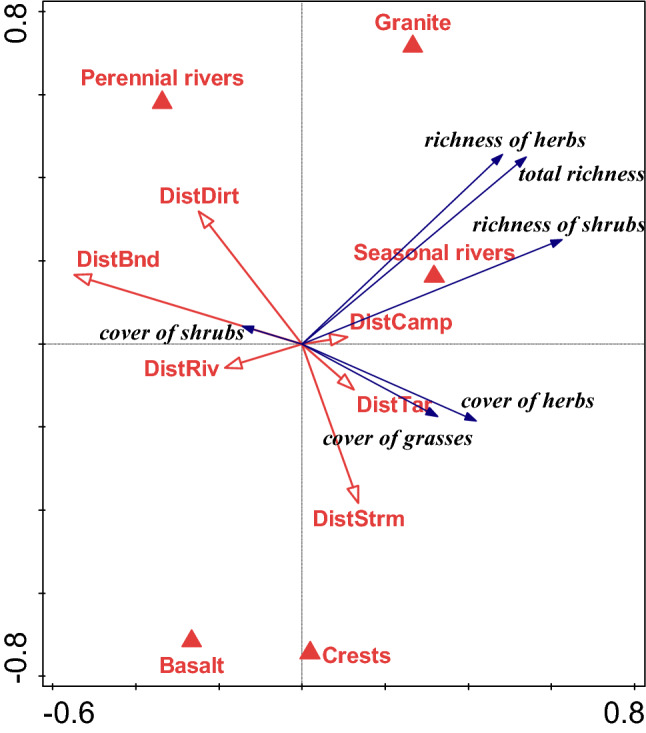
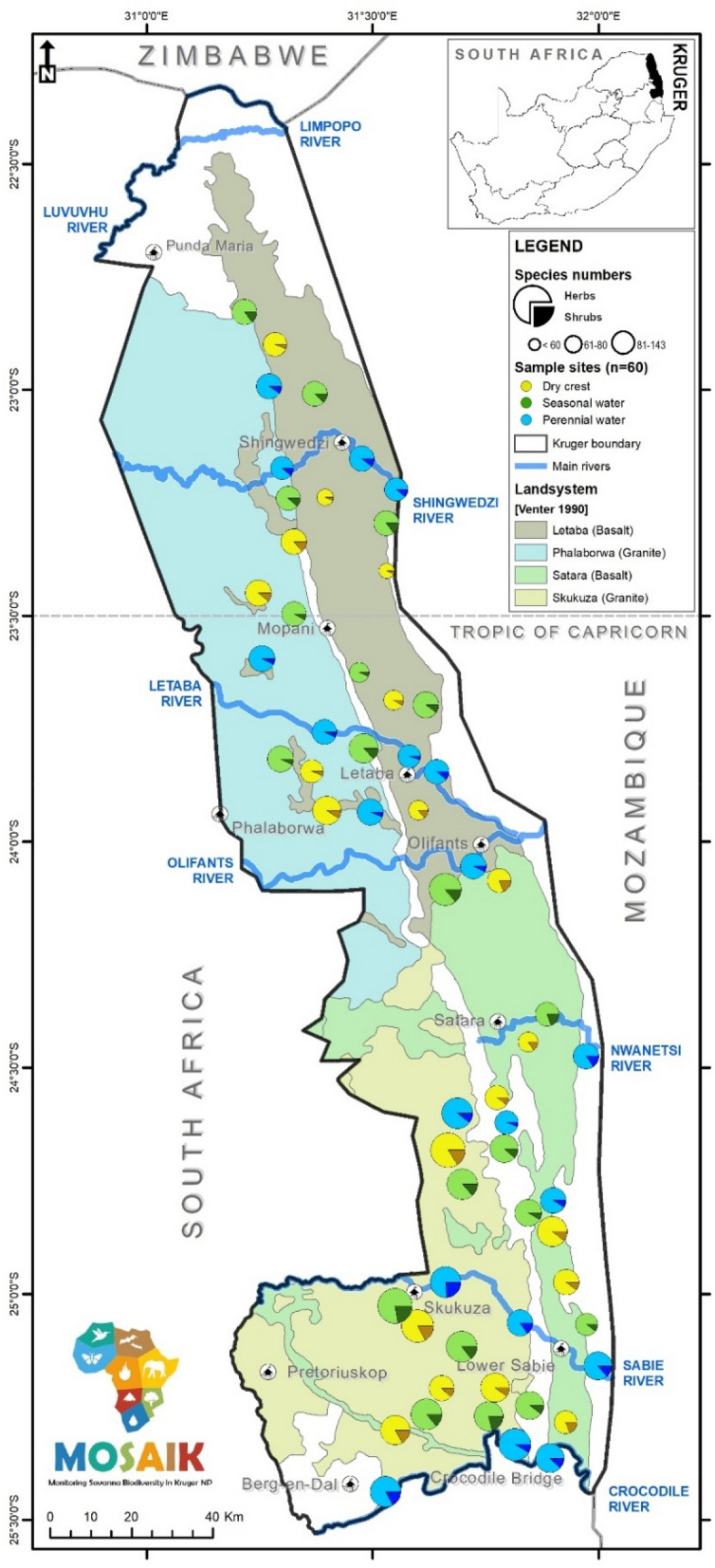
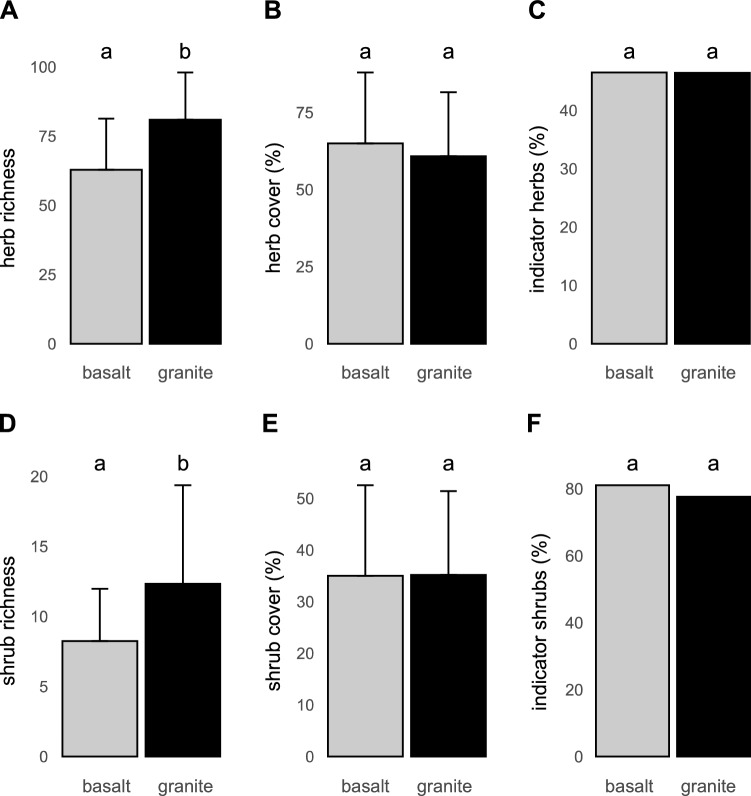
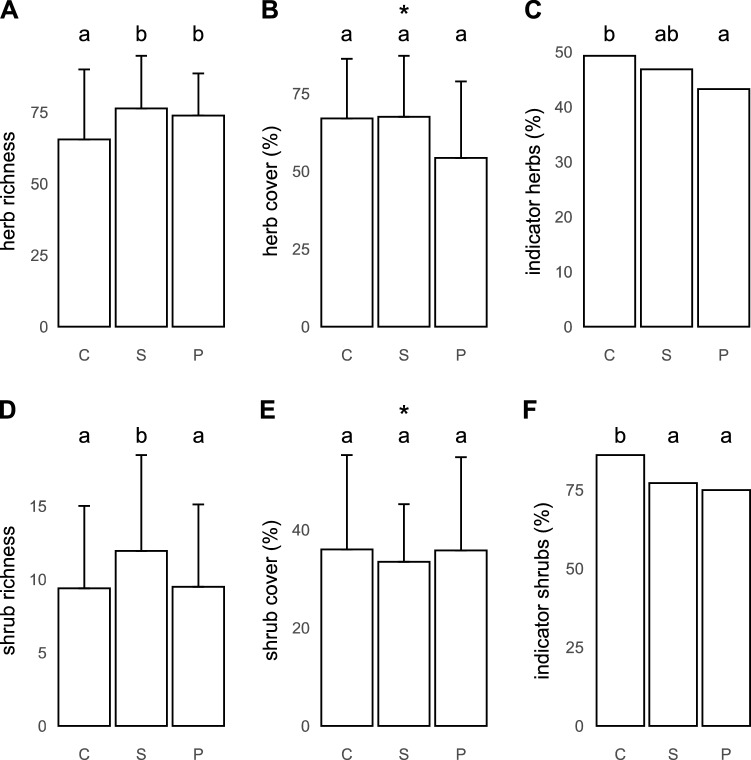
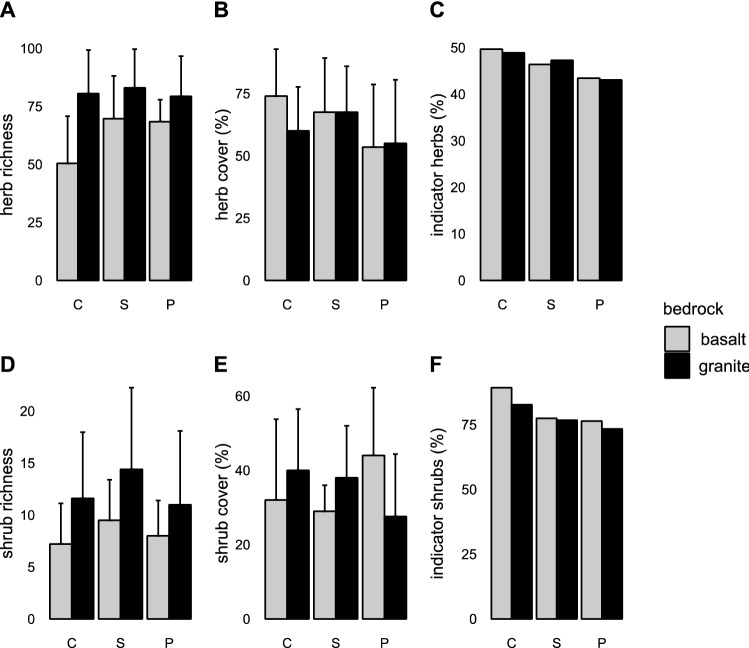
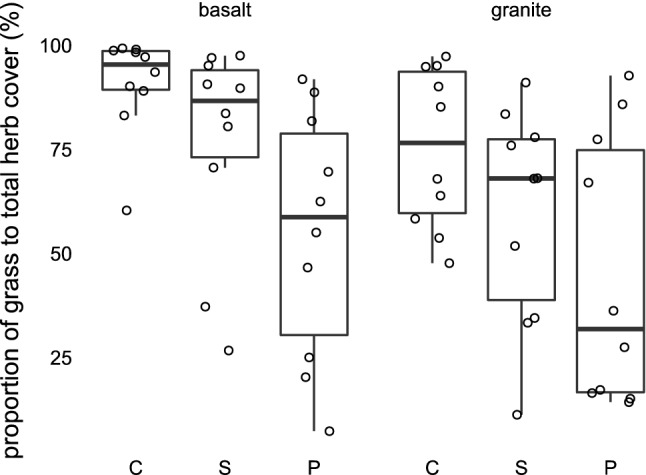
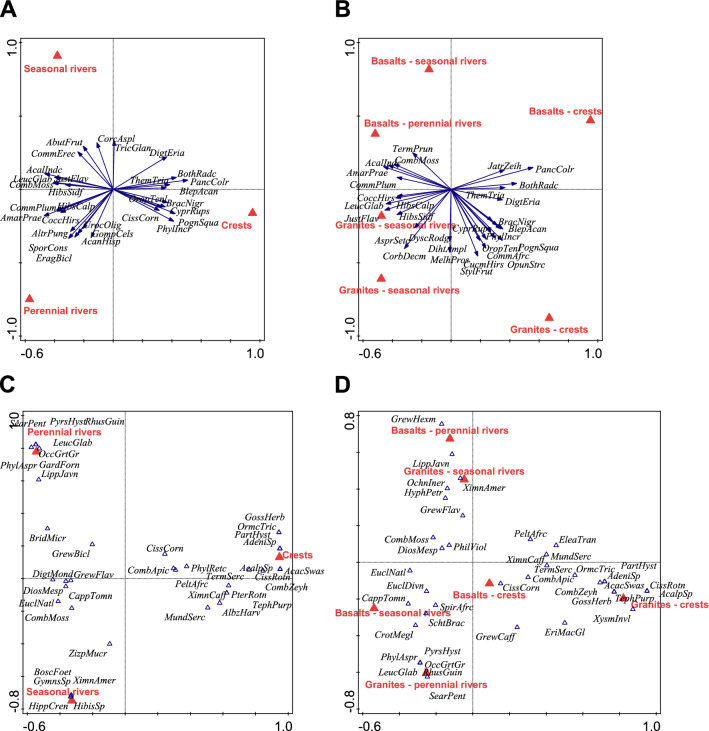
To identify factors that drive plant species richness in South-African savanna and explore their relative importance, we sampled plant communities across habitats differing in water availability, disturbance, and bedrock, using the Kruger National Park as a model system. We made plant inventories in 60 plots of 50 × 50 m, located in three distinct habitats: (i) at perennial rivers, (ii) at seasonal rivers with water available only during the rainy season, and (iii) on crests, at least ~ 5 km away from any water source. We predicted that large herbivores would utilise seasonal rivers' habitats less intensely than those along perennial rivers where water is available throughout the year, including dry periods. Plots on granite harboured more herbaceous and shrub species than plots on basalt. The dry crests were poorer in herb species than both seasonal and perennial rivers. Seasonal rivers harboured the highest numbers of shrub species, in accordance with the prediction of the highest species richness at relatively low levels of disturbance and low stress from the lack of water. The crests, exposed to relatively low pressure from grazing but stressed by the lack of water, are important from the conservation perspective because they harbour typical, sometimes rare savanna species, and so are seasonal rivers whose shrub richness is stimulated and maintained by the combination of moderate disturbance imposed by herbivores and position in the middle of the water availability gradient. To capture the complexity of determinants of species richness in KNP, we complemented the analysis of the above local factors by exploring large-scale factors related to climate, vegetation productivity, the character of dominant vegetation, and landscape features. The strongest factor was temperature; areas with the highest temperatures reveal lower species richness. Our results also suggest that Colophospermum mopane, a dominant woody species in the north of KNP is not the ultimate cause of the lower plant diversity in this part of the park.
为了确定驱动南非稀树草原植物物种丰富度的因素,并探讨它们的相对重要性,我们以克鲁格国家公园为模型系统,在水分可用性、干扰和基岩不同的生境中采样植物群落。我们在 60 个 50×50 米的样方中进行了植物清查,这些样方位于三个不同的生境中:(i)在常年河流,(ii)在季节性河流,只有在雨季才有水,以及 (iii)在离任何水源至少 5 公里的山脊上。我们预测,大型食草动物对季节性河流生境的利用强度将低于常年河流,因为常年河流全年都有水源,包括干旱期。花岗岩上的样方比玄武岩上的样方含有更多的草本和灌木物种。干旱的山脊上的草本物种比季节性和常年河流都要少。季节性河流的灌木物种数量最多,这符合在相对较低的干扰水平和缺乏水分的低压力下,物种丰富度最高的预测。山脊暴露在相对较低的放牧压力下,但因缺水而受到压力,从保护的角度来看很重要,因为它们拥有典型的、有时是稀有的稀树草原物种,而且是季节性河流,其灌木丰富度受到食草动物适度干扰和位于水分可用性梯度中间的位置的刺激和维持。为了捕捉克鲁格国家公园物种丰富度决定因素的复杂性,我们通过探索与气候、植被生产力、优势植被特征和景观特征相关的大尺度因素,补充了对上述局部因素的分析。最强的因素是温度;温度最高的地区物种丰富度较低。我们的研究结果还表明,在克鲁格国家公园北部占主导地位的木本物种山龙眼不是该公园这一部分植物多样性较低的最终原因。