Sport and Exercise Science, University of Northampton, University Drive, NN1 5PH, Northampton, UK.
Sport and Exercise Physiology, University of Northampton, University Drive, Northampton, NN1 5PH, UK.
Sci Rep. 2022 Jan 10;12(1):356. doi: 10.1038/s41598-021-04092-z.
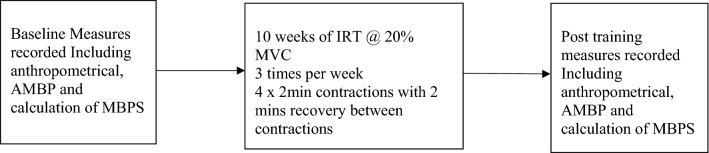
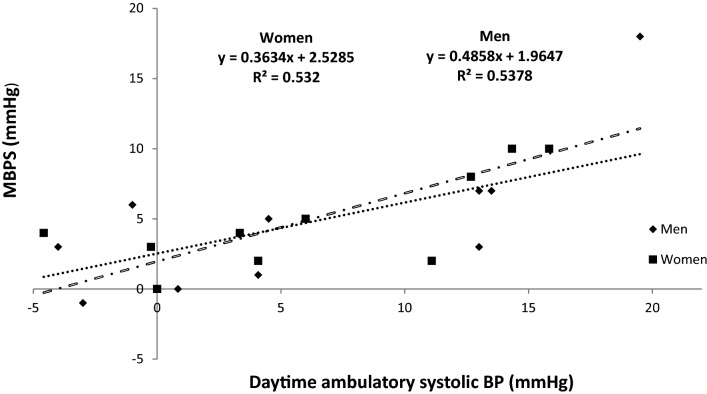
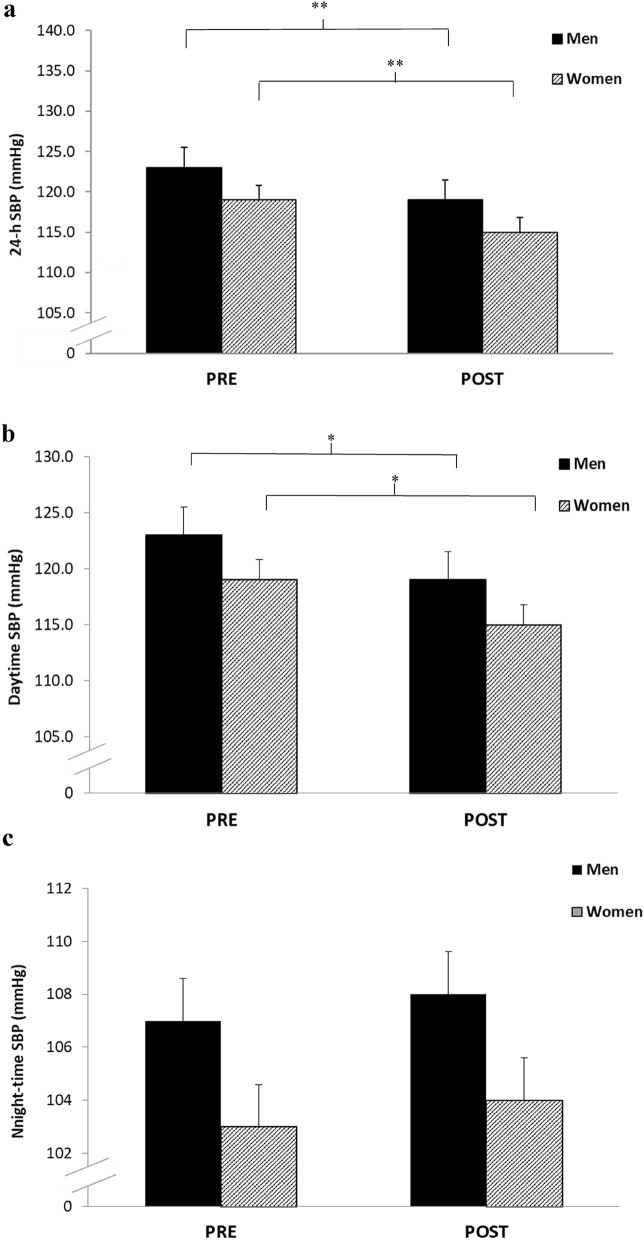
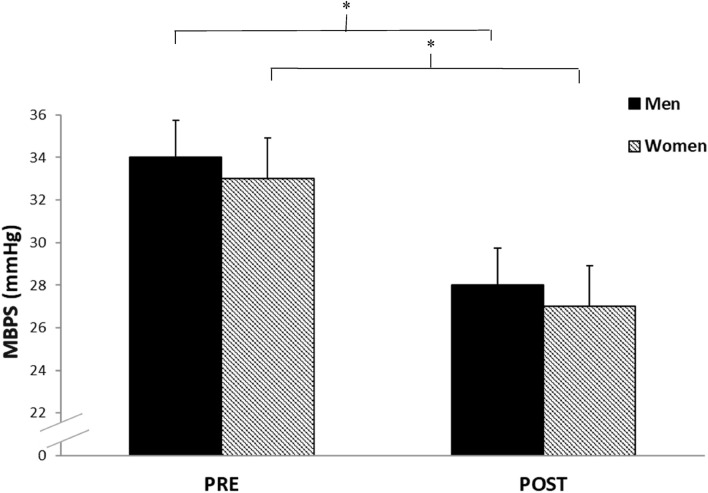
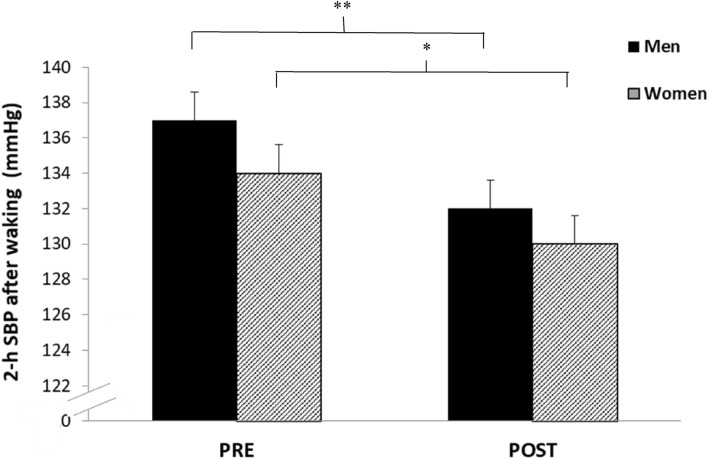
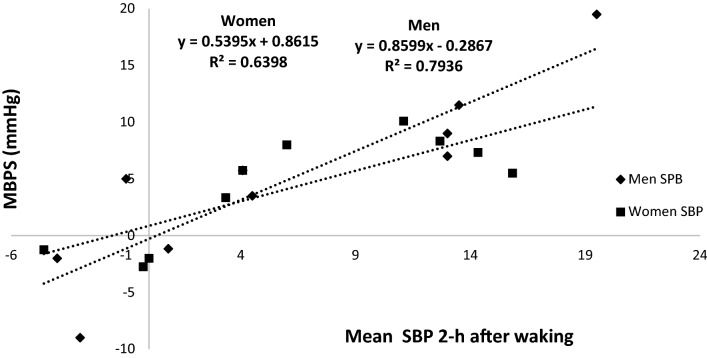
Despite the reported association between diurnal variations in ambulatory blood pressure (BP) and elevated cardiovascular disease risk, little is known regarding the effects of isometric resistance training (IRT), a practical BP-lowering intervention, on ambulatory BP and morning BP surge (MBPS). Thus, we investigated whether (i) IRT causes reductions in ambulatory BP and MBPS, in young normotensives, and (ii) if there are any sex differences in these changes. Twenty normotensive individuals (mean 24-h SBP = 121 ± 7, DBP = 67 ± 6 mmHg) undertook 10-weeks of bilateral-leg IRT (4 × 2-min/2-min rest, at 20% maximum voluntary contraction (MVC) 3 days/week). Ambulatory BP and MBPS (mean systolic BP (SBP) 2 h after waking minus the lowest sleeping 1 h mean SBP) was measures pre- and post-training. There were significant reductions in 24-h ambulatory SBP in men (- 4 ± 2 mmHg, P = 0.0001) and women (- 4 ± 2 mmHg, P = 0.0001) following IRT. Significant reductions were also observed in MBPS (- 6 ± 8 mmHg, p = 0.044; - 6 ± 7 mmHg, P = 0.019), yet there were no significant differences between men and women in these changes, and 24-h ambulatory diastolic BP remained unchanged. Furthermore, a significant correlation was identified between the magnitude of the change in MBPS and the magnitude of changes in the mean 2-h SBP after waking for both men and women (men, r = 0.89, P = 0.001; women, r = 0.74, P = 0.014). These findings add further support to the idea that IRT, as practical lifestyle intervention, is effective in significantly lowering ambulatory SBP and MBPS and might reduce the incidence of adverse cardiovascular events that often occur in the morning.
尽管有报道称动态血压(BP)的日间变化与心血管疾病风险升高有关,但对于等长阻力训练(IRT)这种实用的降压干预措施对动态血压和晨峰血压(MBPS)的影响知之甚少。因此,我们研究了 IRT 是否会导致年轻的血压正常者的动态血压和 MBPS 降低,以及这些变化是否存在性别差异。20 名血压正常者(平均 24 小时 SBP = 121 ± 7mmHg,DBP = 67 ± 6mmHg)接受了 10 周的双侧腿部 IRT(4×2 分钟/2 分钟休息,20%最大自主收缩(MVC),每周 3 天)。在训练前后测量了动态血压和 MBPS(平均醒来后 2 小时 SBP 减去最低睡眠 1 小时平均 SBP)。男性(-4 ± 2mmHg,P=0.0001)和女性(-4 ± 2mmHg,P=0.0001)的 24 小时动态 SBP 均有显著降低。MBPS 也显著降低(-6 ± 8mmHg,p=0.044;-6 ± 7mmHg,P=0.019),但男性和女性之间的变化无显著差异,24 小时动态舒张压保持不变。此外,还发现男性和女性的 MBPS 变化幅度与醒来后 2 小时平均 SBP 变化幅度之间存在显著相关性(男性,r=0.89,P=0.001;女性,r=0.74,P=0.014)。这些发现进一步支持了 IRT 作为一种实用的生活方式干预措施,可以有效降低动态 SBP 和 MBPS,并可能降低经常在早上发生的不良心血管事件的发生率。