Division of Cardiovascular Sciences, University of Manchester, Manchester, United Kingdom.
Division of Diabetes, Endocrinology & Gastroenterology, University of Manchester, Manchester, United Kingdom.
Heart Rhythm. 2019 Feb;16(2):298-307. doi: 10.1016/j.hrthm.2018.08.026. Epub 2018 Aug 29.
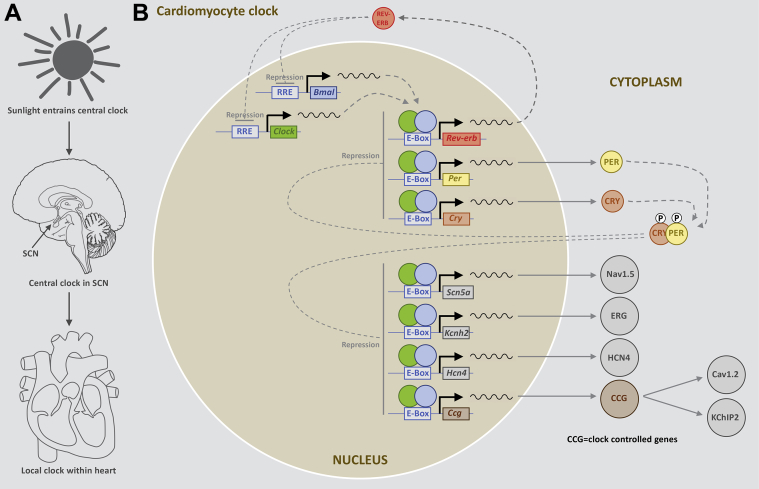
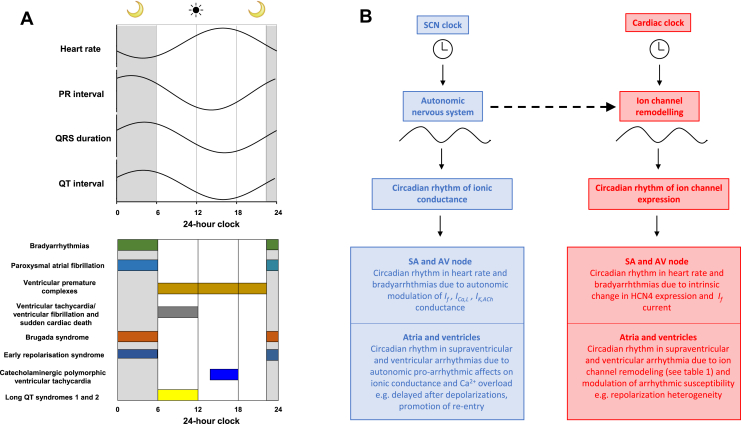
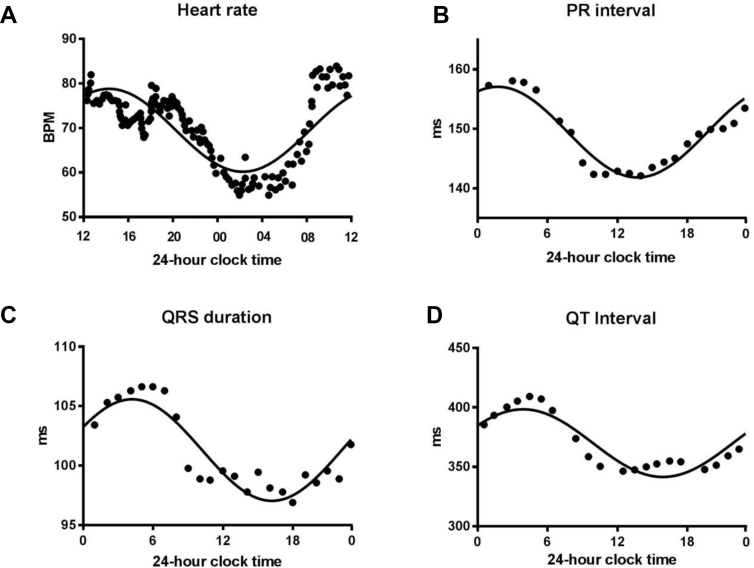
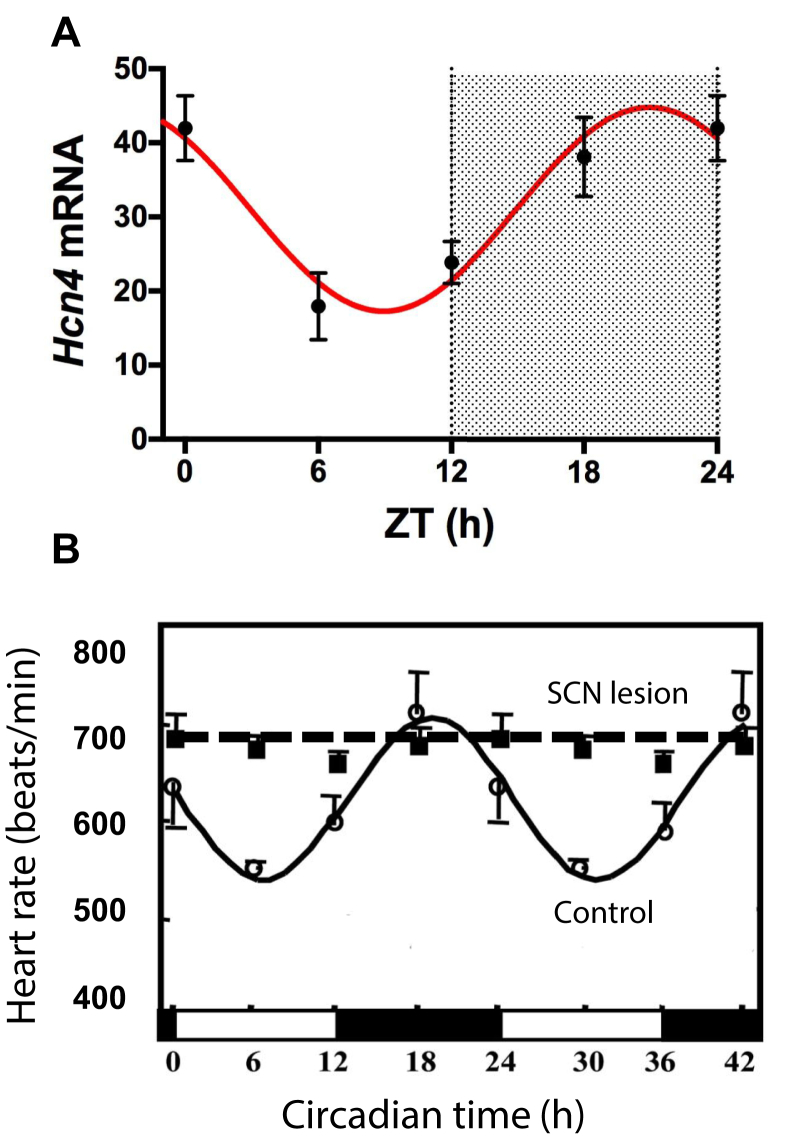
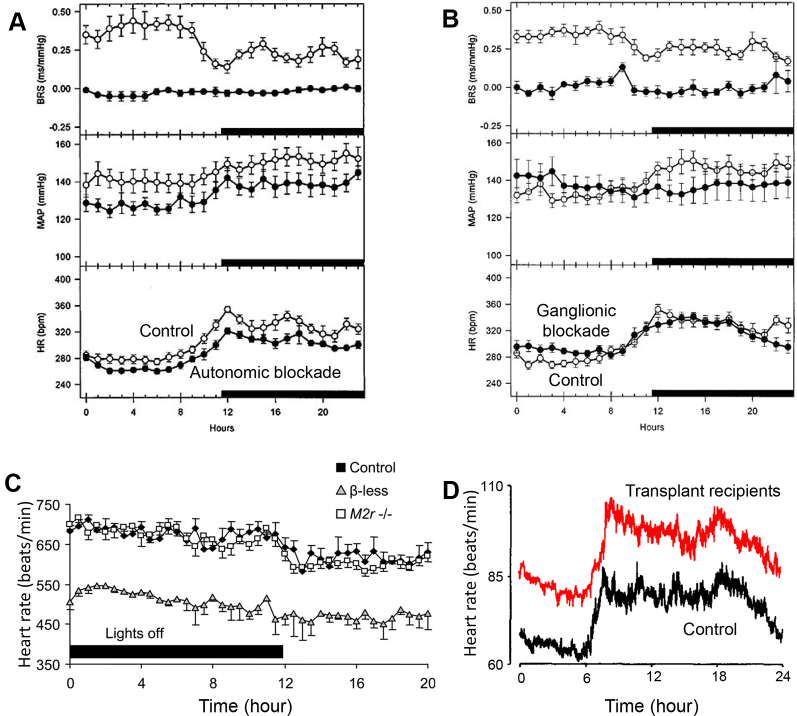
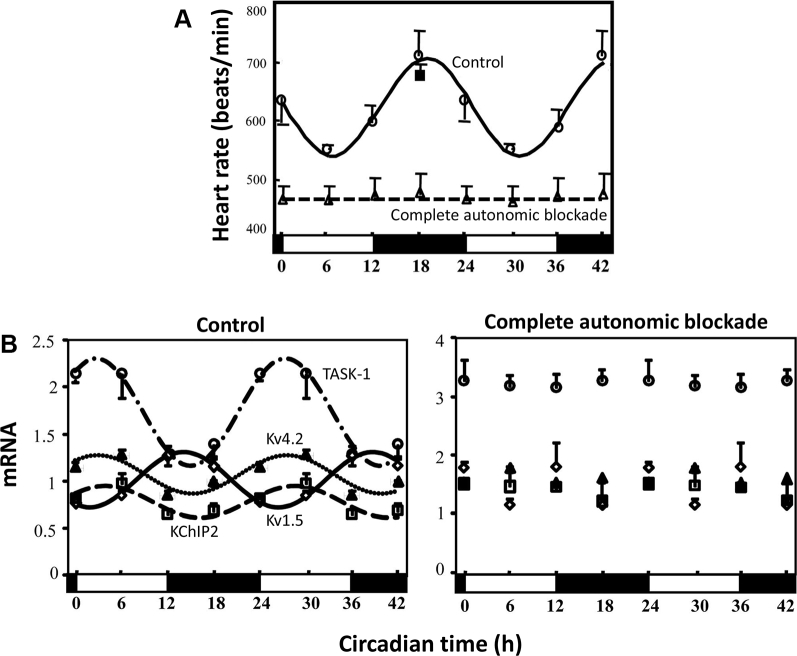
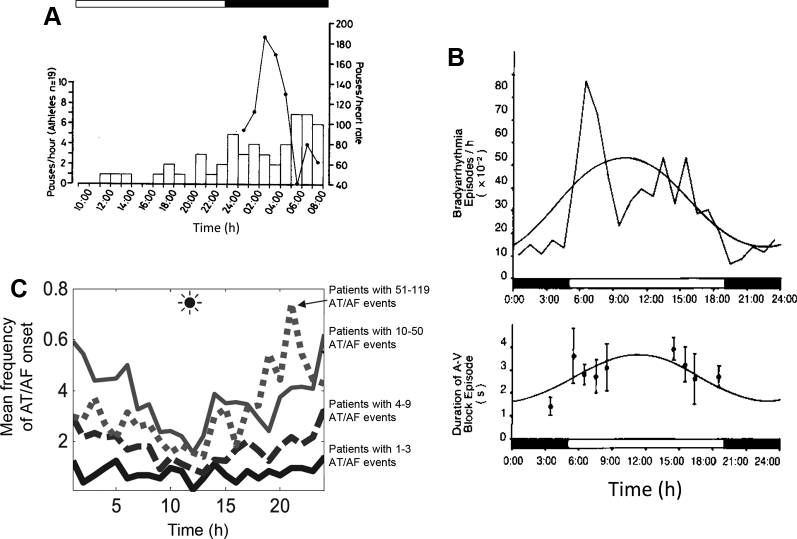
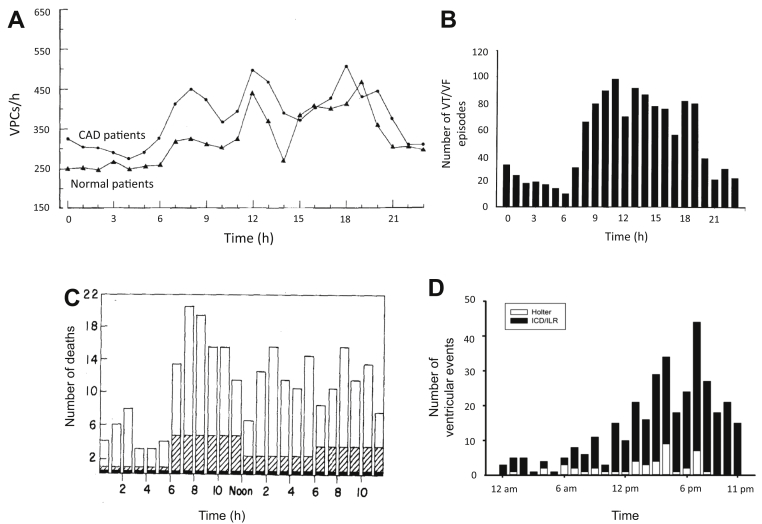
Cardiac arrhythmias are a leading cause of cardiovascular death. It has long been accepted that life-threatening cardiac arrhythmias (ventricular tachycardia, ventricular fibrillation, and sudden cardiac death) are more likely to occur in the morning after waking. It is perhaps less well recognized that there is a circadian rhythm in cardiac pacemaking and other electrophysiological properties of the heart. In addition, there is a circadian rhythm in other arrhythmias, for example, bradyarrhythmias and supraventricular arrhythmias. Two mechanisms may underlie this finding: (1) a central circadian clock in the suprachiasmatic nucleus in the hypothalamus may directly affect the electrophysiology of the heart and arrhythmogenesis via various neurohumoral factors, particularly the autonomic nervous system; or (2) a local circadian clock in the heart itself (albeit under the control of the central clock) may drive a circadian rhythm in the expression of ion channels in the heart, which in turn varies arrhythmic substrate. This review summarizes the current understanding of the circadian rhythm in cardiac electrophysiology, arrhythmogenesis, and the underlying molecular mechanisms.
心律失常是心血管死亡的主要原因。长期以来,人们一直认为,在清晨醒来后,更有可能发生危及生命的心律失常(室性心动过速、心室颤动和心源性猝死)。也许人们不太了解的是,心脏起搏和心脏其他电生理特性存在昼夜节律。此外,其他心律失常也存在昼夜节律,例如,心动过缓和室上性心律失常。这一发现可能有两个机制:(1)下丘脑视交叉上核中的中央昼夜钟可能通过各种神经体液因素(特别是自主神经系统)直接影响心脏的电生理和心律失常发生;或(2)心脏本身的局部昼夜钟(尽管受中央时钟的控制)可能驱动心脏中离子通道表达的昼夜节律,进而改变心律失常的基质。这篇综述总结了目前对心脏电生理、心律失常发生机制以及潜在分子机制的昼夜节律的理解。