Cao Ting-Ting, Chen Huan, Pang Mao, Xu Si-Si, Wen Hui-Quan, Liu Bin, Rong Li-Min, Li Mang-Mang
Department of Cell Biology, School of Basic Medical Sciences, Southern Medical University, Guangzhou, Guangdong Province, China.
Department of Spine Surgery, The Third Affiliated Hospital of Sun Yat-sen University; Guangdong Provincial Center for Engineering and Technology Research of Minimally Invasive Spine Surgery; Guangdong Provincial Center for Quality Control of Minimally Invasive Spine Surgery, Guangzhou, Guangdong Province, China.
Neural Regen Res. 2022 Aug;17(8):1785-1794. doi: 10.4103/1673-5374.332151.
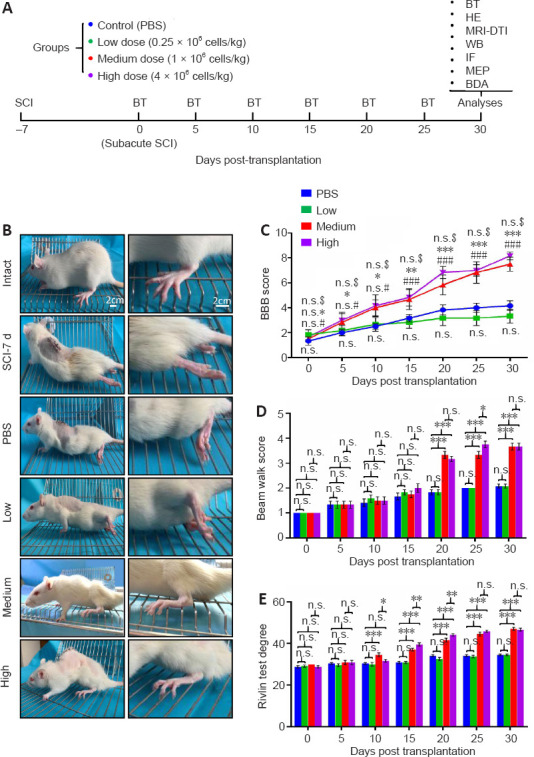
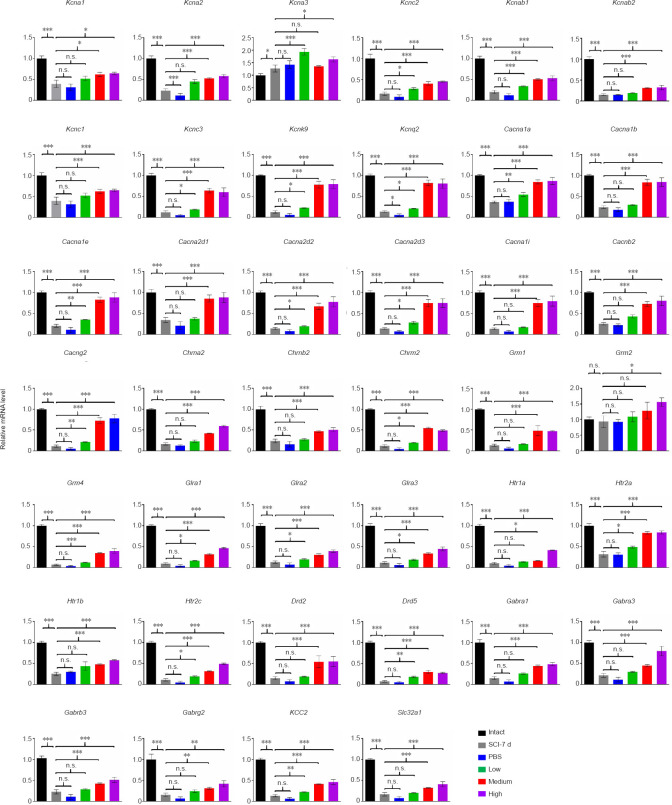
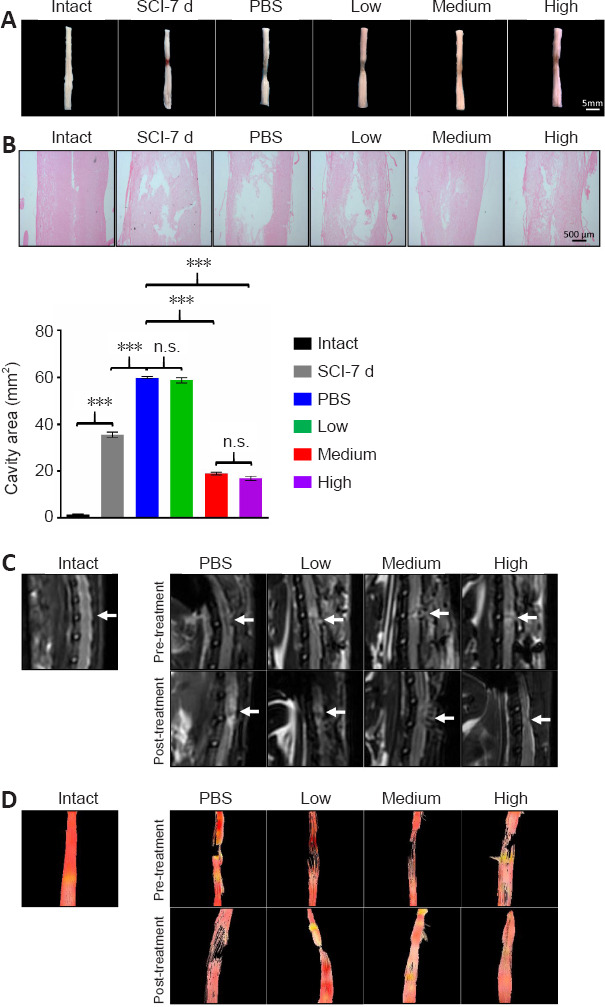
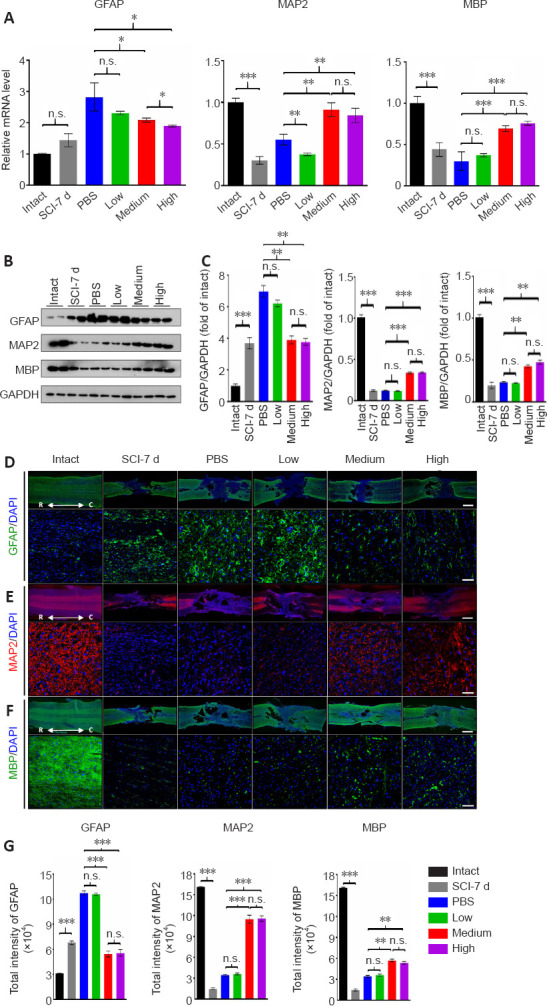
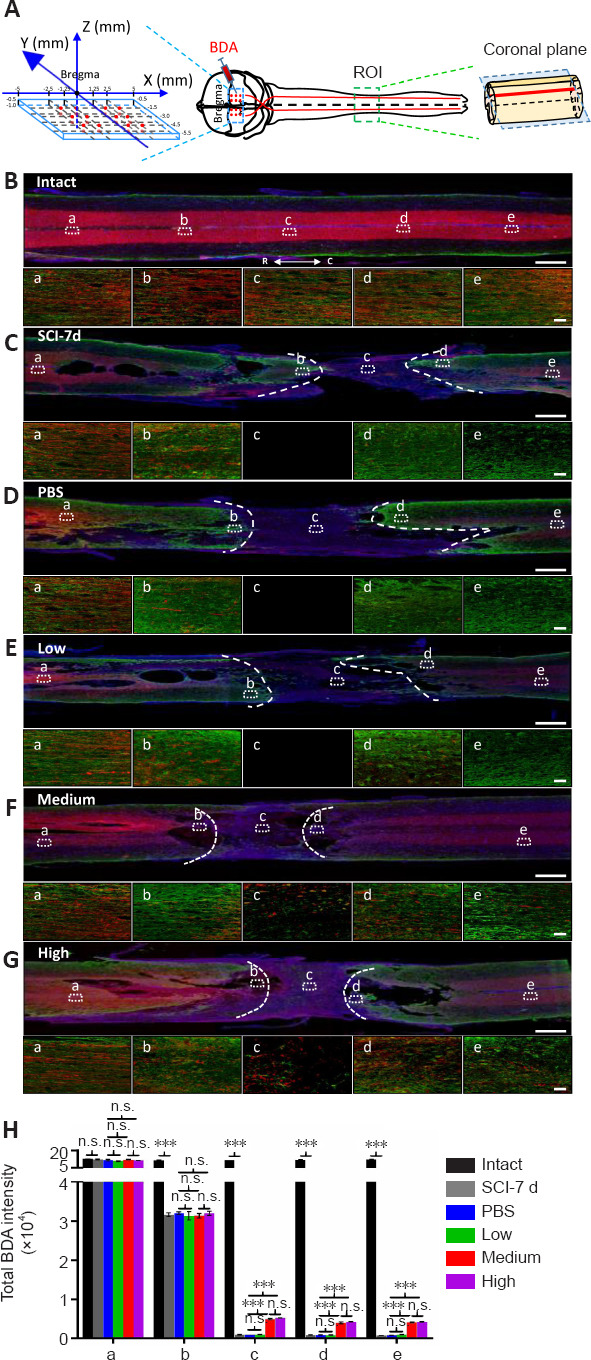
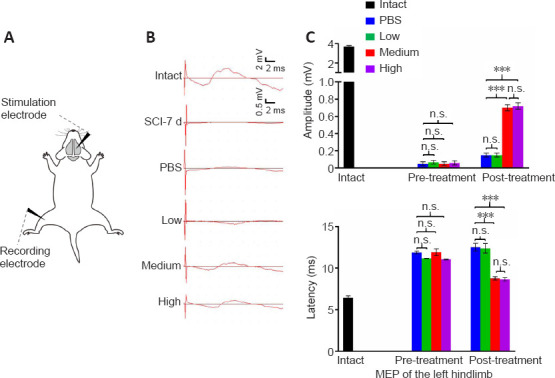
Human umbilical cord mesenchymal stem cells (hUC-MSCs) are a promising candidate for spinal cord injury (SCI) repair owing to their advantages of low immunogenicity and easy accessibility over other MSC sources. However, modest clinical efficacy hampered the progression of these cells to clinical translation. This discrepancy may be due to many variables, such as cell source, timing of implantation, route of administration, and relevant efficacious cell dose, which are critical factors that affect the efficacy of treatment of patients with SCI. Previously, we have evaluated the safety and efficacy of 4 × 10 hUC-MSCs/kg in the treatment of subacute SCI by intrathecal implantation in rat models. To search for a more accurate dose range for clinical translation, we compared the effects of three different doses of hUC-MSCs - low (0.25 × 10 cells/kg), medium (1 × 10 cells/kg) and high (4 × 10 cells/kg) - on subacute SCI repair through an elaborate combination of behavioral analyses, anatomical analyses, magnetic resonance imaging-diffusion tensor imaging (MRI-DTI), biotinylated dextran amine (BDA) tracing, electrophysiology, and quantification of mRNA levels of ion channels and neurotransmitter receptors. Our study demonstrated that the medium dose, but not the low dose, is as efficient as the high dose in producing the desired therapeutic outcomes. Furthermore, partial restoration of the γ-aminobutyric acid type A (GABA) receptor expression by the effective doses indicates that GABA receptors are possible candidates for therapeutic targeting of dormant relay pathways in injured spinal cord. Overall, this study revealed that intrathecal implantation of 1 × 10 hUC-MSCs/kg is an alternative approach for treating subacute SCI.
人脐带间充质干细胞(hUC-MSCs)因其相较于其他间充质干细胞来源具有低免疫原性和易于获取的优势,是脊髓损伤(SCI)修复的一个有前景的候选者。然而,适度的临床疗效阻碍了这些细胞向临床转化的进程。这种差异可能归因于许多变量,如细胞来源、植入时间、给药途径以及相关的有效细胞剂量,这些都是影响SCI患者治疗效果的关键因素。此前,我们已经评估了4×10 hUC-MSCs/kg通过鞘内植入在大鼠模型中治疗亚急性SCI的安全性和疗效。为了寻找更准确的临床转化剂量范围,我们通过行为分析、解剖分析、磁共振成像-扩散张量成像(MRI-DTI)、生物素化葡聚糖胺(BDA)示踪、电生理学以及离子通道和神经递质受体mRNA水平的定量等精心组合的方法,比较了三种不同剂量的hUC-MSCs——低剂量(0.25×10细胞/kg)、中剂量(1×10细胞/kg)和高剂量(4×10细胞/kg)——对亚急性SCI修复的影响。我们的研究表明,中剂量而非低剂量在产生预期治疗效果方面与高剂量一样有效。此外,有效剂量对A型γ-氨基丁酸(GABA)受体表达的部分恢复表明,GABA受体可能是损伤脊髓中休眠中继通路治疗靶点的候选者。总体而言,这项研究表明鞘内植入1×10 hUC-MSCs/kg是治疗亚急性SCI的一种替代方法。