Ma Yuan-Huan, Liang Qing-Yue, Ding Ying, Han Inbo, Zeng Xiang
Guangzhou Institute of Clinical Medicine, Guangzhou First People's Hospital, South China University of Technology, Guangzhou, Guangdong Province, China.
Department of Clinical Nutrition, Chengdu 7 th People's Hospital, Chengdu Medical College, Chengdu, Sichuan Province, China.
Neurospine. 2022 Sep;19(3):616-629. doi: 10.14245/ns.2244272.136. Epub 2022 Sep 30.
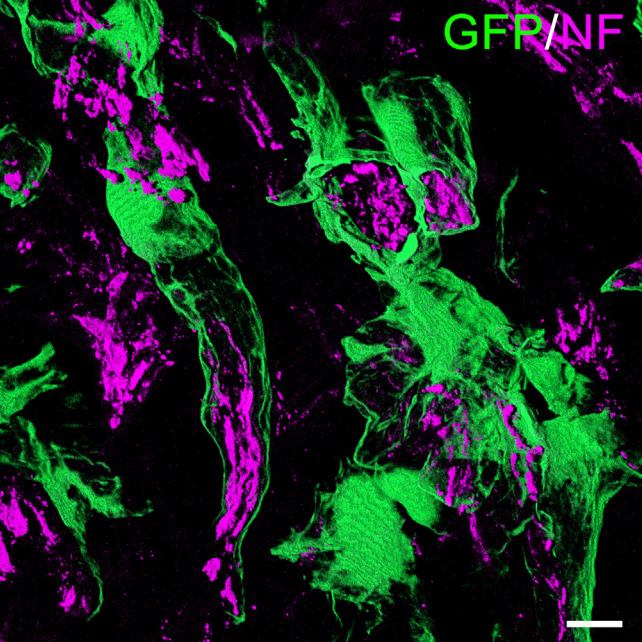
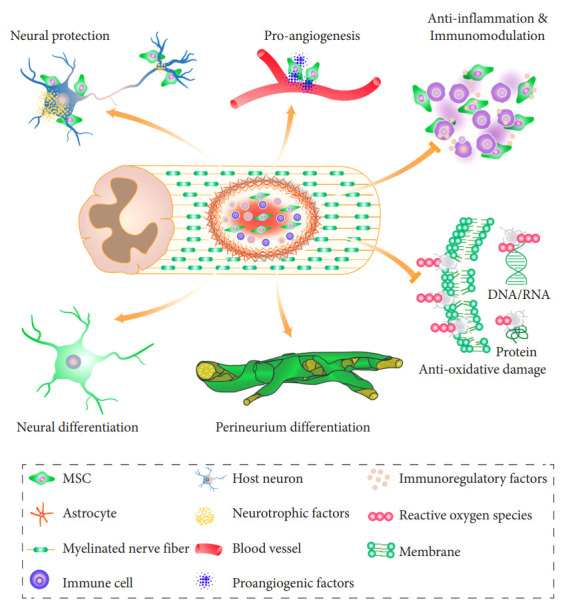
Spinal cord injury (SCI) is a result of a devastating injury to the central nervous system. Currently, there is no effective treatment available for these patients. The possible use of mesenchymal stem cell (MSC)-based treatment for SCI has been the focus of extensive investigations and is increasingly moving from the bench to bedside. Both experimental observations and clinical studies have shown the safety and efficacy of MSCs in managing SCI. However, the exact mechanism by which MSCs contribute to the repair of the injured spinal cord remains to be elucidated. In this review, we aim to summarize current research findings about the role of MSCs in improving complex pathology after SCI. MSCs exert a multimodal repair mechanism targeting multiple events in the secondary injury cascade. Our recent results showing the perineurium-like differentiation of surviving MSCs in the injured spinal cord may further the understanding of the fate of transplanted MSCs. These findings provide fundamental support for the clinical use of MSCs in SCI patients. Under experimental conditions, combining novel physical, chemical, and biological approaches led to significant improvements in the therapeutic efficacy of MSCs. These findings hold promise for the future of cell-based clinical treatment of SCI.
脊髓损伤(SCI)是中枢神经系统遭受毁灭性损伤的结果。目前,这些患者尚无有效的治疗方法。基于间充质干细胞(MSC)的治疗方法在SCI治疗中的潜在应用一直是广泛研究的焦点,并且正越来越多地从实验室走向临床。实验观察和临床研究均已表明MSC在治疗SCI方面的安全性和有效性。然而,MSC促进受损脊髓修复的确切机制仍有待阐明。在本综述中,我们旨在总结当前关于MSC在改善SCI后复杂病理过程中作用的研究发现。MSC发挥多模式修复机制,针对继发性损伤级联反应中的多个环节。我们最近的研究结果表明,受损脊髓中存活的MSC可向神经束膜样细胞分化,这可能会加深我们对移植MSC命运的理解。这些发现为MSC在SCI患者临床治疗中的应用提供了基础支持。在实验条件下,将新的物理、化学和生物学方法相结合可显著提高MSC的治疗效果。这些发现为基于细胞的SCI临床治疗的未来带来了希望。