Department of Economics, Sociology, and Statistics, RAND Corporation, Pittsburgh, PA, USA.
Department of Behavioral and Policy Sciences, RAND Corporation, Pittsburgh, PA, USA.
Sleep. 2022 Mar 14;45(3). doi: 10.1093/sleep/zsab303.
African Americans have faced disproportionate socioeconomic and health consequences associated with the COVID-19 pandemic. The current study examines employment and its association with sleep quality during the initial months of the pandemic in a low-income, predominantly African American adult sample.
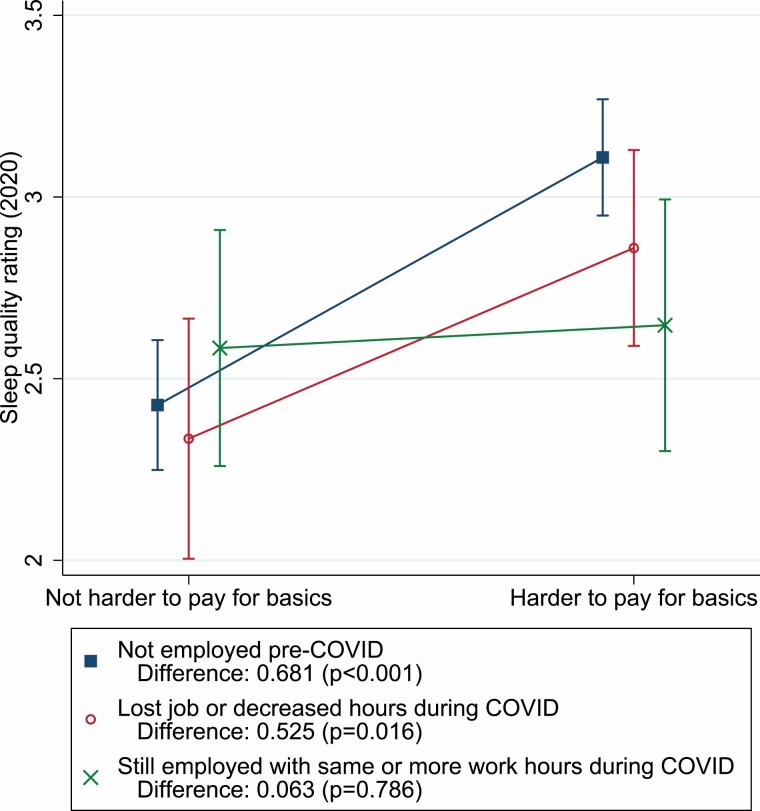
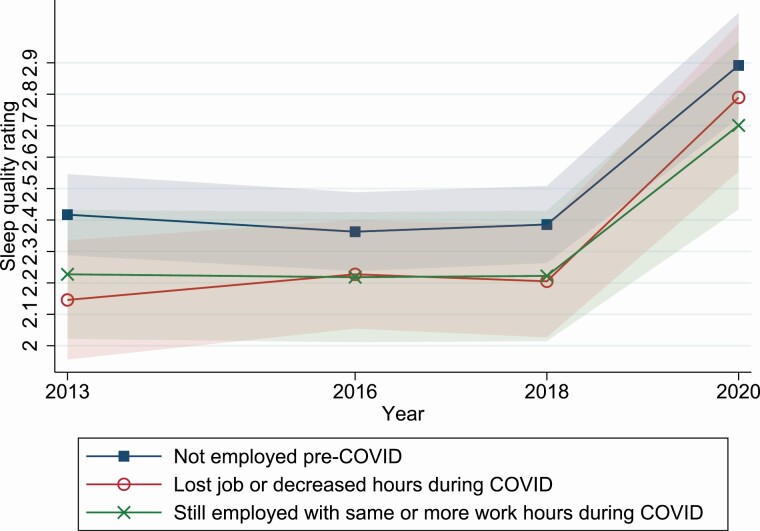
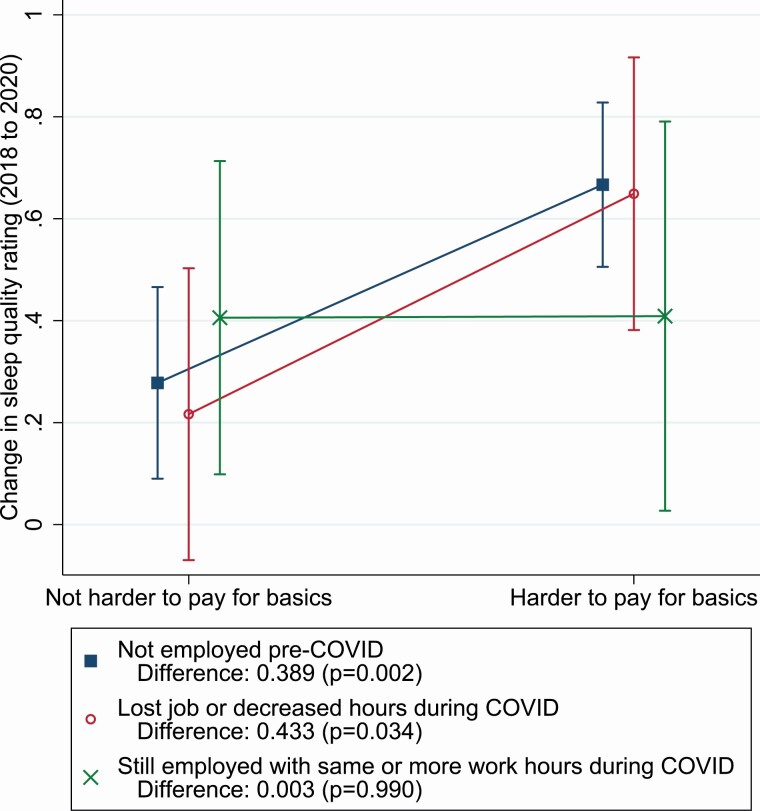
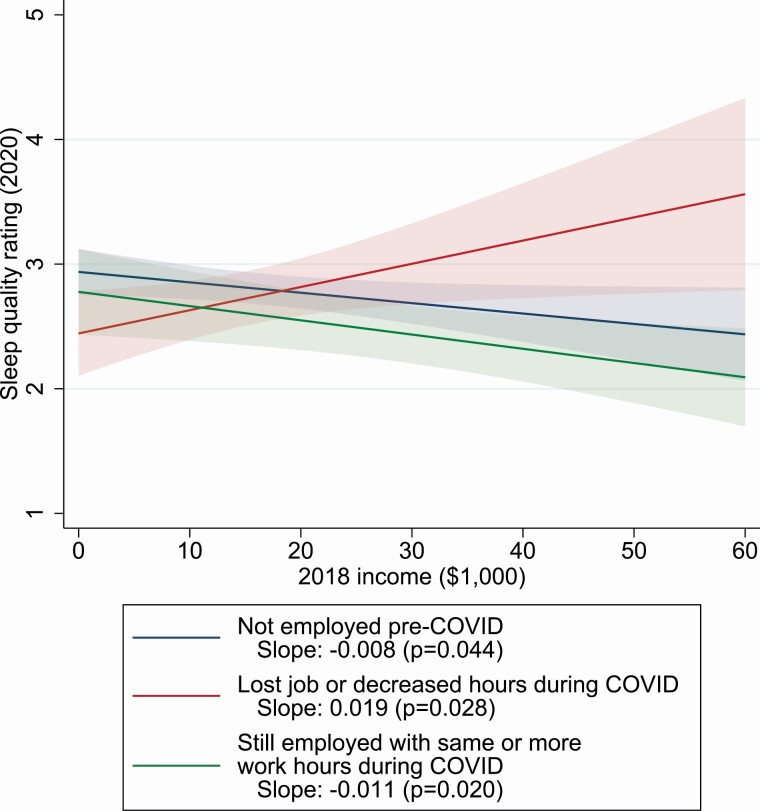
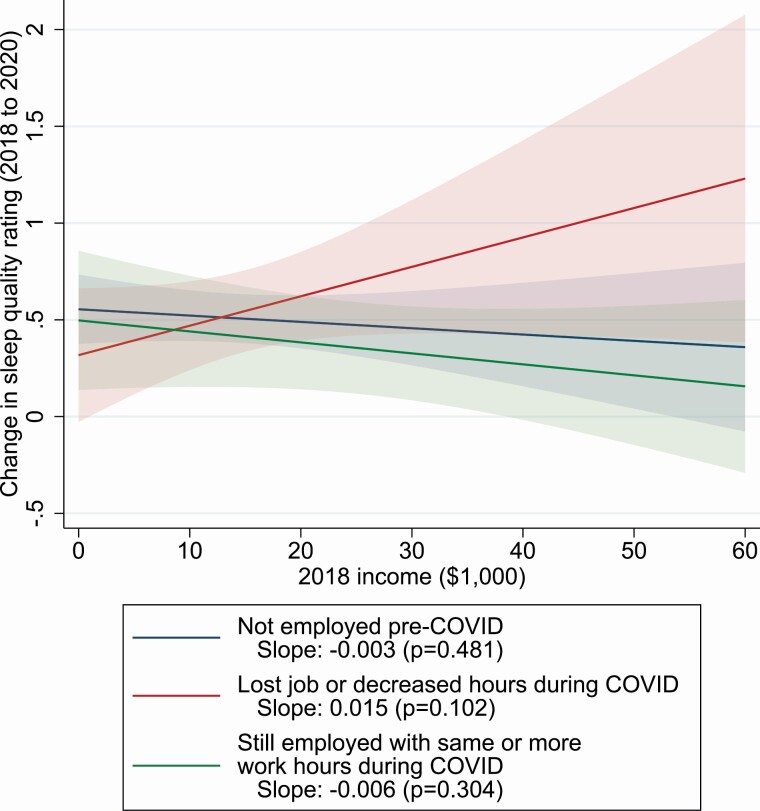
In the early months of COVID-19 (March to May 2020), we administered a survey to an ongoing, longitudinal cohort of older adults to assess the impact of COVID-related changes in employment on self-reported sleep quality (N = 460; 93.9% African American). Participants had prior sleep quality assessed in 2018 and a subset also had sleep quality assessed in 2013 and 2016. Primary analyses focused on the prevalence of poor sleep quality and changes in sleep quality between 2018 and 2020, according to employment status. Financial strain and prior income were assessed as moderators of the association between employment status and sleep quality. We plotted trend lines showing sleep quality from 2013 to 2020 in a subset (n = 339) with all four waves of sleep data available.
All participants experienced increases in poor sleep quality between 2018 and 2020, with no statistical differences between the employment groups. However, we found some evidence of moderation by financial strain and income. The trend analysis demonstrated increases in poor sleep quality primarily between 2018 and 2020.
Sleep quality worsened during the pandemic among low-income African American adults. Policies to support the financially vulnerable and marginalized populations could benefit sleep quality.
非裔美国人在与 COVID-19 大流行相关的社会经济和健康后果方面面临不成比例的情况。本研究在一个低收入、主要是非裔美国成年人的样本中,考察了大流行初期的就业及其与睡眠质量的关系。
在 COVID-19 早期(2020 年 3 月至 5 月),我们向一个正在进行的、纵向的老年人群体进行了一项调查,以评估与 COVID 相关的就业变化对自我报告的睡眠质量的影响(N=460;93.9%为非裔美国人)。参与者之前的睡眠质量在 2018 年进行了评估,一部分参与者在 2013 年和 2016 年也进行了睡眠质量评估。主要分析根据就业状况,关注 2018 年至 2020 年期间睡眠质量差的患病率和睡眠质量的变化。财务压力和之前的收入被评估为就业状况与睡眠质量之间关联的调节剂。我们绘制了趋势线,显示了在有全部四个睡眠数据的一个亚组(n=339)中,从 2013 年到 2020 年的睡眠质量。
所有参与者在 2018 年至 2020 年期间睡眠质量均有所恶化,就业群体之间没有统计学差异。然而,我们发现财务压力和收入存在一些调节作用的证据。趋势分析表明,主要是在 2018 年至 2020 年之间,睡眠质量恶化。
在大流行期间,低收入非裔美国成年人的睡眠质量恶化。支持经济脆弱和边缘化人群的政策可能有利于睡眠质量。