Romhányi Dóra, Szabó Kornélia, Kemény Lajos, Sebestyén Endre, Groma Gergely
Department of Dermatology and Allergology, University of Szeged, H-6720 Szeged, Hungary.
Hungarian Centre of Excellence for Molecular Medicine-University of Szeged Skin Research Group (HCEMM-USZ Skin Research Group), University of Szeged, H-6720 Szeged, Hungary.
Life (Basel). 2022 Jan 13;12(1):111. doi: 10.3390/life12010111.
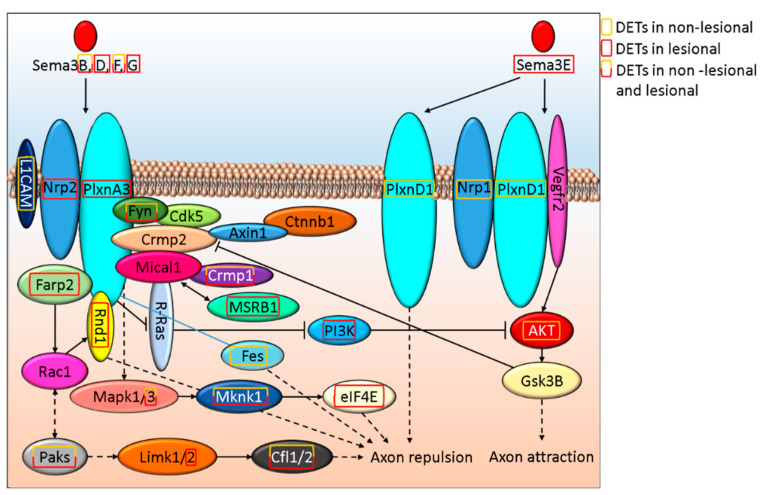
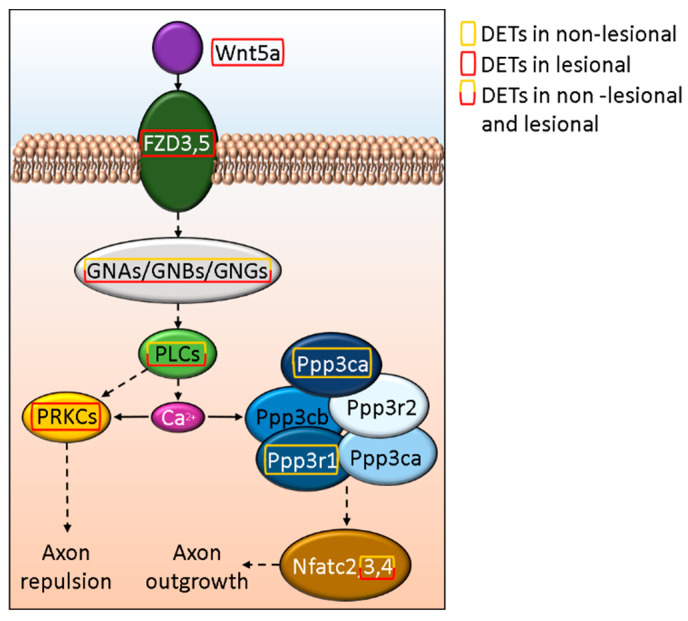
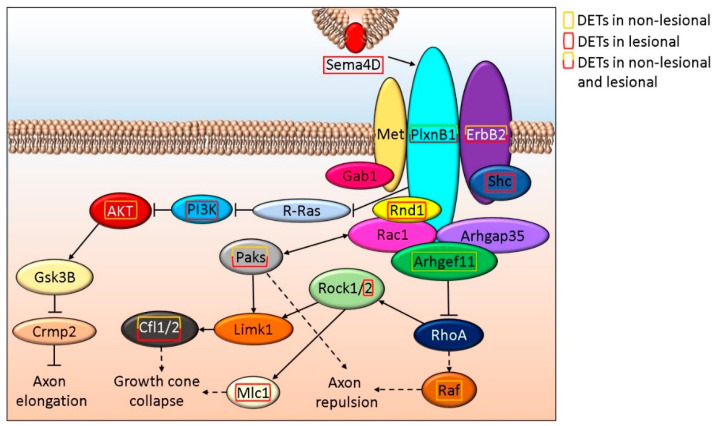
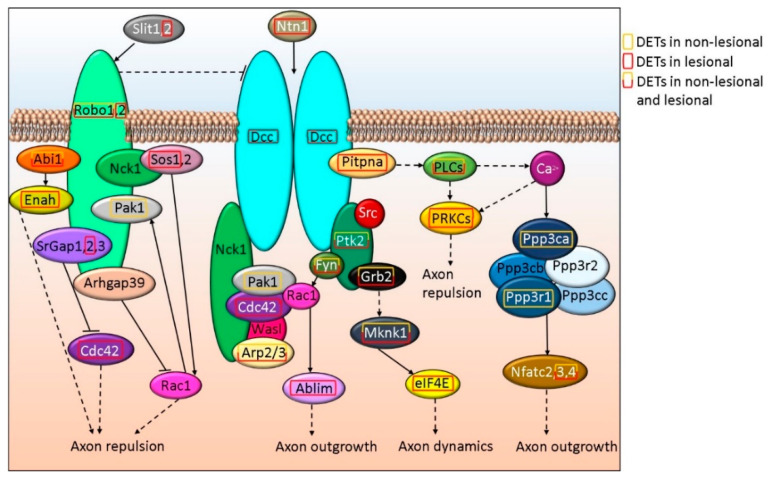
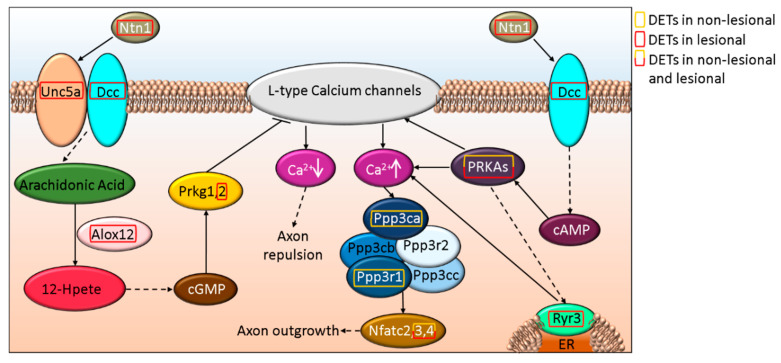
An increasing amount of evidence indicates the critical role of the cutaneous nervous system in the initiation and maintenance of psoriatic skin lesions by neurogenic inflammation. However, molecular mechanisms affecting cutaneous neurons are largely uncharacterized. Therefore, we reanalyzed a psoriatic RNA sequencing dataset from published transcriptome experiments of nearly 300 individuals. Using the Ingenuity Pathway Analysis software, we associated several hundreds of differentially expressed transcripts (DETs) to nervous system development and functions. Since neuronal projections were previously reported to be affected in psoriasis, we performed an in-depth analysis of neurite formation-related process. Our analysis suggests that SEMA-PLXN and ROBO-DCC-UNC5 regulating axonal growth and repulsion are differentially affected in non-lesional and lesional skin samples. We identified opposing expressional alterations in secreted ligands for axonal guidance signaling (RTN4/NOGOA, NTNs, SEMAs, SLITs) and non-conventional axon guidance regulating ligands, including WNT5A and their receptors, modulating axon formation. These differences in neuritogenesis may explain the abnormal cutaneous nerve filament formation described in psoriatic skin. The processes also influence T-cell activation and infiltration, thus highlighting an additional angle of the crosstalk between the cutaneous nervous system and the immune responses in psoriasis pathogenesis, in addition to the known neurogenic pro-inflammatory mediators.
越来越多的证据表明,皮肤神经系统通过神经源性炎症在银屑病皮肤病变的发生和维持中起关键作用。然而,影响皮肤神经元的分子机制在很大程度上仍未明确。因此,我们重新分析了一个来自近300名个体已发表转录组实验的银屑病RNA测序数据集。使用Ingenuity Pathway Analysis软件,我们将数百个差异表达转录本(DETs)与神经系统发育和功能相关联。由于先前报道神经元投射在银屑病中受到影响,我们对神经突形成相关过程进行了深入分析。我们的分析表明,调节轴突生长和排斥的SEMA-PLXN和ROBO-DCC-UNC5在非皮损和皮损皮肤样本中受到不同影响。我们在轴突导向信号的分泌配体(RTN4/NOGOA、NTNs、SEMA、SLITs)和非传统轴突导向调节配体(包括WNT5A及其受体)中发现了相反的表达变化,这些配体调节轴突形成。神经突形成的这些差异可能解释了银屑病皮肤中描述的异常皮肤神经细丝形成。这些过程还影响T细胞活化和浸润,从而除了已知的神经源性促炎介质外,突出了银屑病发病机制中皮肤神经系统与免疫反应之间相互作用的另一个角度。