Unicaen, INRAE, UMR 950 Eva, SFR Normandie Végétal (FED4277), Normandie Université, 14000 Caen, France.
Laboratoire de Nutrition Végétale, Agro Innovation International-TIMAC AGRO, 35400 Saint-Malo, France.
Int J Mol Sci. 2022 Jan 11;23(2):781. doi: 10.3390/ijms23020781.
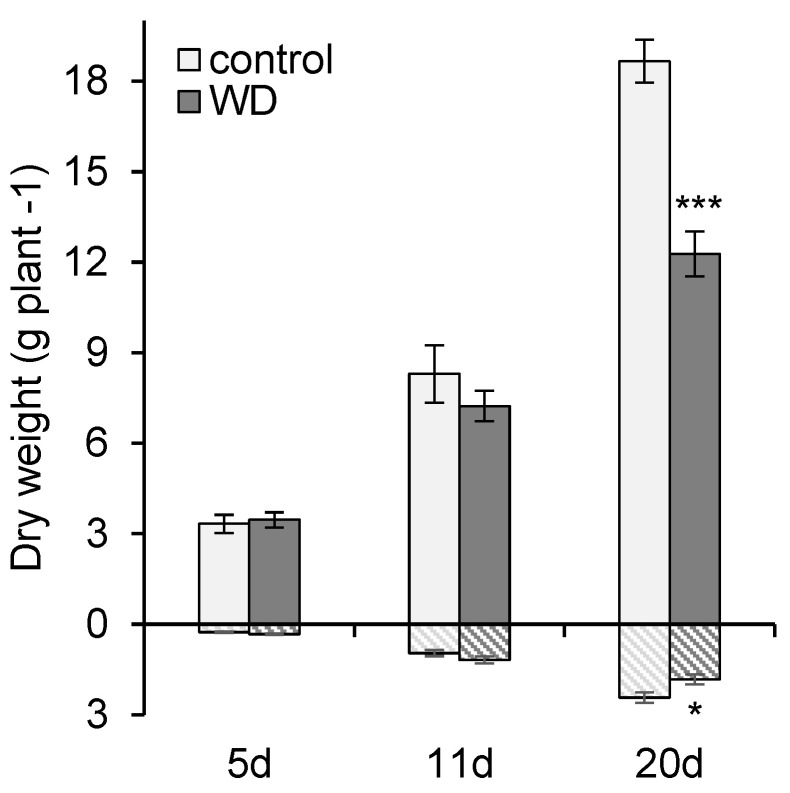
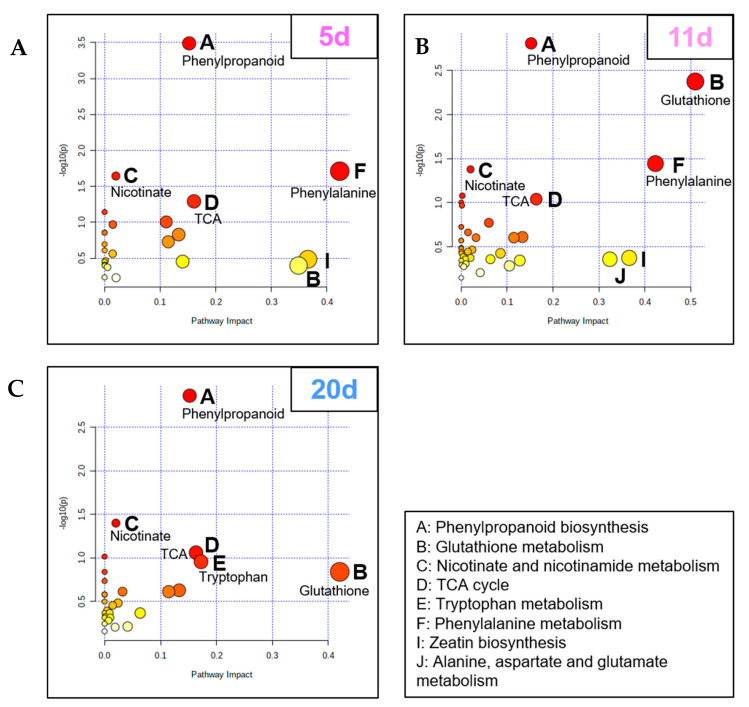
While it is generally acknowledged that drought is one of the main abiotic factors affecting plant growth, how mineral nutrition is specifically and negatively affected by water deficit has received very little attention, other than being analyzed as a consequence of reduced growth. Therefore, plants were subjected to a gradual onset of water deficits (mild, severe, or severe extended), and leaves were analyzed at the ionomic, transcriptomic and metabolic levels. The number of Differentially Expressed Genes (DEGs) and of the most differentially accumulated metabolites increased from mild (525 DEGs, 57 metabolites) to severe (5454 DEGs, 78 metabolites) and severe extended (9346 DEGs, 95 metabolites) water deficit. Gene ontology enrichment analysis of the 11,747 DEGs identified revealed that ion transport was one of the most significant processes affected, even under mild water deficit, and this was also confirmed by the shift in ionomic composition (mostly micronutrients with a strong decrease in Mo, Fe, Zn, and Mn in leaves) that occurred well before growth reduction. The metabolomic data and most of the transcriptomic data suggested that well-known early leaf responses to drought such as phytohormone metabolism (ABA and JA), proline accumulation, and oxidative stress defense were induced later than repression of genes related to nutrient transport.
虽然人们普遍认为干旱是影响植物生长的主要非生物因素之一,但水分亏缺如何具体且负面地影响矿质营养却很少受到关注,除了被分析为生长减少的结果。因此,植物逐渐受到水分亏缺的影响(轻度、重度或重度延长),并在离子组学、转录组学和代谢组学水平上对叶片进行分析。差异表达基因(DEGs)和差异积累代谢物的数量从轻度(525 个 DEGs,57 个代谢物)到重度(5454 个 DEGs,78 个代谢物)和重度延长(9346 个 DEGs,95 个代谢物)水分亏缺而增加。对 11747 个 DEGs 的基因本体富集分析表明,离子转运是受影响最显著的过程之一,即使在轻度水分亏缺下也是如此,这也得到了离子组组成变化(主要是微量元素,叶片中 Mo、Fe、Zn 和 Mn 大量减少)的证实,这种变化早在生长减少之前就发生了。代谢组学数据和大部分转录组学数据表明,植物对干旱的早期反应,如植物激素代谢(ABA 和 JA)、脯氨酸积累和氧化应激防御,在与营养物质转运相关的基因被抑制之后才被诱导。