
2000-2018 年中国 PM 相关的气象和社会经济因素的时空异质性。
Temporal and Spatial Heterogeneity of PM Related to Meteorological and Socioeconomic Factors across China during 2000-2018.
机构信息
Key Laboratory of Environmental Change and Natural Disaster, Beijing Normal University, Beijing 100875, China.
State Key Laboratory of Earth Surface Processes and Resource Ecology, Beijing Normal University, Beijing 100875, China.
出版信息
Int J Environ Res Public Health. 2022 Jan 9;19(2):707. doi: 10.3390/ijerph19020707.
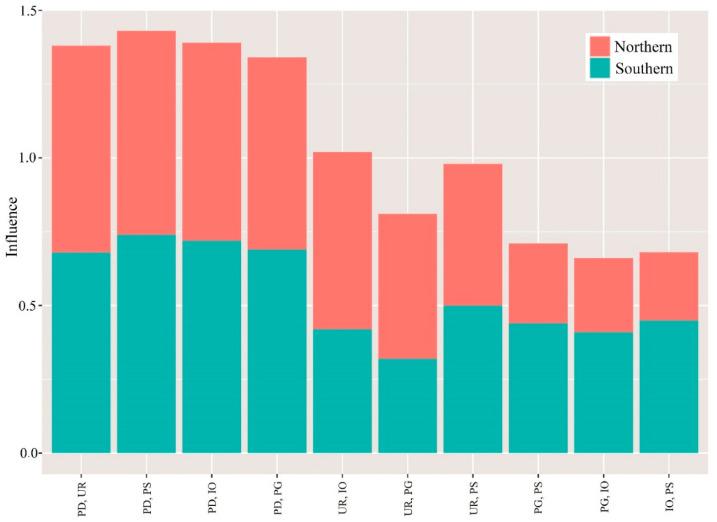
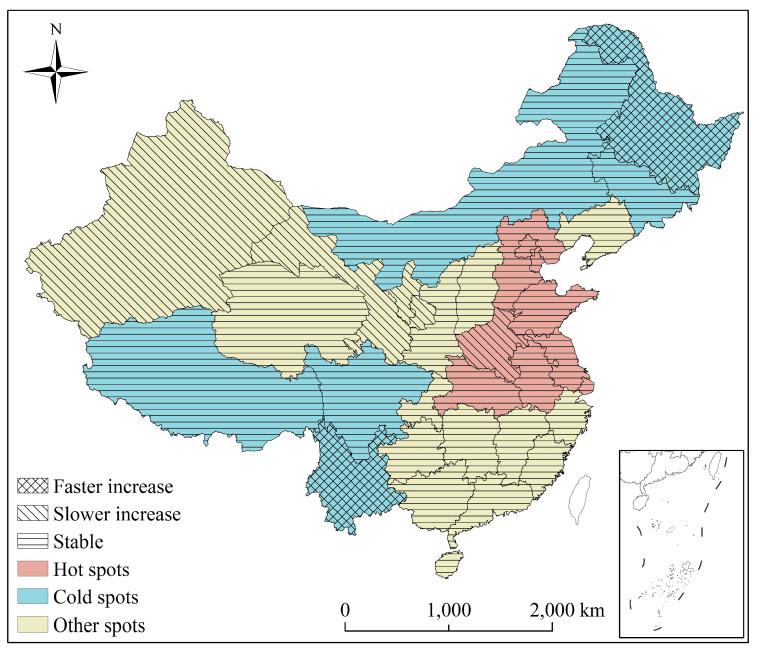
In recent years, air pollution caused by PM in China has become increasingly severe. This study applied a Bayesian space-time hierarchy model to reveal the spatiotemporal heterogeneity of the PM concentrations in China. In addition, the relationship between meteorological and socioeconomic factors and their interaction with PM during 2000-2018 was investigated based on the GeoDetector model. Results suggested that the concentration of PM across China first increased and then decreased between 2000 and 2018. Geographically, the North China Plain and the Yangtze River Delta were high PM pollution areas, while Northeast and Southwest China are regarded as low-risk areas for PM pollution. Meanwhile, in Northern and Southern China, the population density was the most important socioeconomic factor affecting PM with values of 0.62 and 0.66, respectively; the main meteorological factors affecting PM were air temperature and vapor pressure, with values of 0.64 and 0.68, respectively. These results are conducive to our in-depth understanding of the status of PM pollution in China and provide an important reference for the future direction of PM pollution control.
近年来,中国由 PM 导致的空气污染日益严重。本研究应用贝叶斯时空层次模型揭示了 2000-2018 年中国 PM 浓度的时空异质性。此外,还基于地理探测器模型探讨了气象和社会经济因素及其与 PM 的相互作用关系。结果表明,2000-2018 年间,中国 PM 浓度先增加后减少。从地域上看,华北平原和长江三角洲是 PM 污染的高值区,而东北和西南地区则被认为是 PM 污染的低风险区。同时,在中国北方和南方,人口密度是影响 PM 的最重要社会经济因素,其 值分别为 0.62 和 0.66;影响 PM 的主要气象因素是气温和水汽压,其 值分别为 0.64 和 0.68。这些结果有助于我们深入了解中国 PM 污染的现状,并为未来 PM 污染控制的方向提供重要参考。



 Zotero 插件