Bennouna Fadoua, Sadiki Moulay, Elabed Soumya, Ibnsouda Koraichi Saad, Lachkar Mohammed
Laboratory of Microbial Biotechnology and Bioactive Molecules, University Sidi Mohammed Ben Abdellah, Faculty of Science and Technology, Po. Box 2202, Fez 30007, Morocco.
Engineering Laboratory of Organometallic, Molecular Materials and Environment, University Sidi Mohammed Ben Abdellah, Faculty of Science, Po. Box 1796, Fez 30000, Morocco.
Int J Biomater. 2022 Jan 13;2022:9923079. doi: 10.1155/2022/9923079. eCollection 2022.
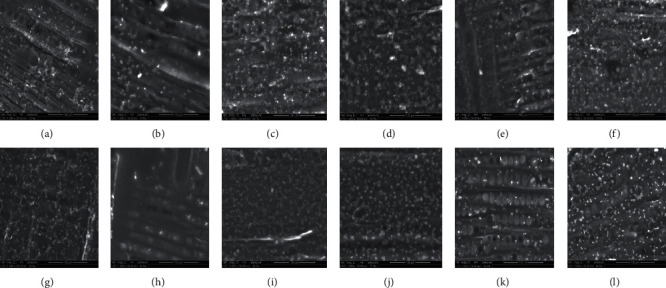
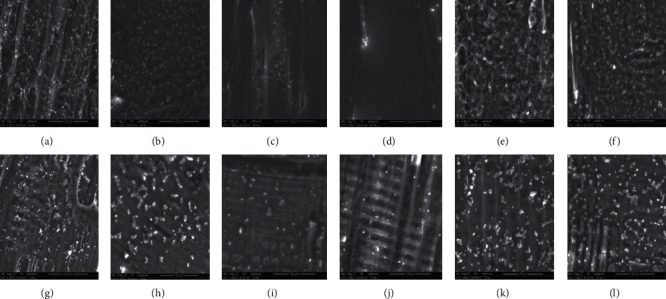
Despite having been used for ages to preserve wood against several effects (biological attack and moisture effects) that cause its degradation, the effect of vegetable oils on the cedar wood physicochemical properties is poorly known. Thus, in this study, the hydrophobicity, electron-acceptor ( ), and electron-donor ( ) properties of cedar wood before and after treatment with vegetable oils have been determined using contact angle measurement. The cedar wood has kept its hydrophobic character after treatment with the different vegetable oils. It has become more hydrophobic quantitatively with values of surface energy ranged from -25.84 to -43.45 mJ/m and more electron donors compared to the untreated sample. Moreover, the adhesion of four fungal strains ( (PDLd"), , (PDLd10), and ) on untreated and treated cedar wood was examined theoretically and experimentally. For untreated wood, the experimental adhesion showed a positive relationship with the results obtained by the extended Derjaguin-Landau-Verwey-Overbeek (XDLVO) approach which found that all fungal strains could adhere strongly to the cedar wood material. In contrast, this relationship was not always positive after treatment. The Environmental Scanning Electron Microscopy (ESEM) has shown that (PDLd10) and were found unable to adhere to the wood surface after treatment with sunflower and rapeseed oils. In addition, the results showed that the four fungal strains' adhesion was decreased with olive and linseed oils treatment except that of P. (PDLd10) treated with linseed oil.
尽管植物油长期以来一直被用于保护木材免受多种导致其降解的影响(生物攻击和湿度影响),但其对雪松木材理化性质的影响却鲜为人知。因此,在本研究中,通过接触角测量确定了植物油处理前后雪松木材的疏水性、电子受体( )和电子供体( )性质。用不同植物油处理后,雪松木材保持了其疏水特性。与未处理的样品相比,其表面能值范围为-25.84至-43.45 mJ/m²,疏水性在数量上变得更强,且电子供体更多。此外,从理论和实验两方面研究了四种真菌菌株((PDLd")、 、 (PDLd10)和 )在未处理和处理过的雪松木材上的附着力。对于未处理的木材,实验附着力与通过扩展的Derjaguin-Landau-Verwey-Overbeek(XDLVO)方法获得的结果呈正相关,该方法发现所有真菌菌株都能强烈附着在雪松木材材料上。相比之下,处理后这种关系并不总是呈正相关。环境扫描电子显微镜(ESEM)显示,在用向日葵油和菜籽油处理后, (PDLd10)和 无法附着在木材表面。此外,结果表明,除了用亚麻籽油处理的 (PDLd10)外,用橄榄油和亚麻籽油处理后,四种真菌菌株的附着力均降低。