de la Garza Ana Laura, Romero-Delgado Bianca, Martínez-Tamez Alejandra Mayela, Cárdenas-Tueme Marcela, Camacho-Zamora Bianka Dianey, Matta-Yee-Chig Daniel, Sánchez-Tapia Mónica, Torres Nimbe, Camacho-Morales Alberto
Universidad Autónoma de Nuevo León, Facultad de Salud Pública y Nutrición, Centro de Investigación en Nutrición y Salud Pública, Monterrey, Mexico.
Universidad Autónoma de Nuevo León, Unidad de Nutrición, Centro de Investigación y Desarrollo en Ciencias de la Salud, Monterrey, Mexico.
Front Pediatr. 2022 Jan 7;9:746437. doi: 10.3389/fped.2021.746437. eCollection 2021.
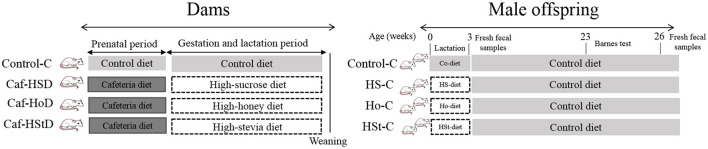
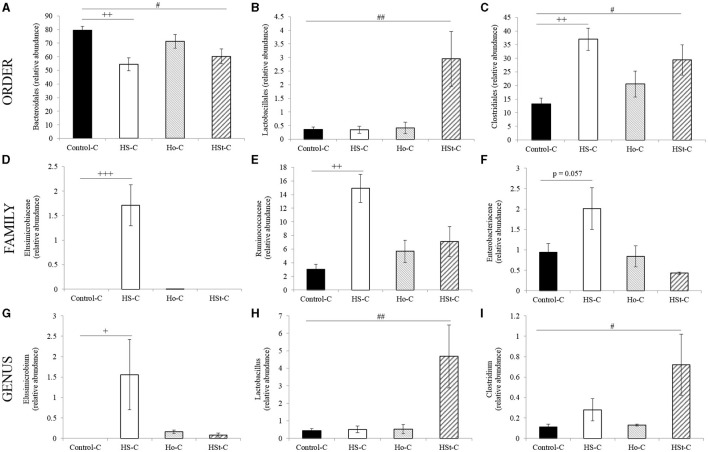
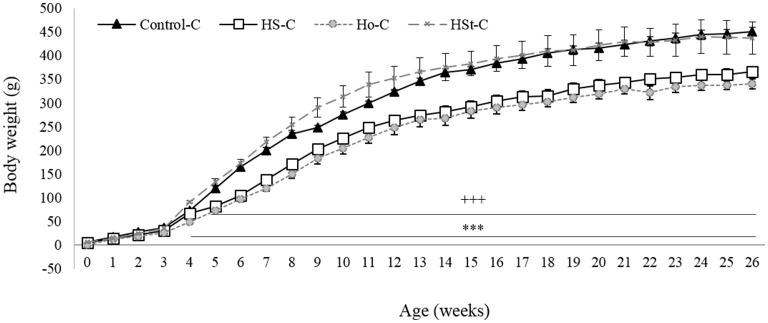
There is increasing evidence that gut microbiota in offspring is derived in part from maternal environment such as diet. Thus, sweeteners intake including caloric or non-caloric during perinatal period can induce gut dysbiosis and program the offspring to develop cognitive problems later in life. To determine the effect of maternal high-sweeteners intake during gestation and lactation on gut microbiota shifts in adult male offspring rats and the impact on cognitive dysfunction. Thirty-four male pups from dams fed standard diet (Control-C, = 10), high-sucrose diet (HS-C, = 11), high-honey diet (Ho-C, = 8), and high-stevia diet (HSt-C, = 5) were fed standard diet after weaning, and body weight and food intake were recorded once a week for 26 weeks. Learning and memory tests were performed at week 23 of life using the Barnes maze. Fecal samples from the breastfeeding and adulthood periods were collected and analyzed by sequencing the 16S rRNA V3-V4 region of gut microbiota. Maternal high-sucrose and stevia diets programmed the male offspring, and changes in microbial diversity by Shannon index were observed after weaning ( < 0.01). Furthermore, maternal high-stevia diet programming lasted into adulthood. The increase of abundance and the decrease in phylum were significant in HS-C and HSt-C groups. This led to an increase in the Firmicutes/Bacteroidetes index, although only in HS-C group was statistically significant ( < 0.05). Of note, the downstream gram-negative and the upregulation of the gram-positive abundance contribute to cognitive dysfunction. These results suggest that dams fed a high-sucrose and stevia diets during gestation and lactation favor a deficient memory performance in adult male offspring rats through shifts gut microbiota diversity and relative abundance at several taxa.
越来越多的证据表明,后代的肠道微生物群部分源自母体环境,如饮食。因此,围产期摄入包括热量或非热量在内的甜味剂会导致肠道菌群失调,并使后代在以后的生活中出现认知问题。为了确定孕期和哺乳期母体高糖摄入对成年雄性后代大鼠肠道微生物群变化的影响以及对认知功能障碍的影响。将来自喂食标准饮食(对照-C,n = 10)、高蔗糖饮食(HS-C,n = 11)、高蜂蜜饮食(Ho-C,n = 8)和高甜菊糖饮食(HSt-C,n = 5)的母鼠的34只雄性幼崽在断奶后喂食标准饮食,并每周记录一次体重和食物摄入量,持续26周。在出生后第23周使用巴恩斯迷宫进行学习和记忆测试。收集哺乳期和成年期的粪便样本,并通过对肠道微生物群的16S rRNA V3-V4区域进行测序来分析。母体高蔗糖和甜菊糖饮食对雄性后代产生了影响,断奶后观察到香农指数所反映的微生物多样性变化(P < 0.01)。此外,母体高甜菊糖饮食的影响持续到成年期。HS-C组和HSt-C组中,某菌属丰度增加,某门丰度降低。这导致厚壁菌门/拟杆菌门指数增加,不过只有HS-C组具有统计学意义(P < 0.05)。值得注意的是,下游革兰氏阴性菌和革兰氏阳性菌丰度的上调会导致认知功能障碍。这些结果表明,孕期和哺乳期喂食高蔗糖和甜菊糖饮食的母鼠,通过改变肠道微生物群的多样性和几个分类群的相对丰度,使成年雄性后代大鼠出现记忆表现缺陷。