Department of Disease Model, Institute for Developmental Research, Aichi Developmental Disability Center, Kasugai, Aichi, Japan.
Department of Pediatrics, Central Hospital, Aichi Developmental Disability Center, Kasugai, Aichi, Japan.
PLoS One. 2022 Jan 25;17(1):e0262854. doi: 10.1371/journal.pone.0262854. eCollection 2022.
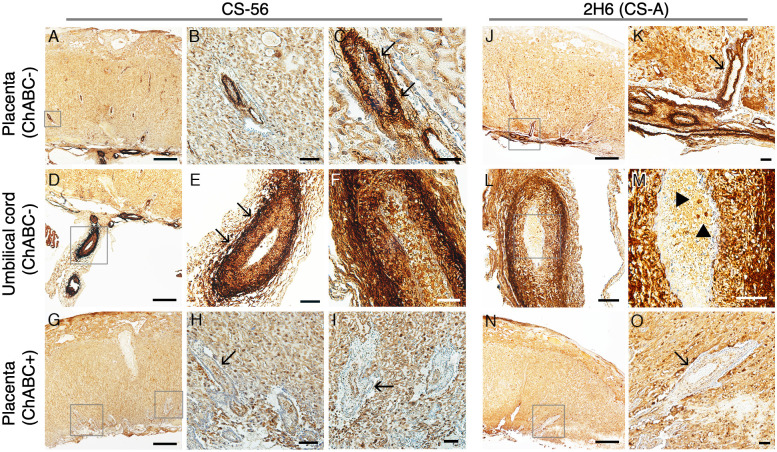
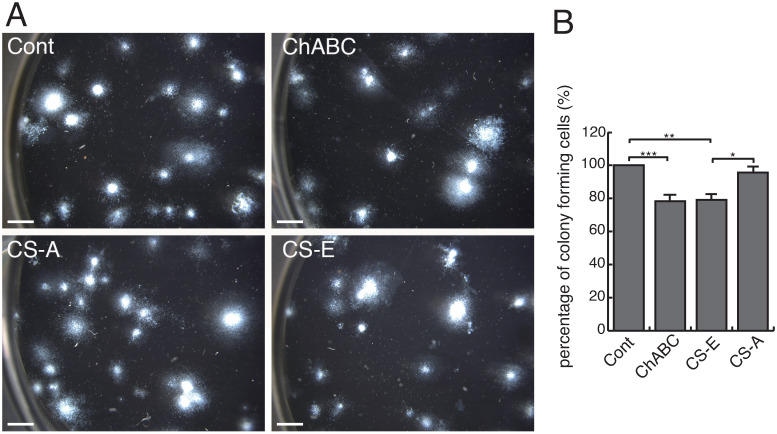
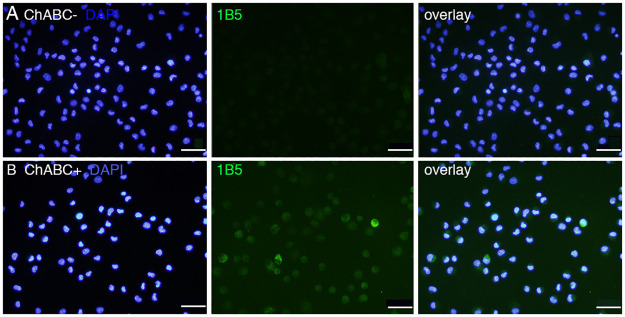
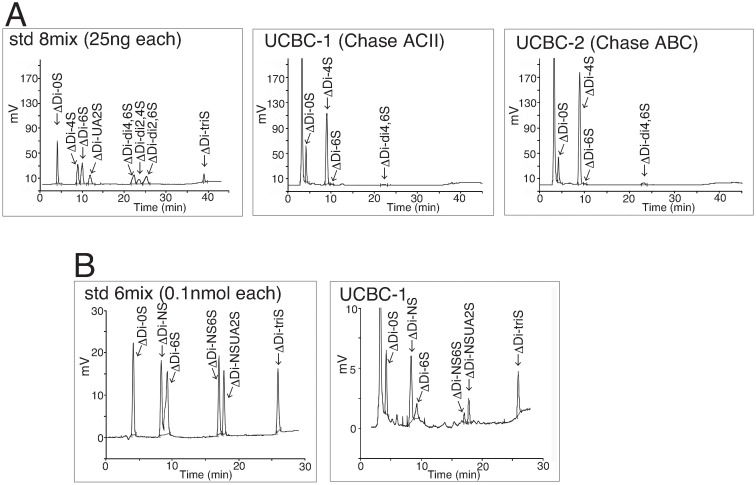
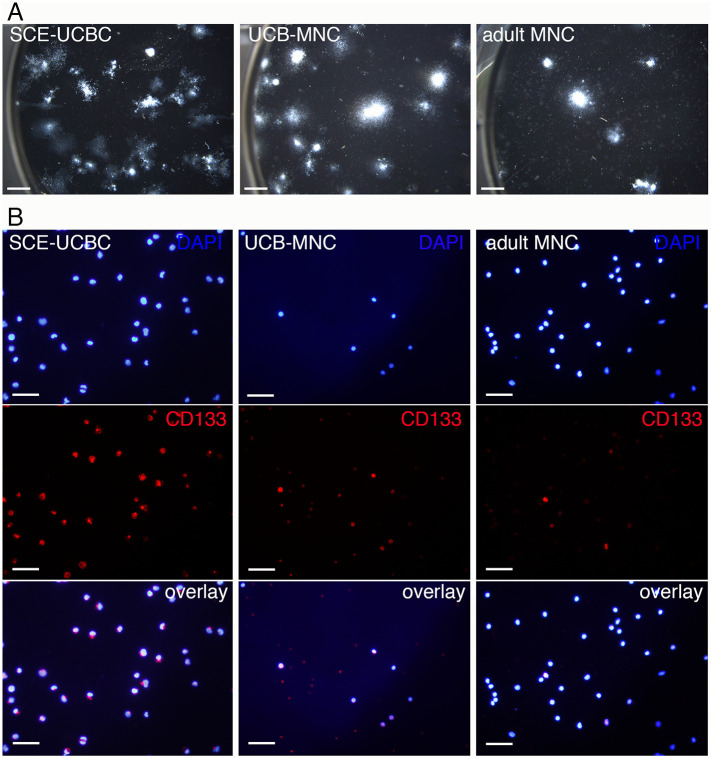
Chondroitin sulfate (CS) and its isomeric variant, dermatan sulfate (DS), are complex glycosaminoglycans (GAGs) which are ubiquitous components of the extracellular matrix in various tissues including the brain. CS and/or DS are known to bind to a variety of growth factors and regulate many cellular events such as proliferation and differentiation. Although the biological activities of CS and/or DS towards neural stem/progenitor cells (NSPCs) have been well investigated, the CS and/or DS of hematopoietic stem cells (HSCs) have not been fully characterized. Here, we analyzed GAGs on mononuclear cells of rat umbilical cord blood cells (UCB-MNCs). CS was detected in vascular intima and media of rat umbilical cord at embryonic day 19 (E19) by immunohistochemistry. The stem-cell-enriched-UCBCs (SCE-UCBCs), which were expanded from rat UCB-MNCs, expressed CS. CS chains are composed of repeating disaccharide units, which are classified into several types such as O-, A-, B-, C-, D-, and E-unit according to the number and positions of sulfation. A disaccharide composition analysis revealed that CS and/or DS were abundant in rat UCB-MNCs as well as in their expanded SCE-UCBCs, while the amount of heparan sulfate (HS) was less. The degree of sulfation of CS/DS was relatively low and the major component in UCB-MNCs and SCE-UCBCs was the A-unit. A colony-forming cell assay revealed that the percentage of colony-forming cells decreased in culture with CS degradation enzyme. The CS and/or DS of UCBCs may be involved in biological activities such as stem cell proliferation and/or differentiation.
硫酸软骨素(CS)及其同型变异体硫酸皮肤素(DS)是广泛存在于各种组织(包括大脑)细胞外基质中的复杂糖胺聚糖(GAG)。CS 和/或 DS 已知可与多种生长因子结合,并调节多种细胞事件,如增殖和分化。尽管 CS 和/或 DS 对神经干细胞/祖细胞(NSPCs)的生物学活性已得到充分研究,但对造血干细胞(HSCs)的 CS 和/或 DS 尚未进行充分表征。在这里,我们分析了大鼠脐带血单核细胞(UCB-MNCs)中的 GAG。通过免疫组织化学法在胚胎第 19 天(E19)的大鼠脐带血管内皮下和中膜中检测到 CS。从大鼠 UCB-MNC 中扩增的富含干细胞的 UCBCs(SCE-UCBCs)表达 CS。CS 链由重复的二糖单元组成,根据硫酸化的数量和位置,可分为 O-、A-、B-、C-、D-和 E-单元等几种类型。二糖组成分析表明,CS 和/或 DS 在大鼠 UCB-MNCs 及其扩增的 SCE-UCBCs 中丰富,而肝素硫酸盐(HS)的量较少。CS/DS 的硫酸化程度相对较低,UCB-MNCs 和 SCE-UCBCs 的主要成分是 A 单元。集落形成细胞测定显示,在用 CS 降解酶处理的培养物中,集落形成细胞的百分比下降。UCBCs 的 CS 和/或 DS 可能参与生物活性,如干细胞增殖和/或分化。