Department of Experimental Therapeutics, BC Cancer Research Institute, Vancouver, British Columbia, Canada.
Vancouver Prostate Centre, Faculty of Medicine, University of British Columbia, Vancouver, British Columbia, Canada.
Mol Cancer Res. 2022 May 4;20(5):782-793. doi: 10.1158/1541-7786.MCR-21-1037.
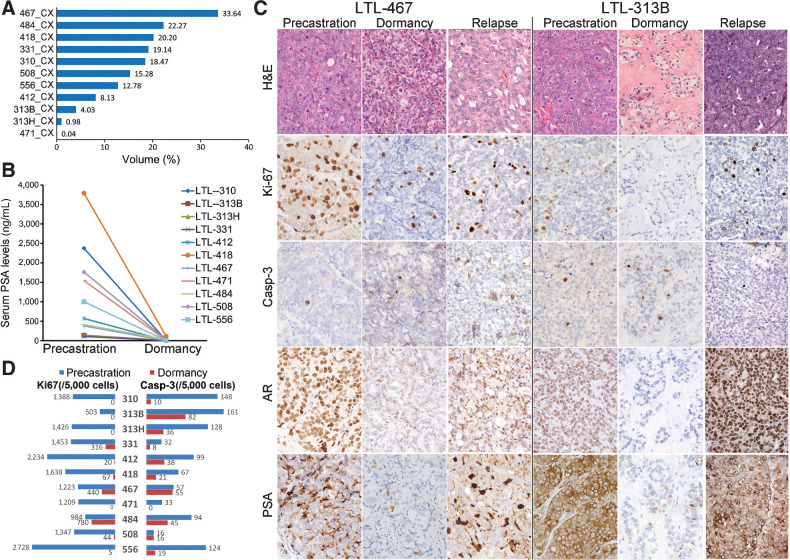
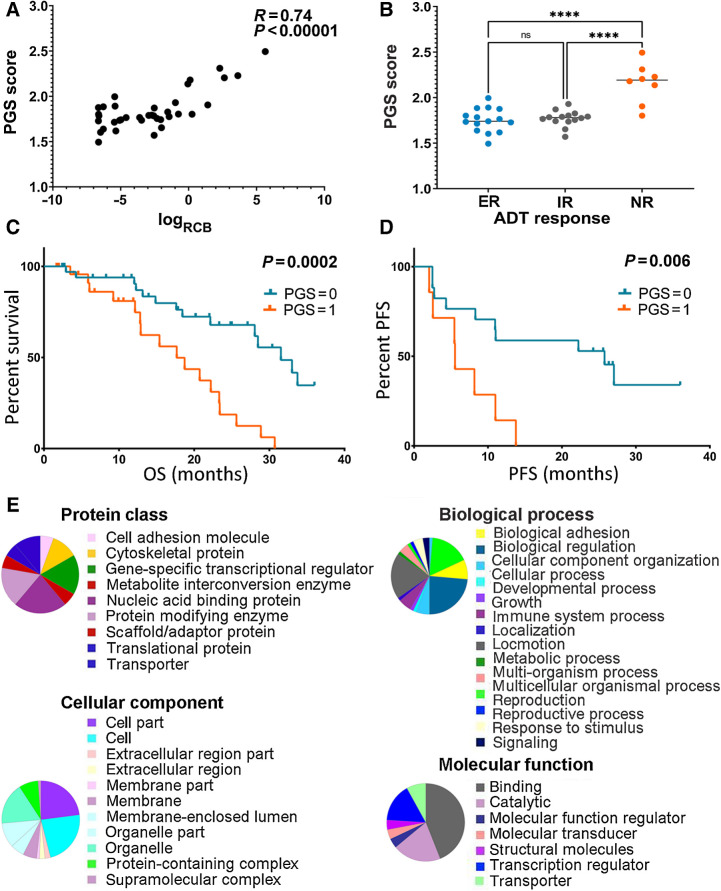
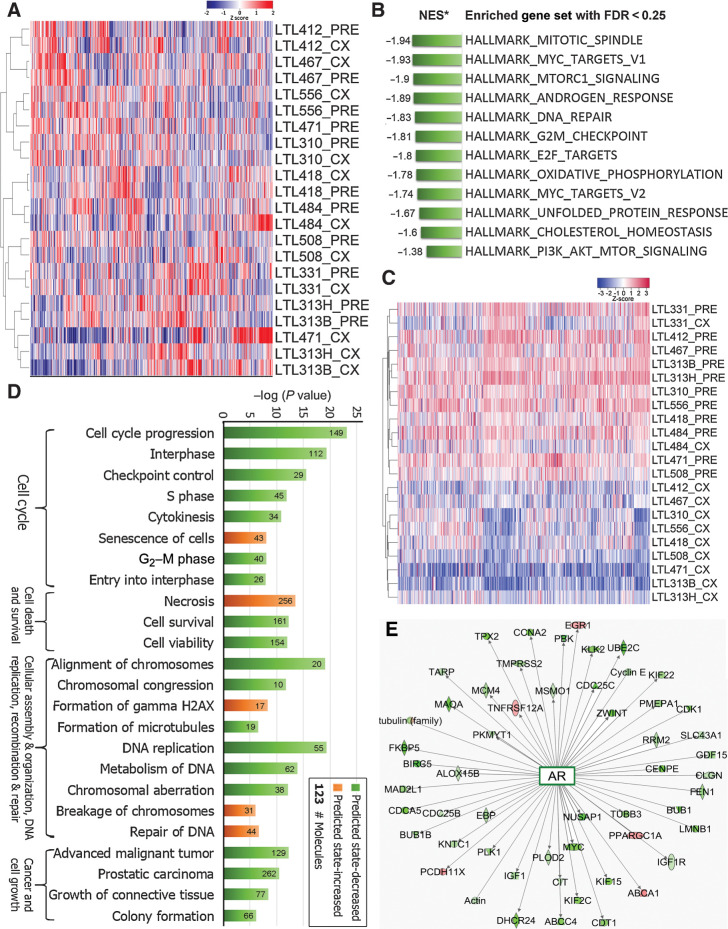
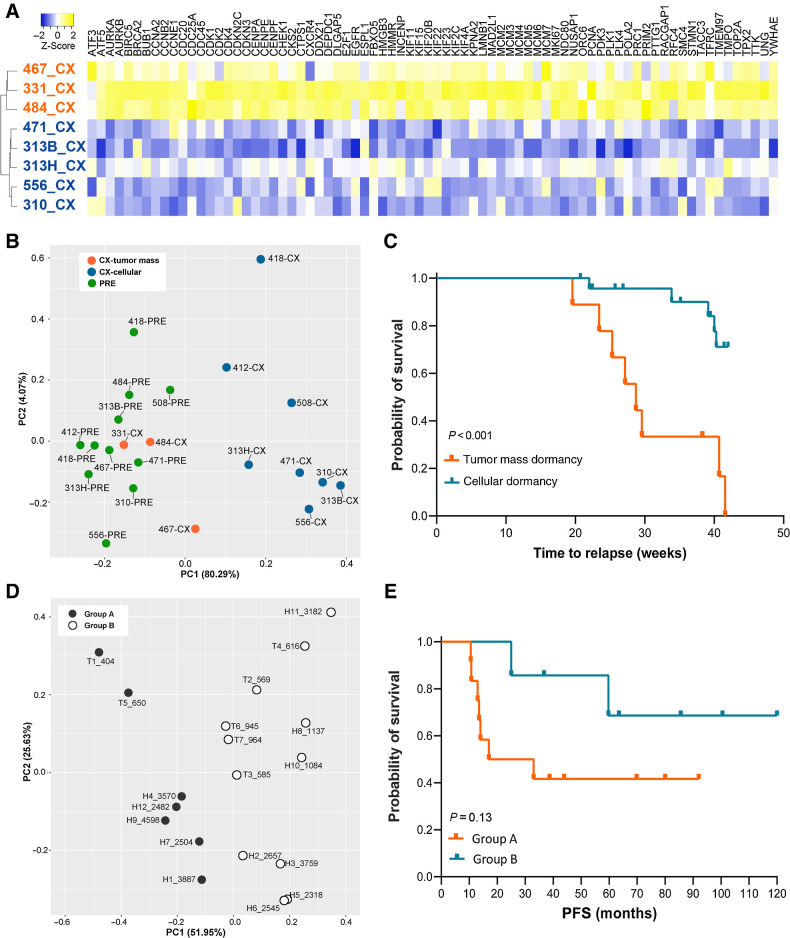
Treatment-induced tumor dormancy is a state in cancer progression where residual disease is present but remains asymptomatic. Dormant cancer cells are treatment-resistant and responsible for cancer recurrence and metastasis. Prostate cancer treated with androgen-deprivation therapy (ADT) often enters a dormant state. ADT-induced prostate cancer dormancy remains poorly understood due to the challenge in acquiring clinical dormant prostate cancer cells and the lack of representative models. In this study, we aimed to develop clinically relevant models for studying ADT-induced prostate cancer dormancy. Dormant prostate cancer models were established by castrating mice bearing patient-derived xenografts (PDX) of hormonal naïve or sensitive prostate cancer. Dormancy status and tumor relapse were monitored and evaluated. Paired pre- and postcastration (dormant) PDX tissues were subjected to morphologic and transcriptome profiling analyses. As a result, we established eleven ADT-induced dormant prostate cancer models that closely mimicked the clinical courses of ADT-treated prostate cancer. We identified two ADT-induced dormancy subtypes that differed in morphology, gene expression, and relapse rates. We discovered transcriptomic differences in precastration PDXs that predisposed the dormancy response to ADT. We further developed a dormancy subtype-based, predisposed gene signature that was significantly associated with ADT response in hormonal naïve prostate cancer and clinical outcome in castration-resistant prostate cancer treated with ADT or androgen-receptor pathway inhibitors.
We have established highly clinically relevant PDXs of ADT-induced dormant prostate cancer and identified two dormancy subtypes, leading to the development of a novel predicative gene signature that allows robust risk stratification of patients with prostate cancer to ADT or androgen-receptor pathway inhibitors.
诱导肿瘤休眠是癌症进展中的一种状态,此时残留的疾病仍然存在,但没有症状。休眠癌细胞具有抗药性,是癌症复发和转移的原因。接受去势治疗(ADT)的前列腺癌通常会进入休眠状态。由于难以获得临床休眠前列腺癌细胞,以及缺乏代表性模型,ADT 诱导的前列腺癌休眠仍然知之甚少。在这项研究中,我们旨在开发用于研究 ADT 诱导的前列腺癌休眠的临床相关模型。通过对携带激素-naive 或敏感前列腺癌的患者衍生异种移植物(PDX)的雄性去势的小鼠建立休眠前列腺癌模型。监测和评估休眠状态和肿瘤复发。对去势前(休眠)和去势后的 PDX 组织进行形态和转录组谱分析。结果,我们建立了 11 个 ADT 诱导的休眠前列腺癌模型,这些模型很好地模拟了 ADT 治疗前列腺癌的临床过程。我们发现了两种 ADT 诱导的休眠亚型,它们在形态、基因表达和复发率上存在差异。我们在去势前的 PDX 中发现了转录组差异,这些差异使休眠对 ADT 产生反应。我们进一步开发了一种基于休眠亚型的、有倾向性的基因特征,该特征与激素-naive 前列腺癌的 ADT 反应以及接受 ADT 或雄激素受体通路抑制剂治疗的去势抵抗性前列腺癌的临床结局显著相关。
我们已经建立了高度临床相关的 ADT 诱导的休眠前列腺癌 PDX,并确定了两种休眠亚型,从而开发了一种新的预测基因特征,可以对接受 ADT 或雄激素受体通路抑制剂治疗的前列腺癌患者进行稳健的风险分层。