Zhang Yichi, Zhao Haige, Su Qun, Wang Cuili, Chen Hongjun, Shen Lingling, Ma Liang, Zhu Tingting, Chen Wenqing, Jiang Hong, Chen Jianghua
Kidney Disease Center, The First Affiliated Hospital, College of Medicine, Zhejiang University, Hangzhou, China.
Key Laboratory of Nephropathy, Hangzhou, China.
Front Med (Lausanne). 2022 Jan 14;8:799516. doi: 10.3389/fmed.2021.799516. eCollection 2021.
Acute kidney injury (AKI) after cardiac surgery is independently associated with a prolonged hospital stay, increased cost of care, and increased post-operative mortality. Delayed elevation of serum creatinine (SCr) levels requires novel biomarkers to provide a prediction of AKI after cardiac surgery. Our objective was to find a novel blood biomarkers combination to construct a model for predicting AKI after cardiac surgery and risk stratification.
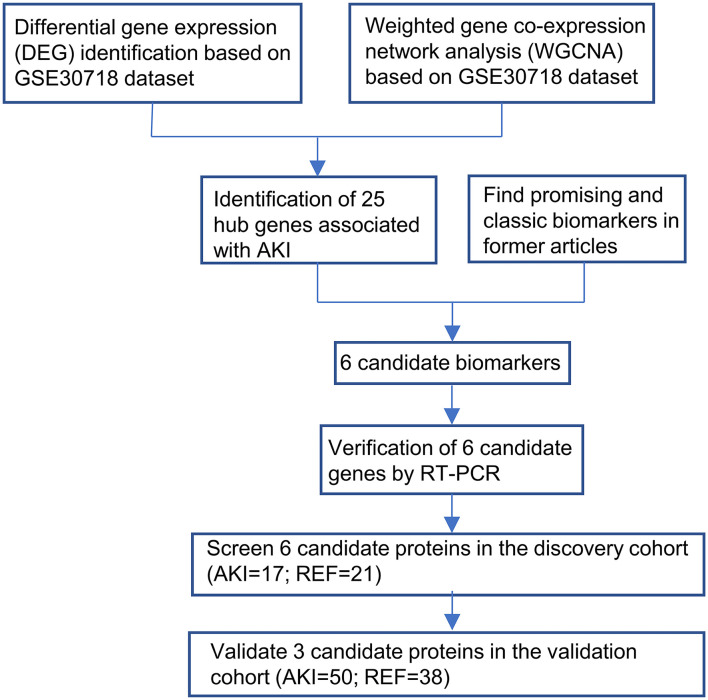
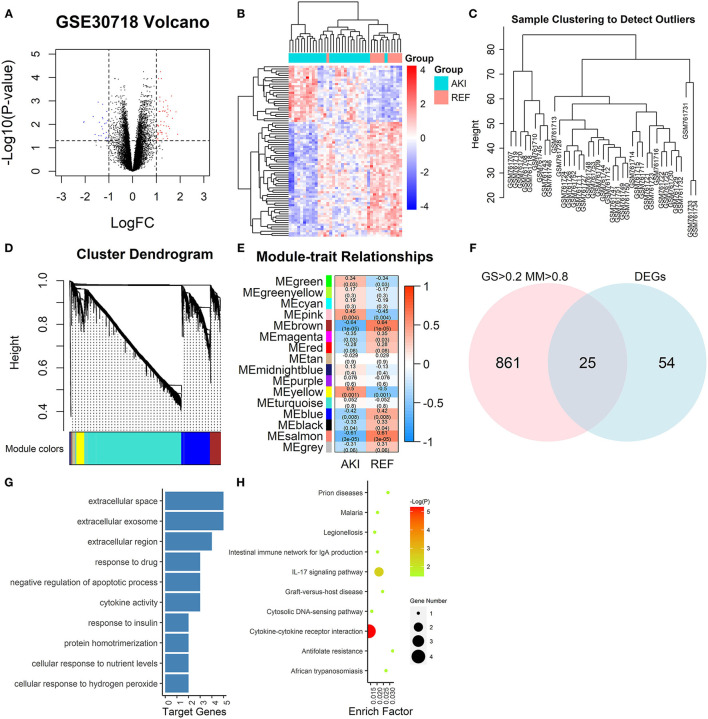
This was a case-control study. Weighted Gene Co-expression Network Analysis (WGCNA) was applied to Gene Expression Omnibus (GEO) dataset GSE30718 to seek potential biomarkers associated with AKI. We measured biomarker levels in venous blood samples of 67 patients with AKI after cardiac surgery and 59 control patients in two cohorts. Clinical data were collected. We developed a multi-biomarker model for predicting cardiac-surgery-associated AKI and compared it with a traditional clinical-factor-based model.
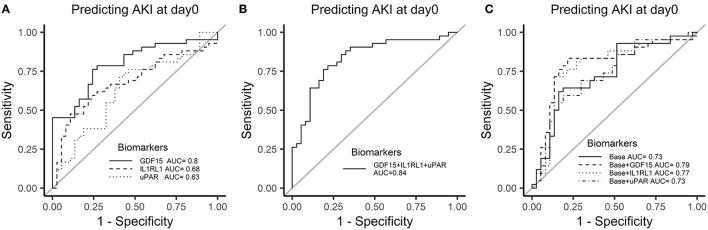
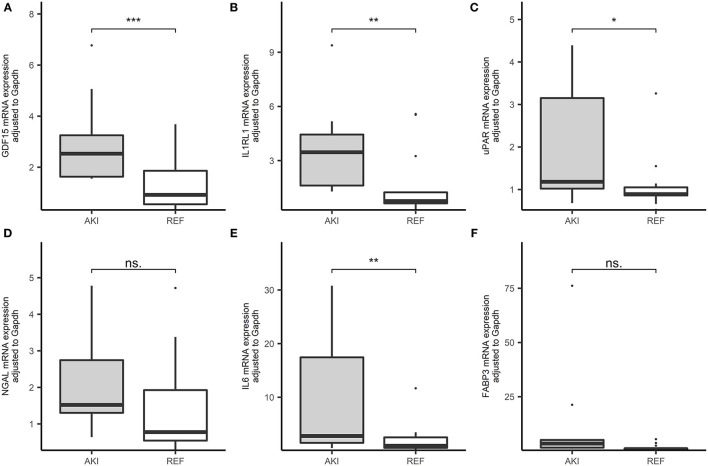
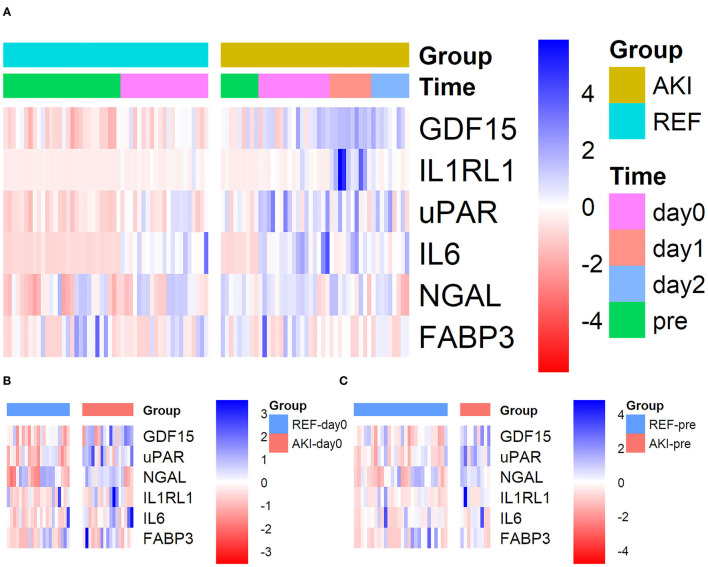
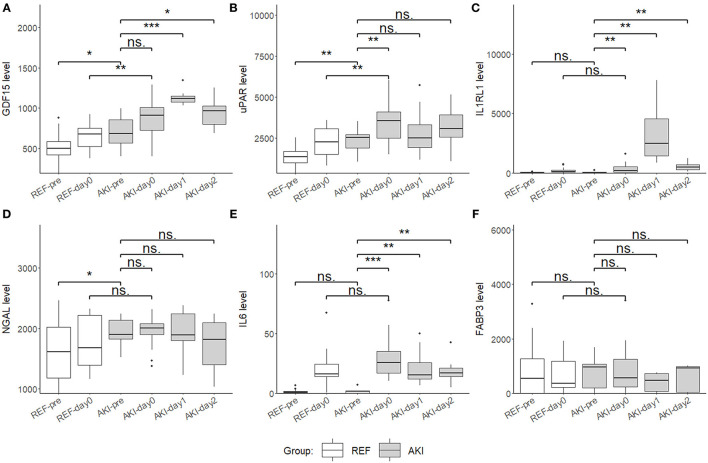
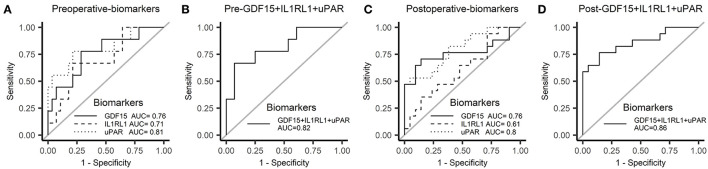
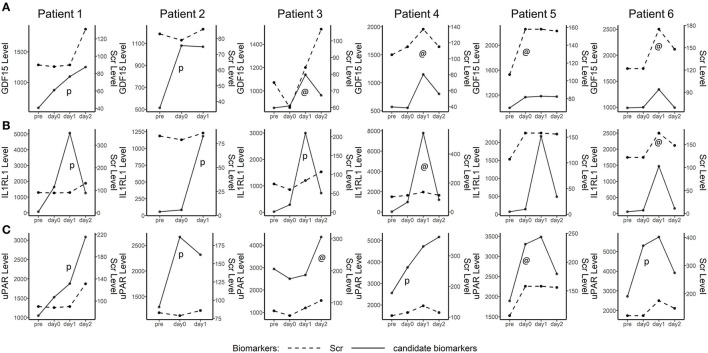
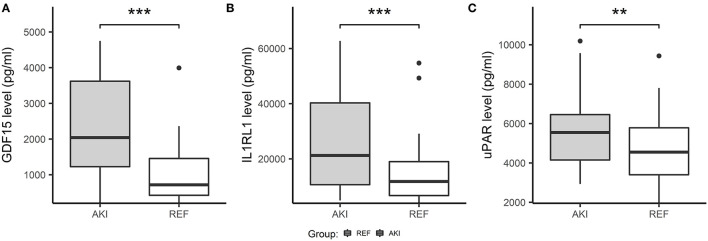
From bioinformatics analysis and previous articles, we found 6 potential plasma biomarkers for the prediction of AKI. Among them, 3 biomarkers, such as growth differentiation factor 15 (GDF15), soluble suppression of tumorigenicity 2 (ST2, IL1RL1), and soluble urokinase plasminogen activator receptor (uPAR) were found to have prediction ability for AKI (area under the curve [AUC] > 0.6) in patients undergoing cardiac surgery. They were then incorporated into a multi-biomarker model for predicting AKI (C-statistic: 0.84, Brier 0.15) which outperformed the traditional clinical-factor-based model (C-statistic: 0.73, Brier 0.16).
Our research validated a promising plasma multi-biomarker model for predicting AKI after cardiac surgery.
心脏手术后的急性肾损伤(AKI)与住院时间延长、护理费用增加及术后死亡率升高独立相关。血清肌酐(SCr)水平延迟升高需要新型生物标志物来预测心脏手术后的AKI。我们的目标是找到一种新型血液生物标志物组合,构建一个预测心脏手术后AKI及风险分层的模型。
这是一项病例对照研究。加权基因共表达网络分析(WGCNA)应用于基因表达综合数据库(GEO)数据集GSE30718,以寻找与AKI相关的潜在生物标志物。我们在两个队列中测量了67例心脏手术后发生AKI患者及59例对照患者静脉血样本中的生物标志物水平。收集了临床数据。我们开发了一个预测心脏手术相关AKI的多生物标志物模型,并将其与传统的基于临床因素的模型进行比较。
通过生物信息学分析和既往文章,我们发现了6种预测AKI的潜在血浆生物标志物。其中,生长分化因子15(GDF15)、可溶性肿瘤抑制因子2(ST2,IL1RL1)和可溶性尿激酶型纤溶酶原激活剂受体(uPAR)这3种生物标志物在接受心脏手术的患者中对AKI具有预测能力(曲线下面积[AUC]>0.6)。然后将它们纳入一个预测AKI的多生物标志物模型(C统计量:0.84,布里尔评分0.15),该模型优于传统的基于临床因素的模型(C统计量:0.73,布里尔评分0.16)。
我们的研究验证了一种有前景的血浆多生物标志物模型,用于预测心脏手术后的AKI。