Pacific Biosciences, Menlo Park, CA 94025, USA.
Department of Integrative Physiology and Neuroscience, Washington State University, Pullman, WA 99164, USA.
G3 (Bethesda). 2022 Mar 4;12(3). doi: 10.1093/g3journal/jkab422.
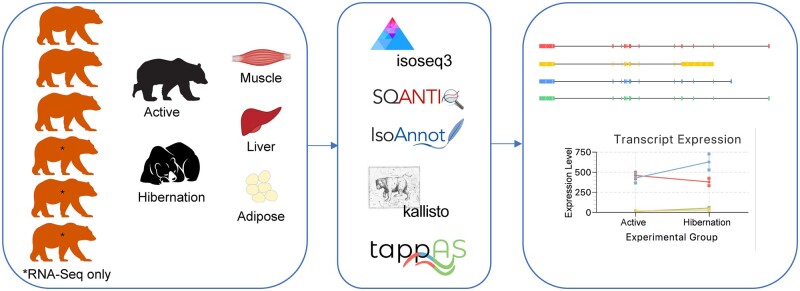
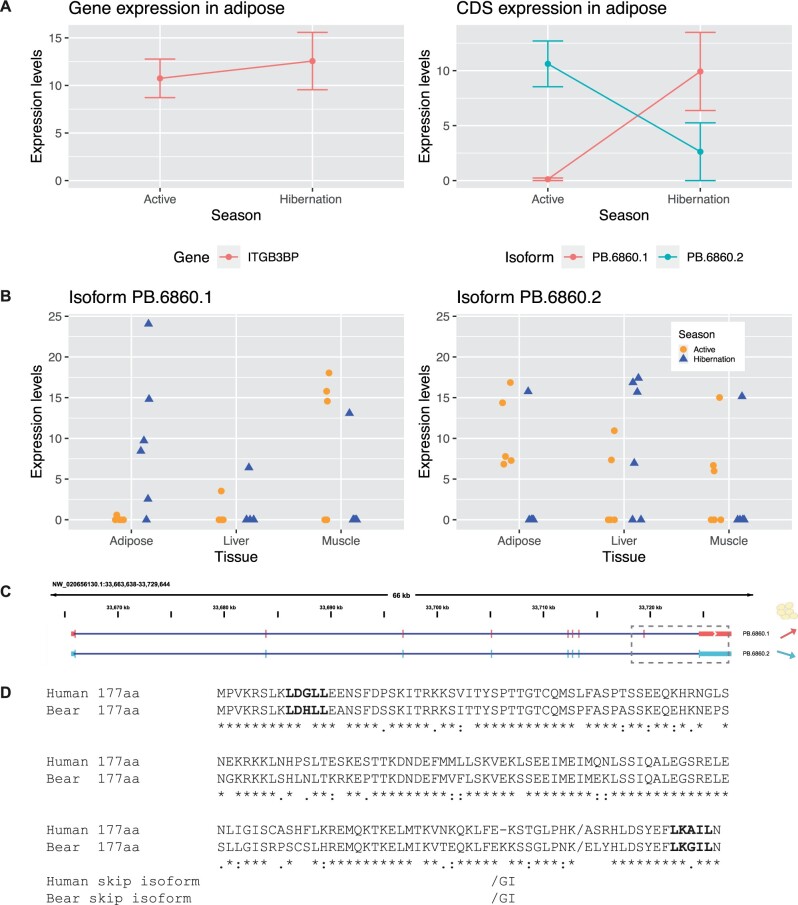
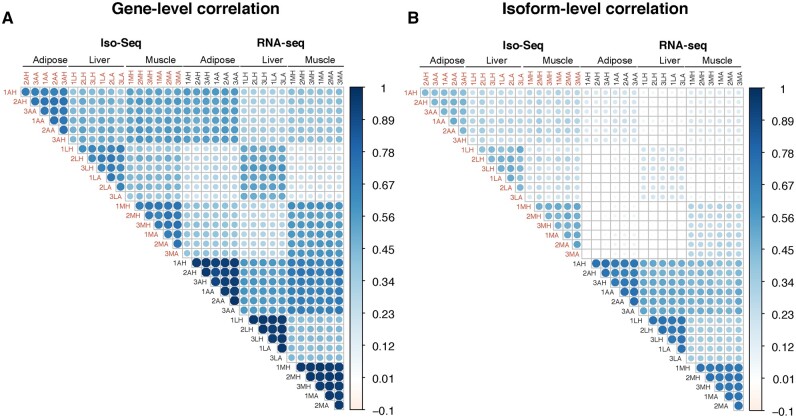
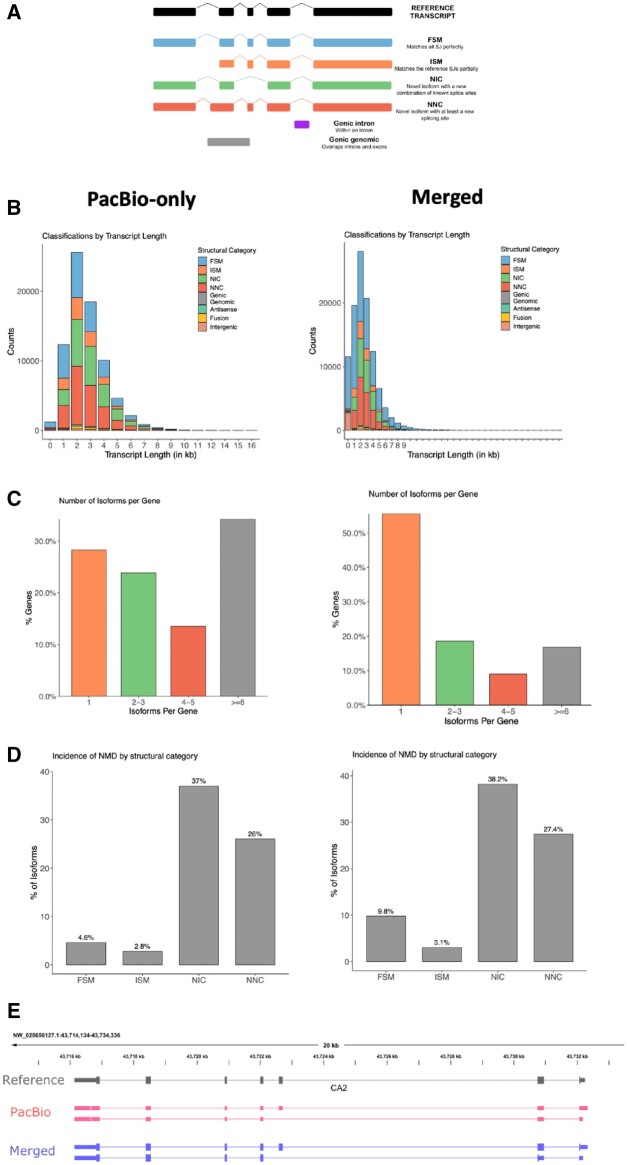
Understanding hibernation in brown bears (Ursus arctos) can provide insight into some human diseases. During hibernation, brown bears experience periods of insulin resistance, physical inactivity, extreme bradycardia, obesity, and the absence of urine production. These states closely mimic aspects of human diseases such as type 2 diabetes, muscle atrophy, as well as renal and heart failure. The reversibility of these states from hibernation to active season enables the identification of mediators with possible therapeutic value for humans. Recent studies have identified genes and pathways that are differentially expressed between active and hibernation seasons in bears. However, little is known about the role of differential expression of gene isoforms on hibernation physiology. To identify both distinct and novel mRNA isoforms, full-length RNA-sequencing (Iso-Seq) was performed on adipose, skeletal muscle, and liver from three individual bears sampled during both active and hibernation seasons. The existing reference genome annotation was improved by combining it with the Iso-Seq data. Short-read RNA-sequencing data from six individuals were mapped to the new reference annotation to quantify differential isoform usage (DIU) between tissues and seasons. We identified differentially expressed isoforms in all three tissues, to varying degrees. Adipose had a high level of DIU with isoform switching, regardless of whether the genes were differentially expressed. Our analyses revealed that DIU, even in the absence of differential gene expression, is an important mechanism for modulating genes during hibernation. These findings demonstrate the value of isoform expression studies and will serve as the basis for deeper exploration into hibernation biology.
了解棕熊(Ursus arctos)的冬眠机制可以为一些人类疾病提供启示。在冬眠期间,棕熊会经历胰岛素抵抗、身体不活动、极度心动过缓、肥胖以及停止产生尿液等阶段。这些状态与人类疾病的某些方面非常相似,如 2 型糖尿病、肌肉萎缩以及肾和心力衰竭。从冬眠到活跃季节这些状态的可逆性使得能够鉴定出对人类具有潜在治疗价值的介质。最近的研究已经确定了熊在活跃季节和冬眠季节之间差异表达的基因和途径。然而,对于基因异构体的差异表达在冬眠生理学中的作用知之甚少。为了鉴定出冬眠生理学中的独特和新颖的 mRNA 异构体,我们对在活跃季节和冬眠季节采集的三只棕熊的脂肪、骨骼肌和肝脏进行了全长 RNA 测序(Iso-Seq)。通过将现有参考基因组注释与 Iso-Seq 数据相结合,对其进行了改进。来自六个个体的短读 RNA-seq 数据被映射到新的参考注释上,以量化组织和季节之间的差异表达异构体使用(DIU)。我们在所有三种组织中都鉴定出了差异表达的异构体,但其程度各不相同。脂肪组织的 DIU 水平很高,存在异构体转换,而不管基因是否存在差异表达。我们的分析表明,DIU 即使在没有差异基因表达的情况下,也是在冬眠过程中调节基因的重要机制。这些发现表明了异构体表达研究的价值,并将作为深入探索冬眠生物学的基础。