Department of Biological Sciences, Tokyo Metropolitan University, Hachioji 192-0397, Japan.
Research Center for Genomics and Bioinformatics, Tokyo Metropolitan University, Hachioji 192-0397, Japan.
G3 (Bethesda). 2022 Mar 4;12(3). doi: 10.1093/g3journal/jkac010.
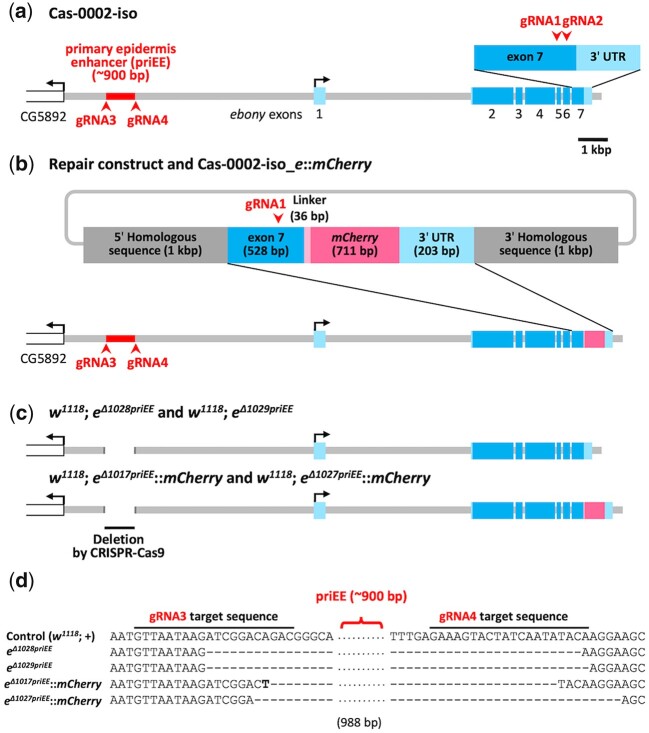
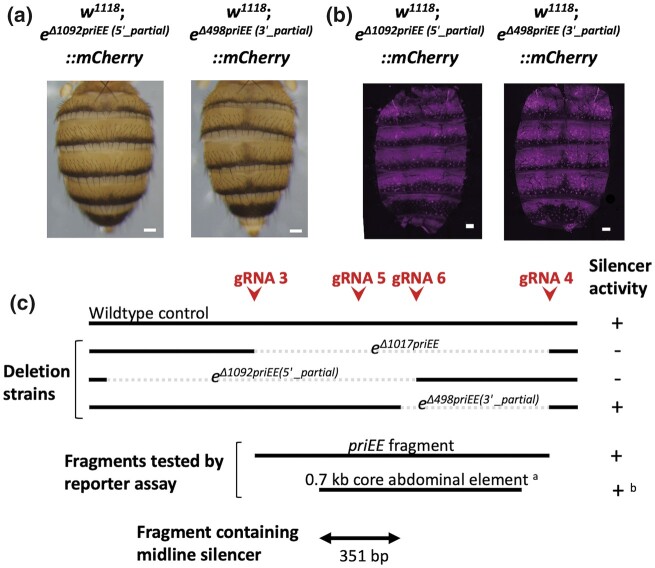
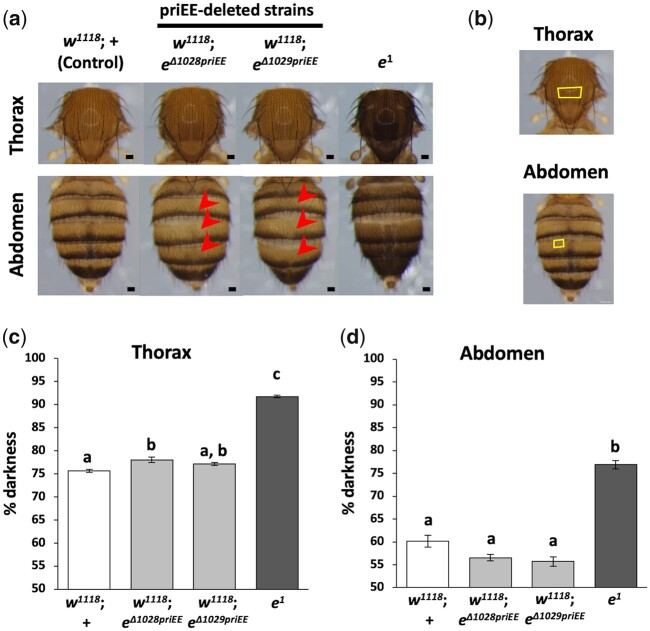
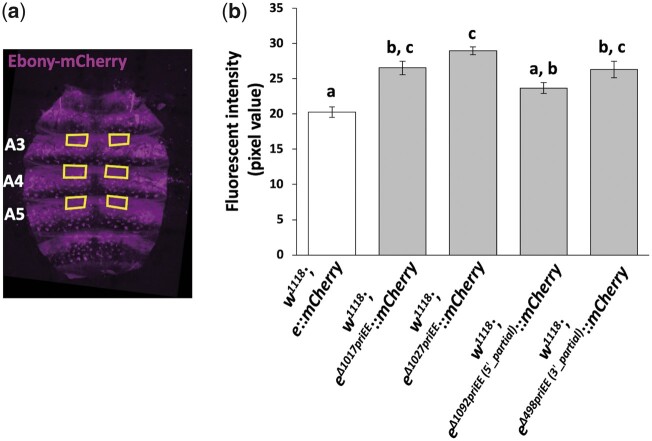
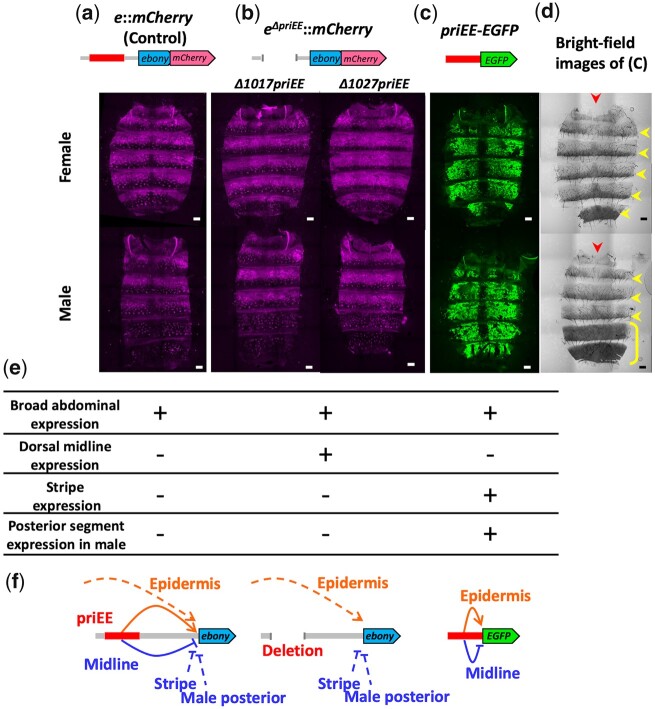
The spatiotemporal regulation of gene expression is essential to ensure robust phenotypic outcomes. Pigmentation patterns in Drosophila are determined by pigments biosynthesized in the developing epidermis and the cis-regulatory elements of the genes involved in this process are well-characterized. Here, we report that the known primary epidermal enhancer is dispensable for the transcriptional activation of ebony (involved in light-colored pigment synthesis) in the developing epidermis of Drosophila melanogaster. The evidence was obtained by introducing an approximately 1 kbp deletion at the primary epidermal enhancer by genome editing. The effect of the primary epidermal enhancer deletion on pigmentation and on the endogenous expression pattern of a mCherry-fused ebony allele was examined in the abdomen. The expression levels of the mCherry-fused ebony in the primary epidermal enhancer-deleted strains were slightly higher than that of the control strain, indicating that the sequences outside the primary epidermal enhancer have an ability to drive an expression of this gene in the epidermis. Interestingly, the primary epidermal enhancer deletion resulted in a derepression of this gene in the dorsal midline of the abdominal tergites, where dark pigmentation is present in the wild-type individuals. This indicated that the primary epidermal enhancer fragment contains a silencer. Furthermore, the endogenous expression pattern of ebony in the 2 additional strains with partially deleted primary epidermal enhancer revealed that the silencer resides within a 351-bp fragment in the 5' portion of the primary epidermal enhancer. These results demonstrated that deletion assays combined with reporter assays are highly effective in detecting the presence of positively and negatively regulating sequences within and outside the focal cis-regulatory elements.
基因表达的时空调控对于确保稳健的表型结果至关重要。果蝇的色素模式是由发育中的表皮中合成的色素决定的,涉及这一过程的基因的顺式调控元件已经得到了很好的描述。在这里,我们报告说,已知的主要表皮增强子对于果蝇发育中的表皮中 ebony(参与浅色色素合成)的转录激活是可有可无的。这一证据是通过基因组编辑在主要表皮增强子处引入大约 1 kbp 的缺失获得的。通过在腹部检查主要表皮增强子缺失对色素沉着和 mCherry 融合 ebony 等位基因的内源性表达模式的影响,获得了证据。在主要表皮增强子缺失的菌株中,mCherry 融合 ebony 的表达水平略高于对照菌株,表明主要表皮增强子之外的序列具有在表皮中驱动该基因表达的能力。有趣的是,主要表皮增强子缺失导致该基因在腹部节的背中线处的表达去抑制,在野生型个体中,背中线处存在深色色素。这表明主要表皮增强子片段包含一个沉默子。此外,在另外两个部分缺失主要表皮增强子的菌株中 ebony 的内源性表达模式表明,沉默子位于主要表皮增强子 5' 部分的 351bp 片段内。这些结果表明,删除测定法与报告基因测定法相结合,非常有效地检测到焦点顺式调控元件内外的正调控和负调控序列的存在。