Faculty of Pharmacy, University of Coimbra, Azinhaga de Santa Comba, 3000-548, Coimbra, Portugal; Center for Neuroscience and Cell Biology, University of Coimbra, Rua Larga, 3004-504, Coimbra, Portugal.
Faculty of Pharmacy, University of Coimbra, Azinhaga de Santa Comba, 3000-548, Coimbra, Portugal.
Redox Biol. 2022 Apr;50:102250. doi: 10.1016/j.redox.2022.102250. Epub 2022 Jan 26.
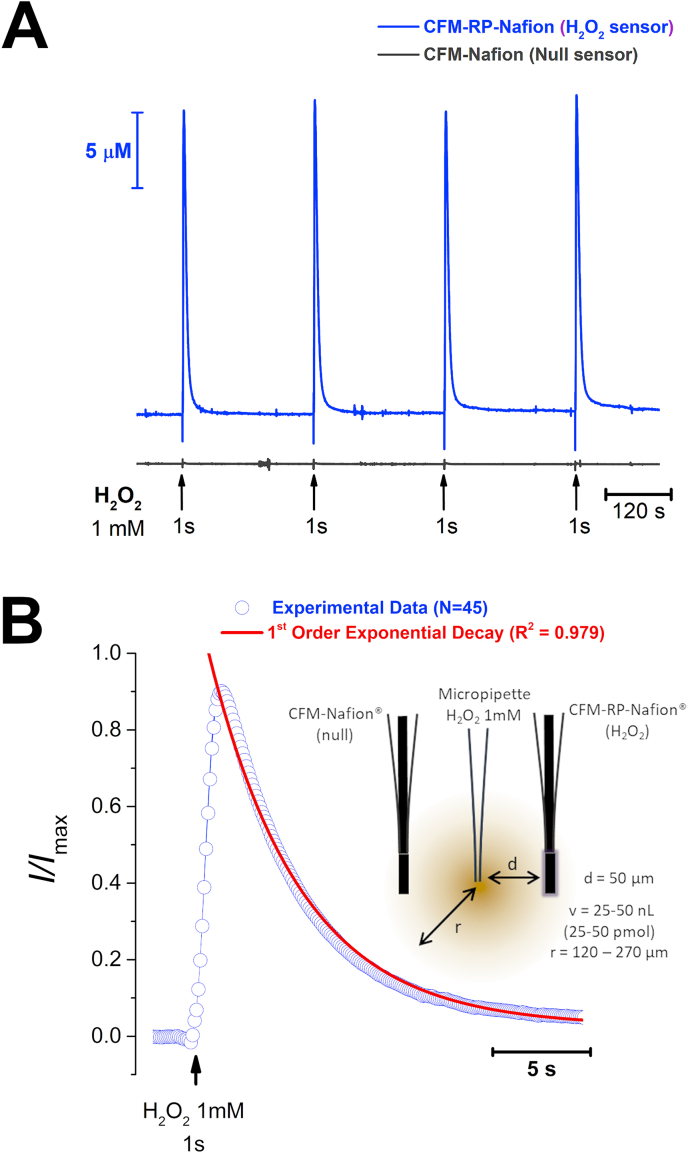
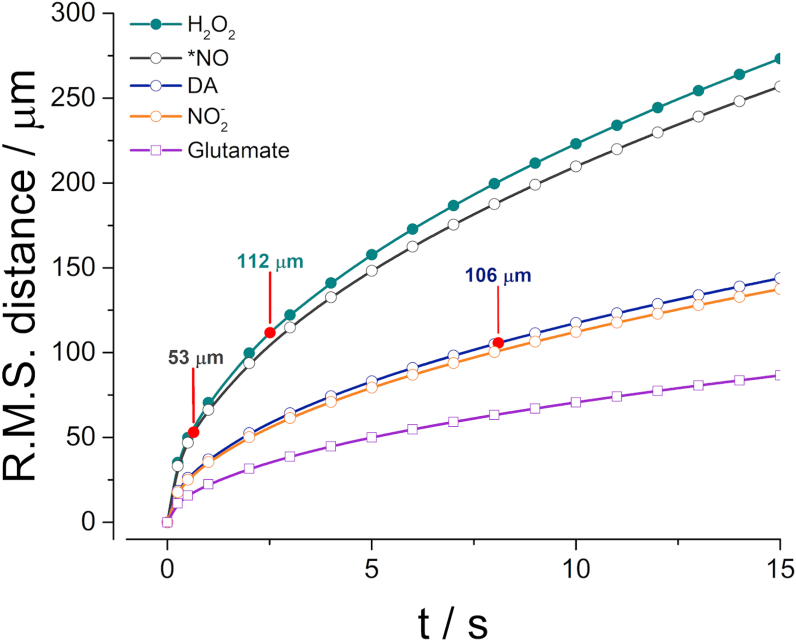
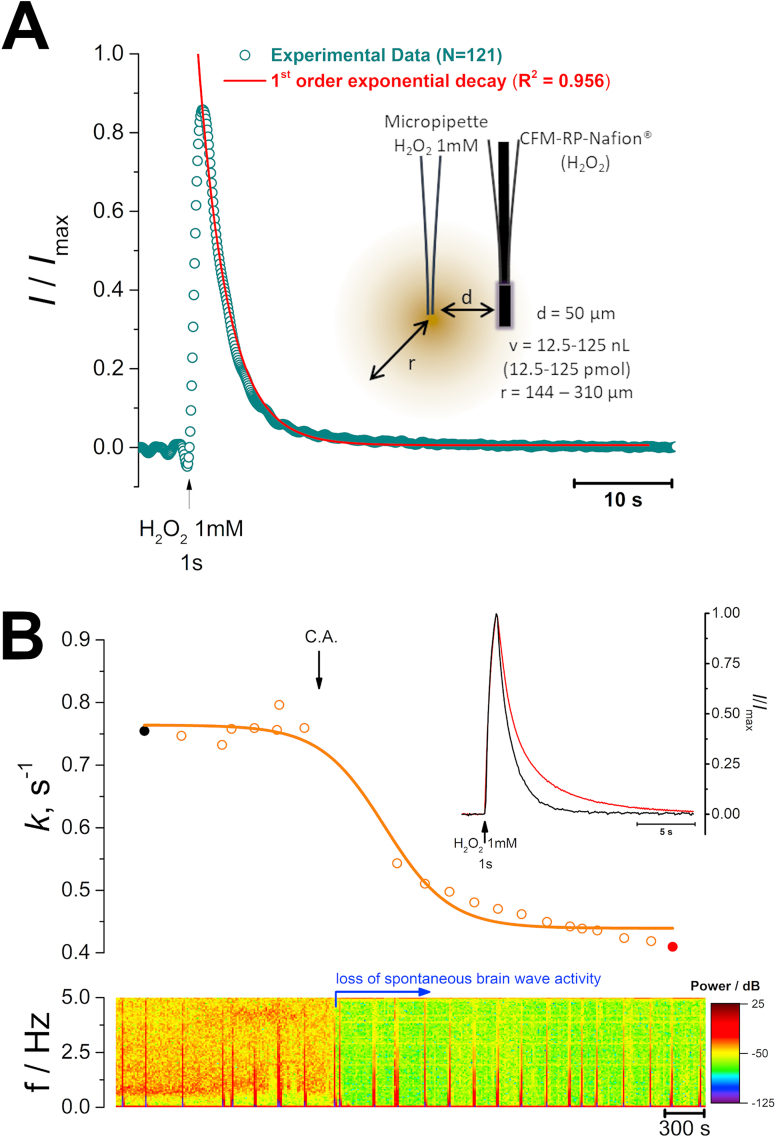
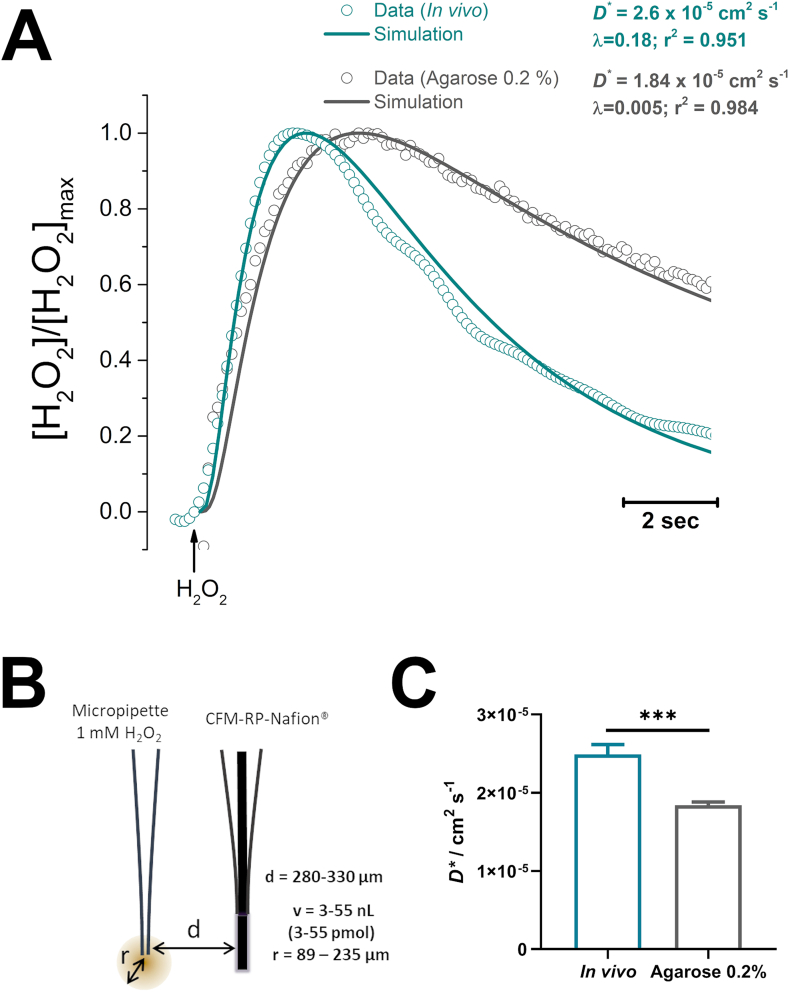
Hydrogen peroxide is a major redox signaling molecule underlying a novel paradigm of cell function and communication. A role for HO as an intercellular signaling molecule and neuromodulator in the brain has become increasingly apparent, with evidence showing this biological oxidant to regulate neuronal polarity, connectivity, synaptic transmission and tuning of neuronal networks. This notion is supported by its ability to diffuse in the extracellular space, from source of production to target. It is, thus, crucial to understand extracellular HO concentration dynamics in the living brain and the factors which shape its diffusion pattern and half-life. To address this issue, we have used a novel microsensor to measure HO concentration dynamics in the brain extracellular matrix both in an ex vivo model using rodent brain slices and in vivo. We found that exogenously applied HO is removed from the extracellular space with an average half-life of t = 2.2 s in vivo. We determined the in vivo effective diffusion coefficient of HO to be D* = 2.5 × 10 cm s. This allows it to diffuse over 100 μm in the extracellular space within its half-life. Considering this, we can tentatively place HO within the class of volume neurotransmitters, connecting all cell types within the complex network of brain tissue, regardless of whether they are physically connected. These quantitative details of HO diffusion and half-life in the brain allow us to interpret the physiology of the redox signal and lay the pavement to then address dysregulation in redox homeostasis associated with disease processes.
过氧化氢是一种主要的氧化还原信号分子,它为细胞功能和通讯提供了一种新的范例。HO 作为一种细胞间信号分子和神经调质在大脑中的作用变得越来越明显,有证据表明这种生物氧化剂可以调节神经元极性、连接、突触传递和神经元网络的调谐。这一概念得到了它在细胞外空间扩散的能力的支持,从产生源到靶标。因此,了解活脑中细胞外 HO 浓度动力学以及塑造其扩散模式和半衰期的因素至关重要。为了解决这个问题,我们使用了一种新型微传感器来测量脑外基质中 HO 浓度的动力学,既在使用啮齿动物脑片的离体模型中,也在体内进行了测量。我们发现,外源性应用的 HO 在体内从细胞外空间中以平均半衰期 t = 2.2 s 的速度被清除。我们确定 HO 的体内有效扩散系数 D* = 2.5 × 10^-5 cm^2 s^-1。这使得它在半衰期内可以在细胞外空间中扩散超过 100 μm。考虑到这一点,我们可以暂时将 HO 归入体积神经递质类,将脑组织复杂网络中的所有细胞类型连接起来,无论它们是否物理上相连。HO 在大脑中的扩散和半衰期的这些定量细节使我们能够解释氧化还原信号的生理学,并为随后解决与疾病过程相关的氧化还原稳态失调问题奠定基础。