Division of Plant Sciences and Technology, College of Agriculture Food and Natural Resources and Interdisciplinary Plant Group, Christopher S. Bond Life Sciences Center, University of Missouri, Columbia, MO 65201.
Department of Surgery, University of Missouri School of Medicine, Christopher S. Bond Life Sciences Center, University of Missouri, Columbia, MO 65201.
Proc Natl Acad Sci U S A. 2023 Aug;120(31):e2305496120. doi: 10.1073/pnas.2305496120. Epub 2023 Jul 26.
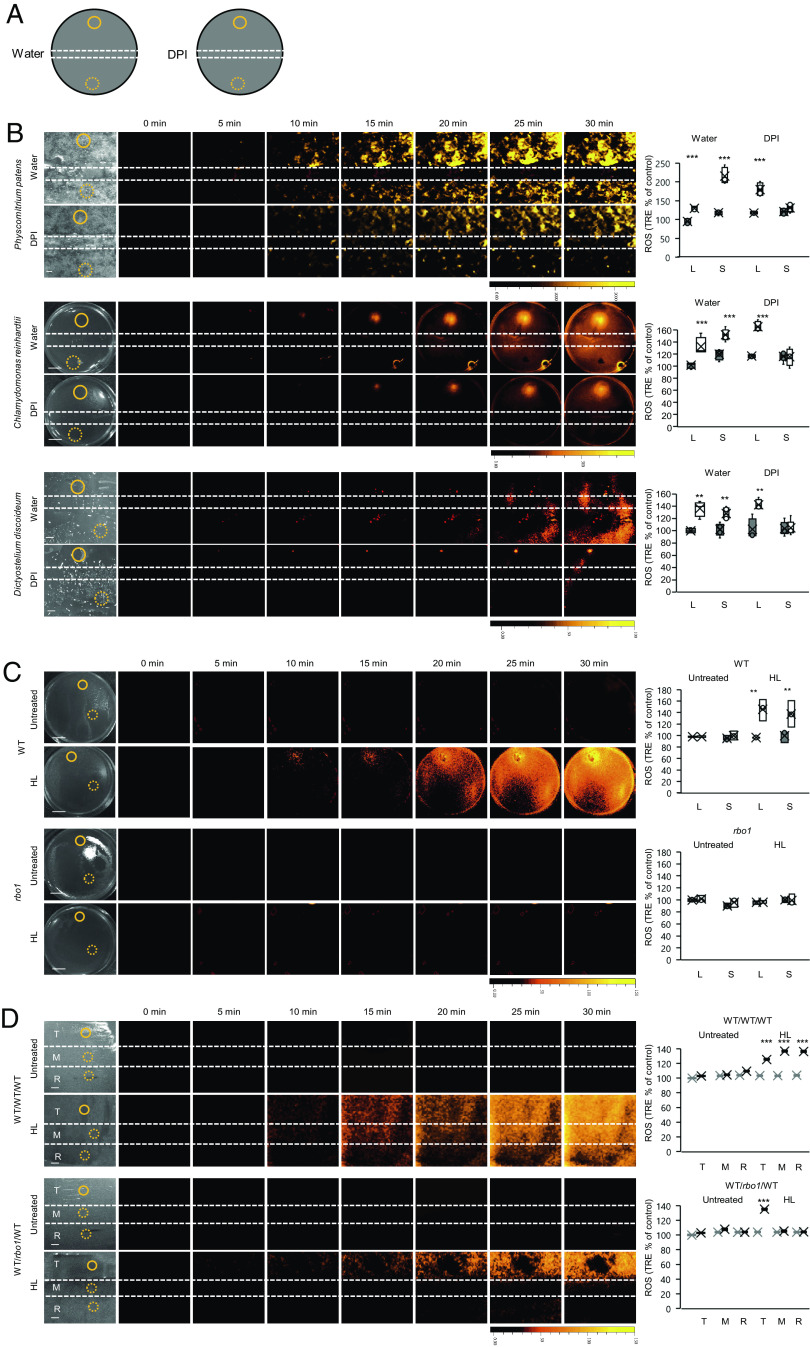
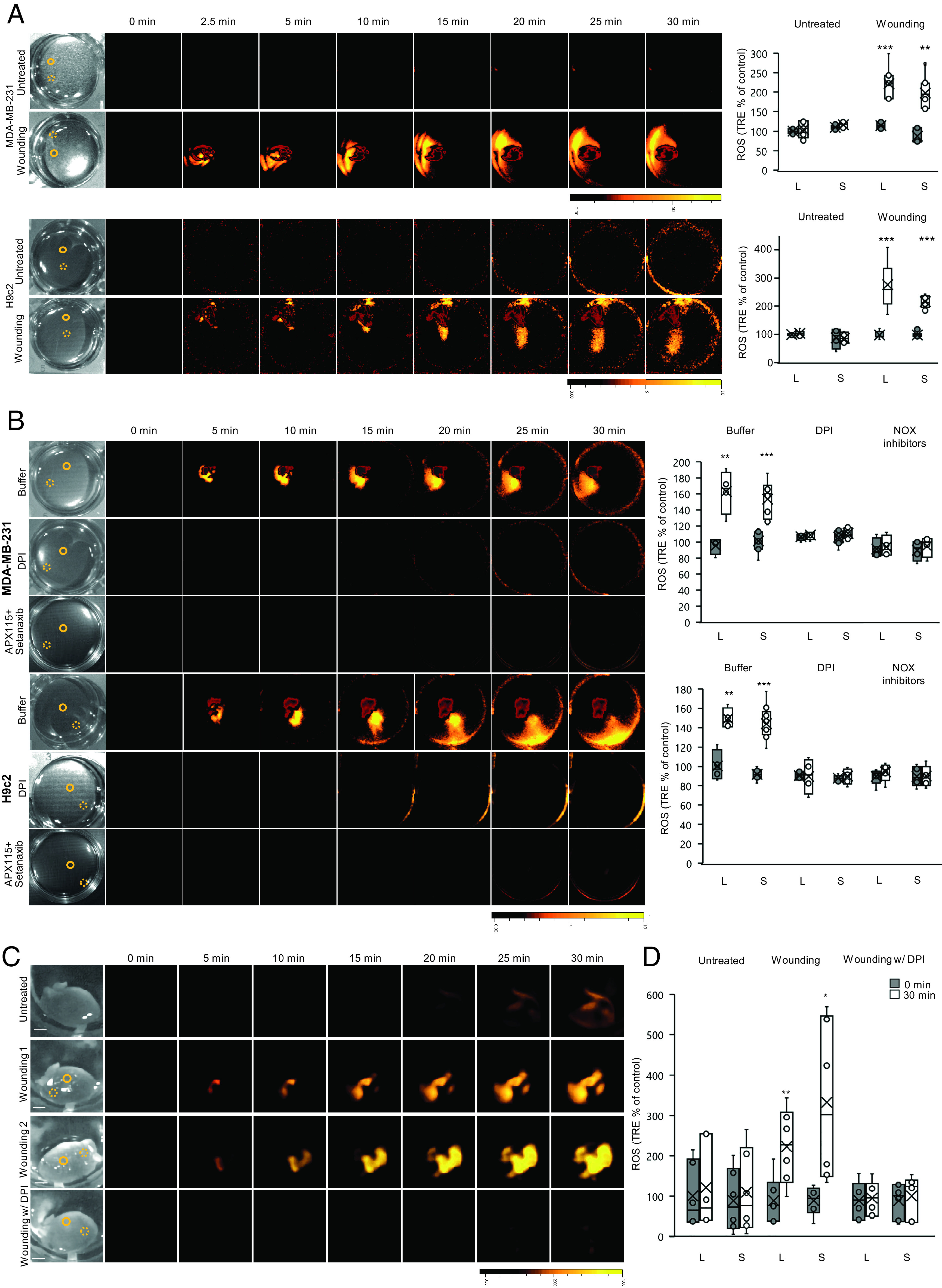
Cell-to-cell communication is fundamental to multicellular organisms and unicellular organisms living in a microbiome. It is thought to have evolved as a stress- or quorum-sensing mechanism in unicellular organisms. A unique cell-to-cell communication mechanism that uses reactive oxygen species (ROS) as a signal (termed the "ROS wave") was identified in flowering plants. This process is essential for systemic signaling and plant acclimation to stress and can spread from a small group of cells to the entire plant within minutes. Whether a similar signaling process is found in other organisms is however unknown. Here, we report that the ROS wave can be found in unicellular algae, amoeba, ferns, mosses, mammalian cells, and isolated hearts. We further show that this process can be triggered in unicellular and multicellular organisms by a local stress or HO treatment and blocked by the application of catalase or NADPH oxidase inhibitors and that in unicellular algae it communicates important stress-response signals between cells. Taken together, our findings suggest that an active process of cell-to-cell ROS signaling, like the ROS wave, evolved before unicellular and multicellular organisms diverged. This mechanism could have communicated an environmental stress signal between cells and coordinated the acclimation response of many different cells living in a community. The finding of a signaling process, like the ROS wave, in mammalian cells further contributes to our understanding of different diseases and could impact the development of drugs that target for example cancer or heart disease.
细胞间通讯对于多细胞生物和生活在微生物组中的单细胞生物至关重要。人们认为,它是单细胞生物作为应激或群体感应机制进化而来的。在开花植物中发现了一种独特的细胞间通讯机制,该机制使用活性氧(ROS)作为信号(称为“ROS 波”)。这个过程对于系统信号传递和植物对压力的适应至关重要,并且可以在几分钟内从一小群细胞传播到整个植物。然而,其他生物体是否存在类似的信号传递过程尚不清楚。在这里,我们报告称,ROS 波可以在单细胞藻类、变形虫、蕨类植物、苔藓、哺乳动物细胞和分离的心脏中找到。我们进一步表明,这个过程可以在单细胞和多细胞生物中通过局部应激或 HO 处理触发,并可以通过应用过氧化氢酶或 NADPH 氧化酶抑制剂来阻断,而且在单细胞藻类中,它可以在细胞之间传递重要的应激反应信号。总之,我们的研究结果表明,在单细胞和多细胞生物分化之前,就已经进化出了一种活跃的细胞间 ROS 信号传递机制,类似于 ROS 波。这种机制可以在细胞之间传递环境应激信号,并协调生活在群落中的许多不同细胞的适应反应。在哺乳动物细胞中发现类似于 ROS 波的信号传递过程,进一步促进了我们对不同疾病的理解,并可能影响针对例如癌症或心脏病的药物的开发。