Callegari Beniamino, Feder Christophe
Oslo New University College, Oslo, Norway.
Kristiania University College, Oslo, Norway.
Econ Disaster Clim Chang. 2022;6(1):183-212. doi: 10.1007/s41885-022-00106-w. Epub 2022 Jan 27.
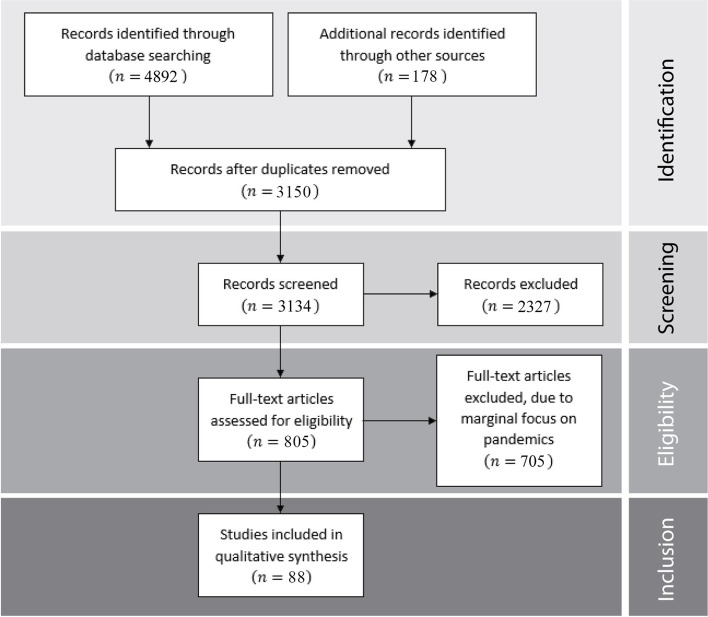
Pandemics have been a long-standing object of study by economists, albeit with declining interest, that is until COVID-19 arrived. We review current knowledge on the pandemics' effects on long-term economic development, spanning economic and historical debates. We show that all economic inputs are potentially affected. Pandemics reduce the workforce and human capital, have mixed effects on investment and savings, but potentially positive consequences for innovation and knowledge development, depending on accompanying institutional change. In the absence of an innovative response supporting income redistribution, pandemics tend to increase income inequalities, worsening poverty traps and highlighting the distributional issues built into insurance-based health insurance systems. We find that the effects of pandemics are asymmetric over time, in space, and among sectors and households. Therefore, we suggest that the research focus on the theoretical plausibility and empirical significance of specific mechanisms should be complemented by meta-analytic efforts aimed at reconstructing the resulting complexity. Finally, we suggest that policymakers prioritize the development of organizational learning and innovative capabilities, focusing on the ability to adapt to emergencies rather than developing rigid protocols or mimicking solutions developed and implemented in different contexts.
大流行一直是经济学家长期研究的对象,尽管关注度在下降,直到新冠疫情出现。我们回顾了关于大流行对长期经济发展影响的现有知识,涵盖经济和历史方面的争论。我们表明,所有经济投入都可能受到影响。大流行会减少劳动力和人力资本,对投资和储蓄有混合影响,但根据伴随的制度变革,对创新和知识发展可能有积极影响。在缺乏支持收入再分配的创新应对措施的情况下,大流行往往会加剧收入不平等,恶化贫困陷阱,并凸显基于保险的医疗保险系统中固有的分配问题。我们发现,大流行的影响在时间、空间以及部门和家庭之间是不对称的。因此,我们建议,在关注特定机制的理论合理性和实证意义的研究重点之外,还应通过旨在重构由此产生的复杂性的元分析努力加以补充。最后,我们建议政策制定者优先发展组织学习和创新能力,重点关注适应紧急情况的能力,而不是制定僵化的方案或模仿在不同背景下制定和实施的解决方案。