Department of Molecular Pathobiology, Neuroscience Institute, New York University, New York, NY 10010.
Department of Neuroscience and Physiology, Neuroscience Institute, New York University, New York, NY 10010.
Proc Natl Acad Sci U S A. 2022 Feb 8;119(6). doi: 10.1073/pnas.2112059119.
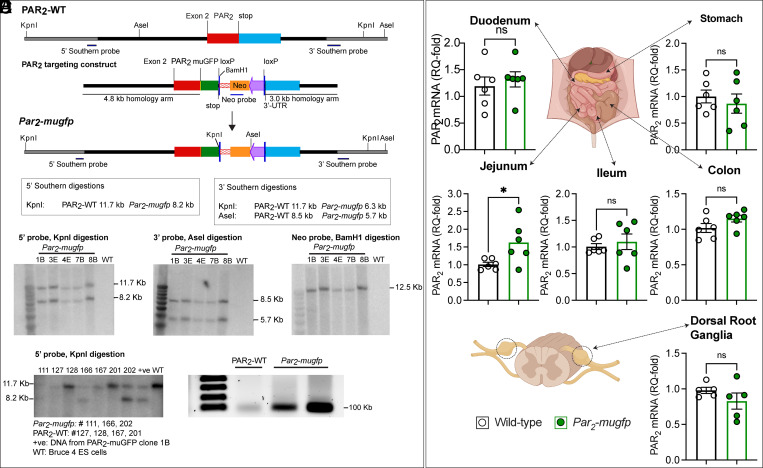
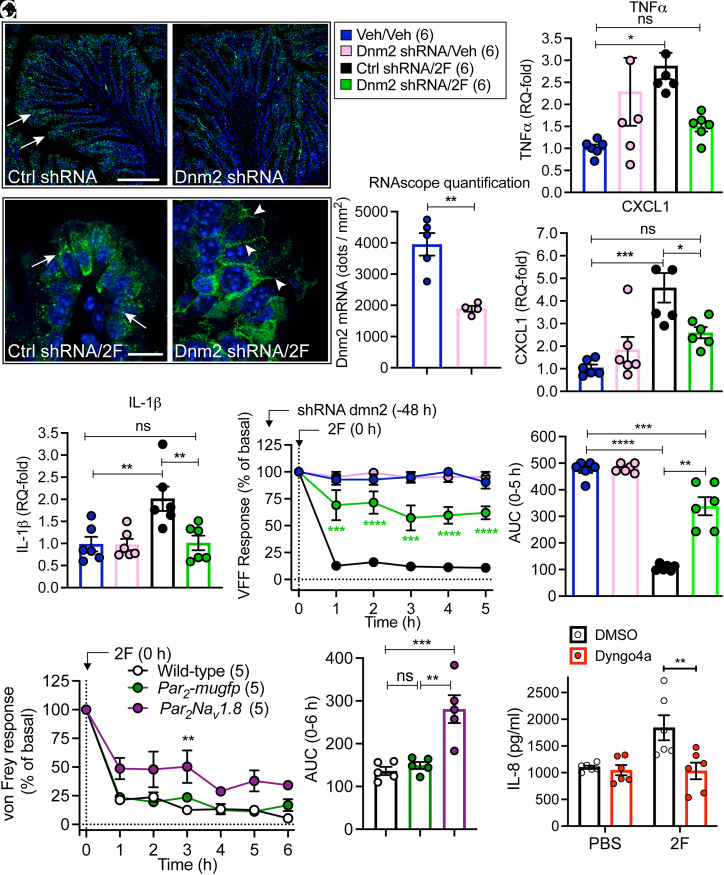
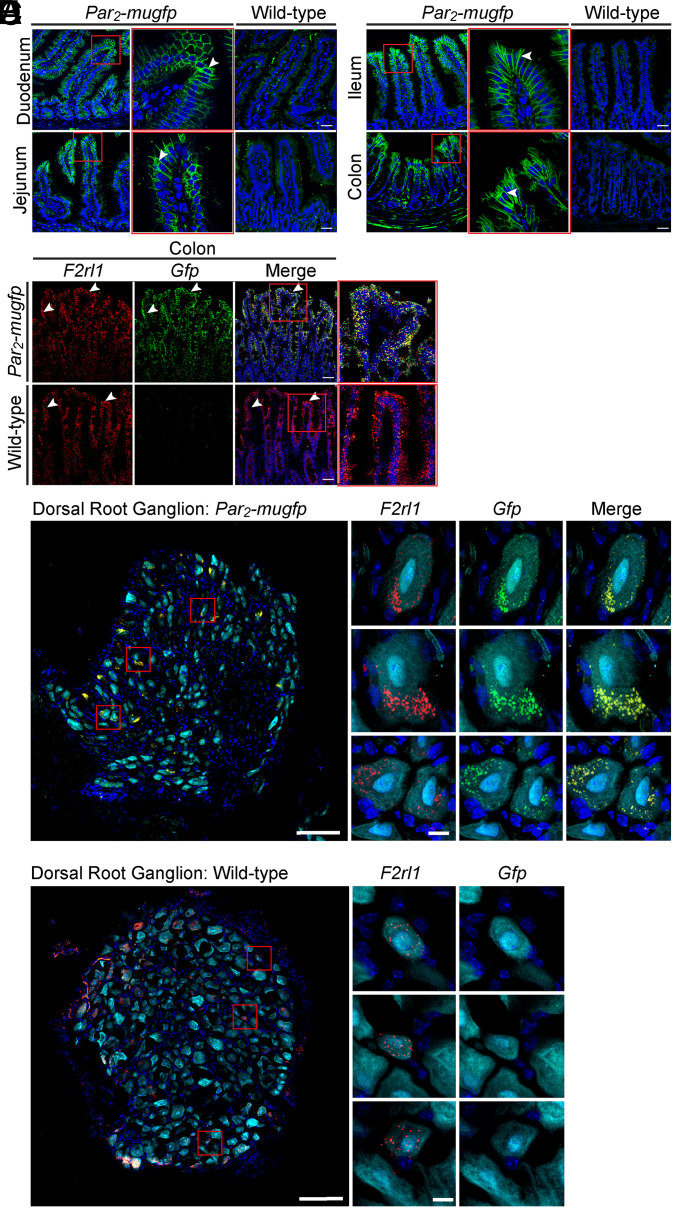
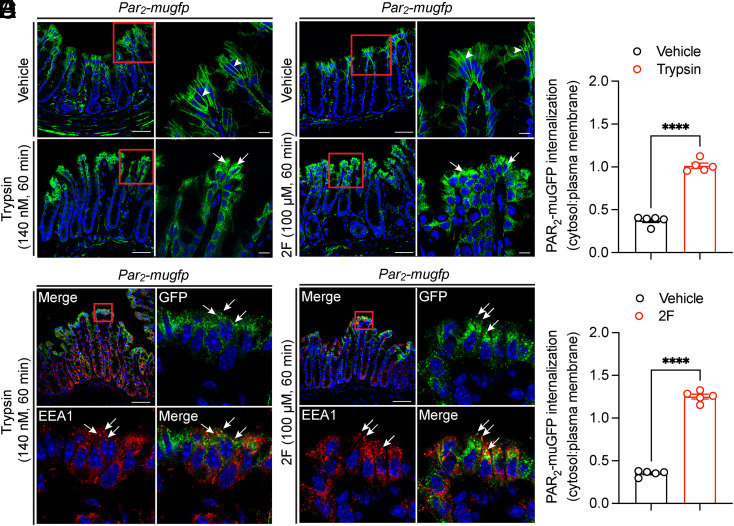
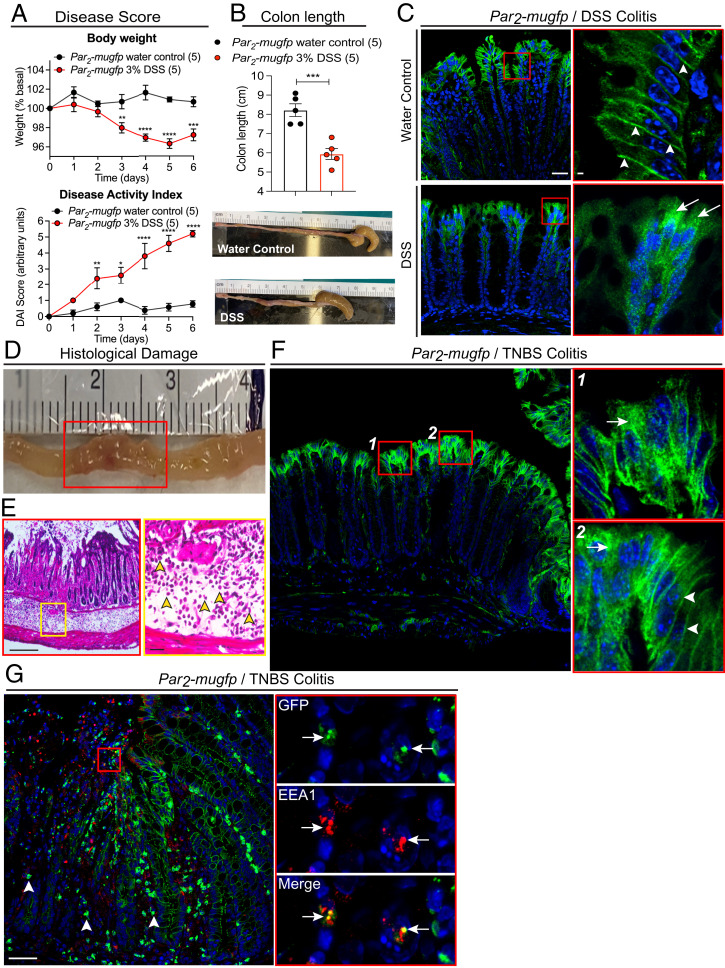
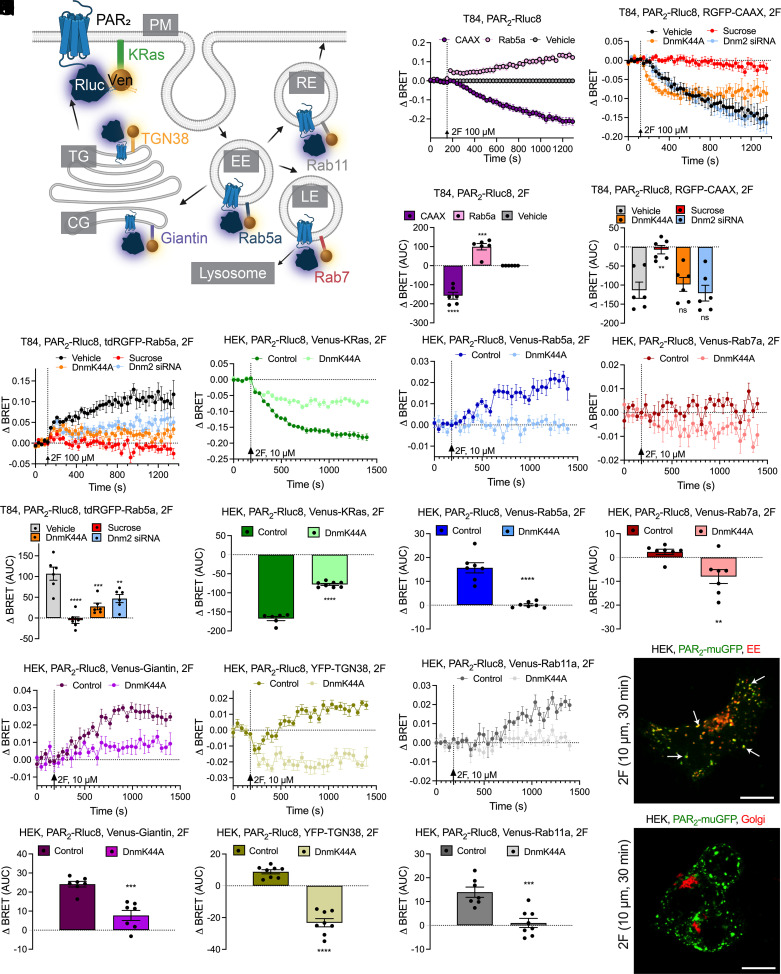
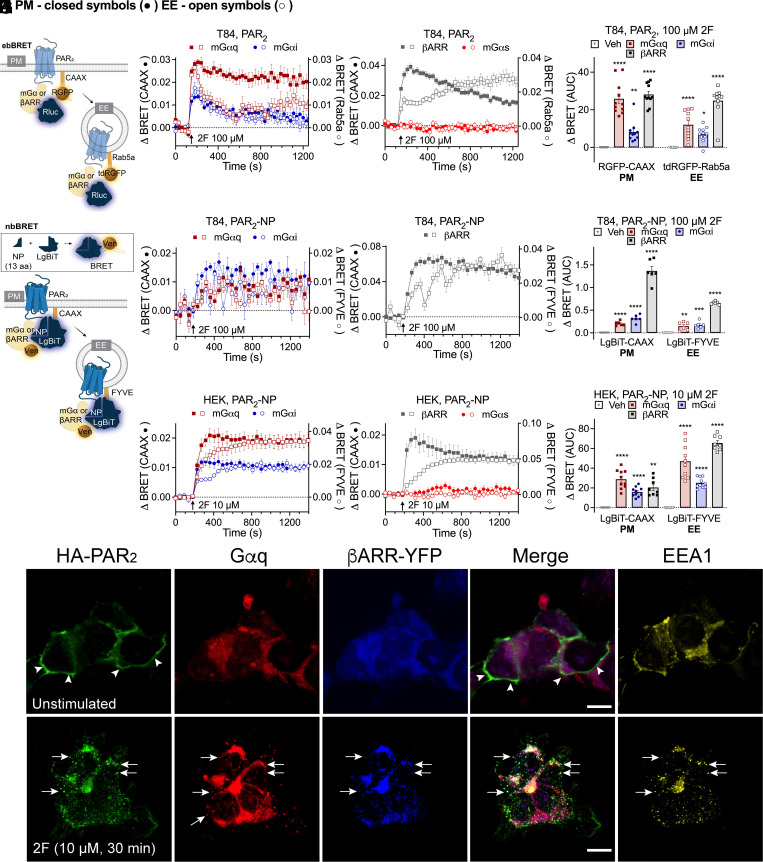
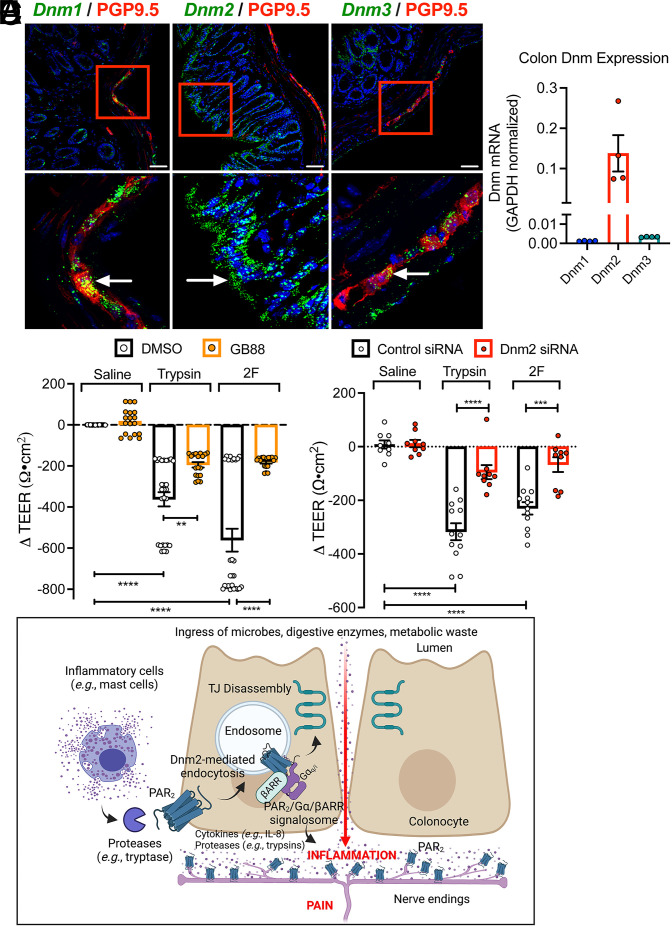
G protein-coupled receptors (GPCRs) regulate many pathophysiological processes and are major therapeutic targets. The impact of disease on the subcellular distribution and function of GPCRs is poorly understood. We investigated trafficking and signaling of protease-activated receptor 2 (PAR) in colitis. To localize PAR and assess redistribution during disease, we generated knockin mice expressing PAR fused to monomeric ultrastable green fluorescent protein (muGFP). PAR-muGFP signaled and trafficked normally. PAR messenger RNA was detected at similar levels in and wild-type mice. Immunostaining with a GFP antibody and RNAScope in situ hybridization using (PAR) and probes revealed that PAR-muGFP was expressed in epithelial cells of the small and large intestine and in subsets of enteric and dorsal root ganglia neurons. In healthy mice, PAR-muGFP was prominently localized to the basolateral membrane of colonocytes. In mice with colitis, PAR-muGFP was depleted from the plasma membrane of colonocytes and redistributed to early endosomes, consistent with generation of proinflammatory proteases that activate PAR PAR agonists stimulated endocytosis of PAR and recruitment of Gα, Gα, and β-arrestin to early endosomes of T84 colon carcinoma cells. PAR agonists increased paracellular permeability of colonic epithelial cells, induced colonic inflammation and hyperalgesia in mice, and stimulated proinflammatory cytokine release from segments of human colon. Knockdown of dynamin-2 (), the major colonocyte isoform, and Dnm inhibition attenuated PAR endocytosis, signaling complex assembly and colonic inflammation and hyperalgesia. Thus, PAR endocytosis sustains protease-evoked inflammation and nociception and PAR in endosomes is a potential therapeutic target for colitis.
G 蛋白偶联受体 (GPCR) 调节许多病理生理过程,是主要的治疗靶点。疾病对 GPCR 亚细胞分布和功能的影响知之甚少。我们研究了结肠炎中蛋白酶激活受体 2 (PAR) 的运输和信号转导。为了定位 PAR 并评估疾病过程中的重分布,我们生成了表达与单体超稳定绿色荧光蛋白 (muGFP) 融合的 PAR 的敲入小鼠。PAR-muGFP 信号转导和运输正常。和野生型小鼠中检测到的 PAR 信使 RNA 水平相似。用 GFP 抗体进行免疫染色,并使用 (PAR) 和 探针进行原位杂交 RNAscope 显示,PAR-muGFP 在小肠和大肠的上皮细胞以及肠和背根神经节神经元的亚群中表达。在健康小鼠中,PAR-muGFP 主要定位于结肠细胞的基底外侧膜。在结肠炎小鼠中,PAR-muGFP 从结肠细胞的质膜耗竭并重新分布到早期内体,这与产生激活 PAR 的促炎蛋白酶一致 PAR 激动剂刺激 PAR 的内吞作用,并招募 Gα、Gα 和 β-arrestin 到 T84 结肠癌细胞的早期内体。PAR 激动剂增加结肠上皮细胞的旁细胞通透性,诱导小鼠结肠炎症和痛觉过敏,并刺激人结肠节段释放促炎细胞因子。动力蛋白-2 (Dyn2) ,主要的结肠细胞同工型和 Dnm 抑制的下调减弱了 PAR 的内吞作用、信号复合物组装以及结肠炎症和痛觉过敏。因此,PAR 的内吞作用维持了蛋白酶引发的炎症和痛觉过敏,内体中的 PAR 是结肠炎的潜在治疗靶点。