Department of Plastic Surgery, Jichi Medical University, 3311-1, Yakushiji, Shimotsuke, Tochigi, 329-0498, Japan.
Department of Plastic Surgery, Federation of National Public Service Personnel Mutual Aid Associations, Hamanomachi Hospital, 3-3-1, Nagahama, Chuou-ku, Fukuoka, 810-8539, Japan.
Sci Rep. 2022 Feb 2;12(1):1775. doi: 10.1038/s41598-022-05760-4.
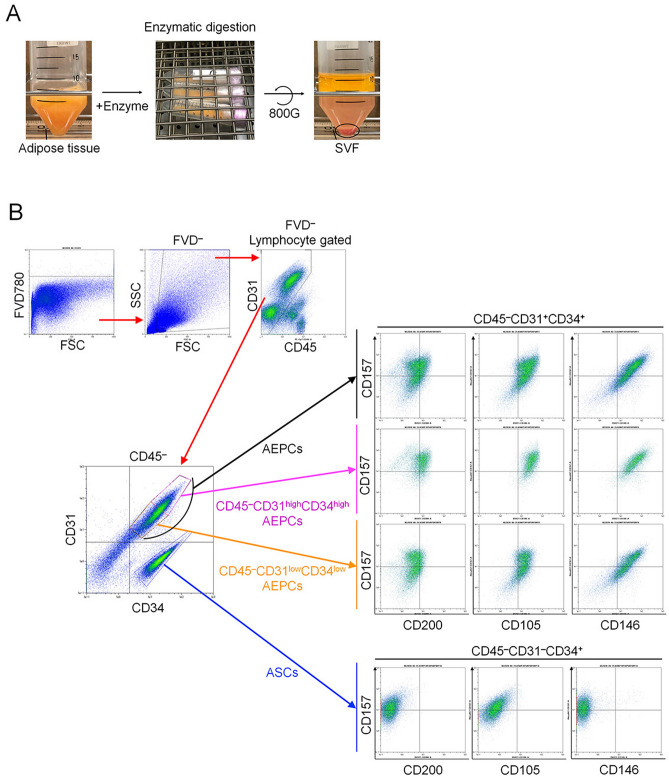
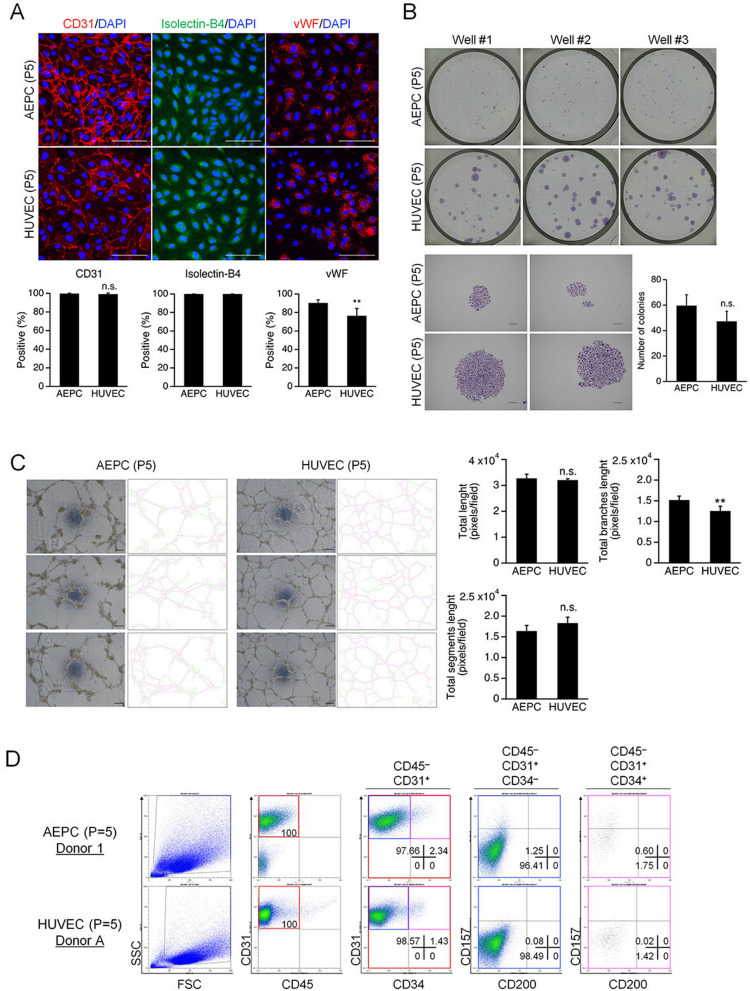
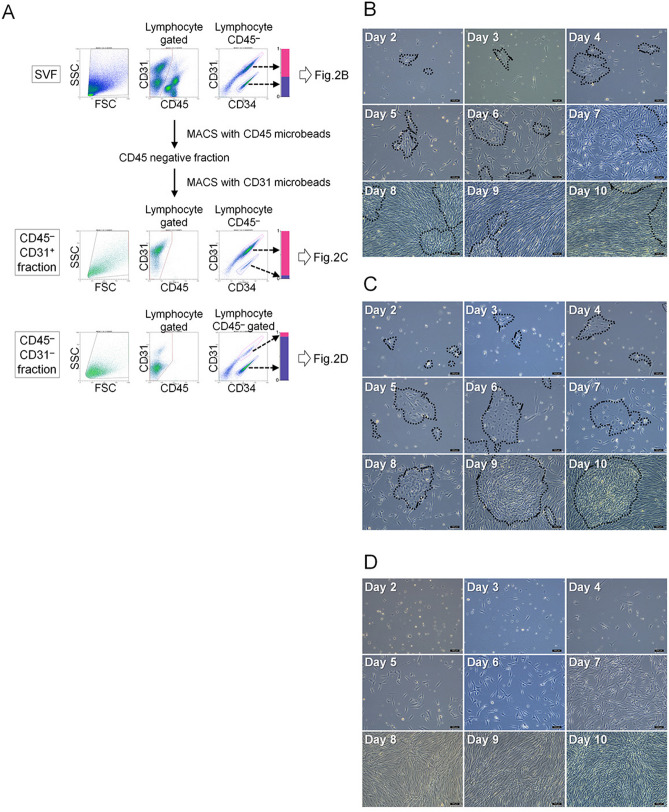
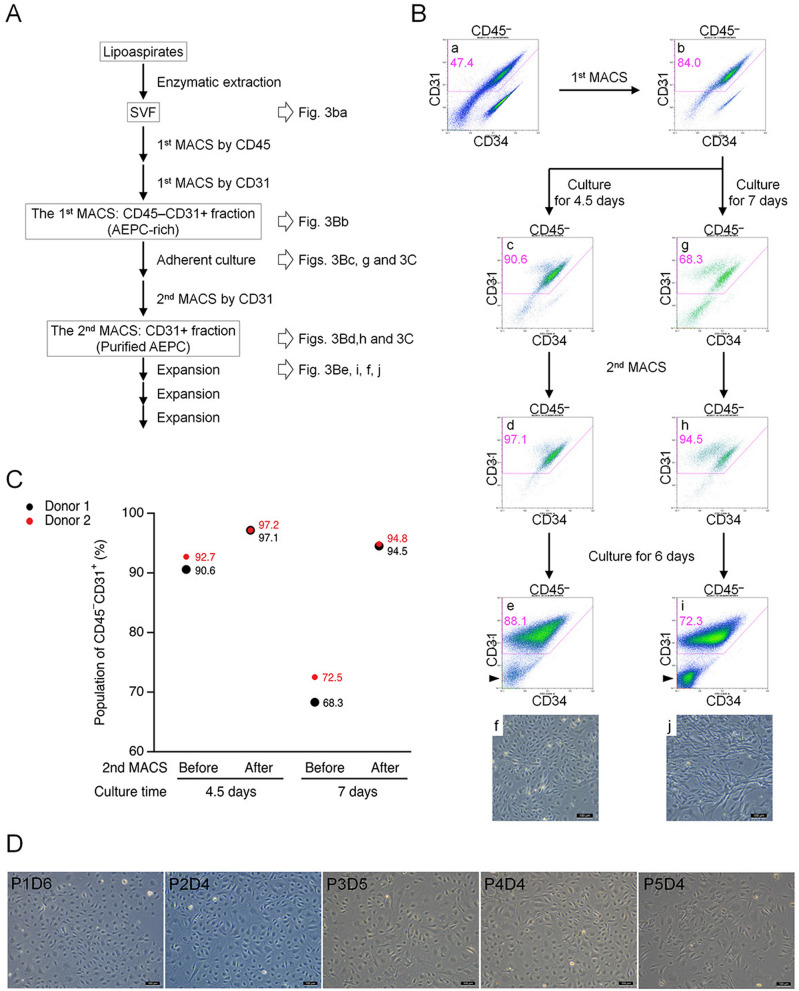
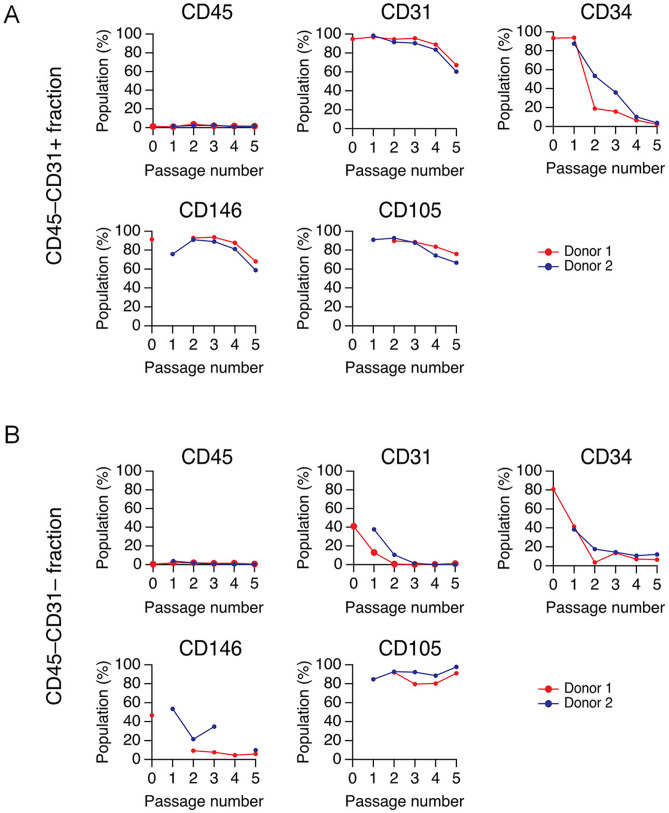
Human adipose tissue is a rich source of adipose-derived stem cells (ASCs) and vascular endothelial progenitor cells (EPCs). However, no standardized method has been established for the isolation and purification of adipose-derived EPCs (AEPCs). The aim of this study was to establish a method for the isolation and purification of AEPCs. The stromal vascular fraction (SVF) was extracted from human lipoaspirates, and the CD45CD31 fraction of the SVF was collected by magnetic-activated cell sorting (MACS). The CD45CD31 fraction was cultured for 4.5 days, followed by a second MACS separation to collect the CD31 fraction. Purified AEPCs were expanded without being overwhelmed by proliferating ASCs, indicating that a high level (> 95%) of AEPC purification is a key factor for their successful isolation and expansion. AEPCs exhibited typical endothelial markers, including CD31, von Willebrand factor, and the isolectin-B4 binding capacity. AEPCs formed colonies, comparable to cultured human umbilical vein endothelial cells (HUVECs). Both AEPCs and HUVECs formed capillary-like networks in the tube formation assay, with no significant difference in network lengths. We are the first to establish a purification and expansion method to isolate these cells. Because adipose tissue is a clinically accessible and abundant tissue, AEPCs may have potential advantages as a therapeutic tool for regenerative medicine.
人体脂肪组织是脂肪来源的干细胞(ASCs)和血管内皮祖细胞(EPCs)的丰富来源。然而,尚未建立用于分离和纯化脂肪来源的 EPC(AEPC)的标准化方法。本研究旨在建立一种分离和纯化 AEPC 的方法。从人脂肪抽吸物中提取基质血管部分(SVF),并通过磁激活细胞分选(MACS)收集 SVF 的 CD45CD31 部分。将 CD45CD31 部分培养 4.5 天,然后进行第二次 MACS 分离以收集 CD31 部分。纯化的 AEPC 进行了扩展而不会被增殖的 ASC 淹没,这表明高水平(>95%)的 AEPC 纯化是成功分离和扩增的关键因素。AEPC 表现出典型的内皮标记物,包括 CD31、血管性血友病因子和异凝集素-B4 结合能力。AEPC 形成与培养的人脐静脉内皮细胞(HUVEC)相当的集落。AEPC 和 HUVEC 都在管形成测定中形成毛细血管样网络,网络长度没有明显差异。我们是第一个建立纯化和扩增方法来分离这些细胞的人。由于脂肪组织是一种临床可及且丰富的组织,因此 AEPC 作为再生医学的治疗工具可能具有潜在优势。