Department of Thoracic Surgery, Xin Hua Hospital, Shanghai Jiao Tong University School of Medicine, Shanghai, China.
Department of Laboratory Medicine, Xin Hua Hospital, Shanghai Jiao Tong University School of Medicine, Shanghai, China.
Front Immunol. 2022 Jan 17;12:722188. doi: 10.3389/fimmu.2021.722188. eCollection 2021.
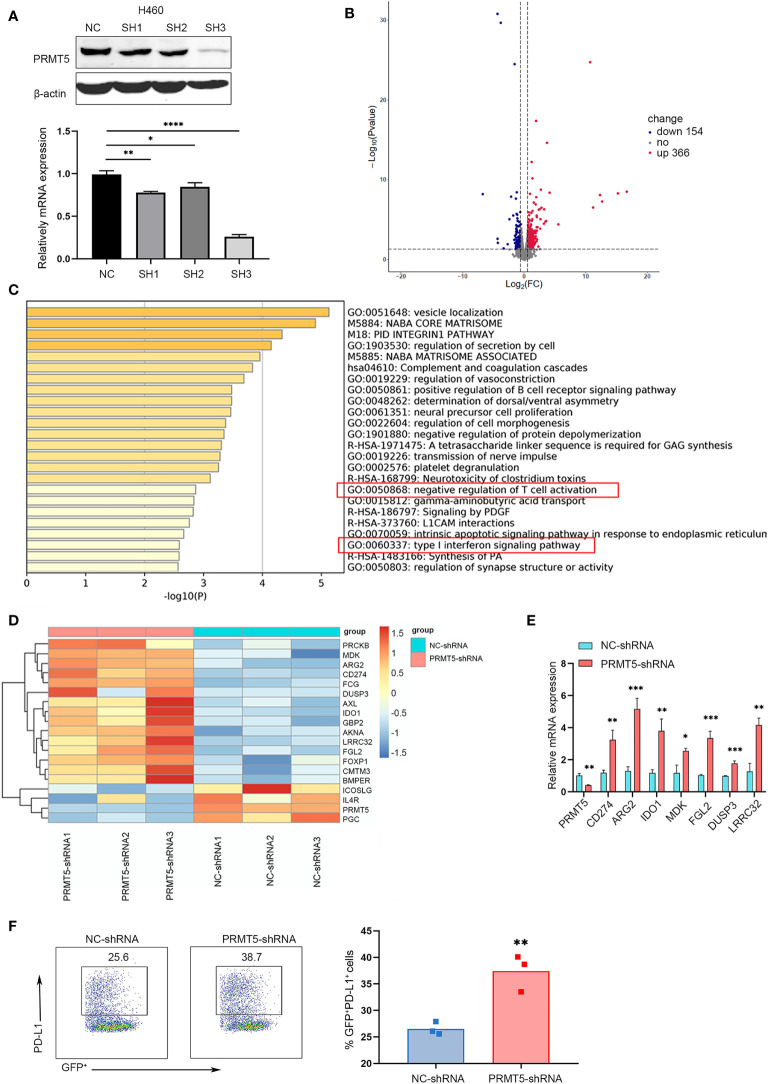
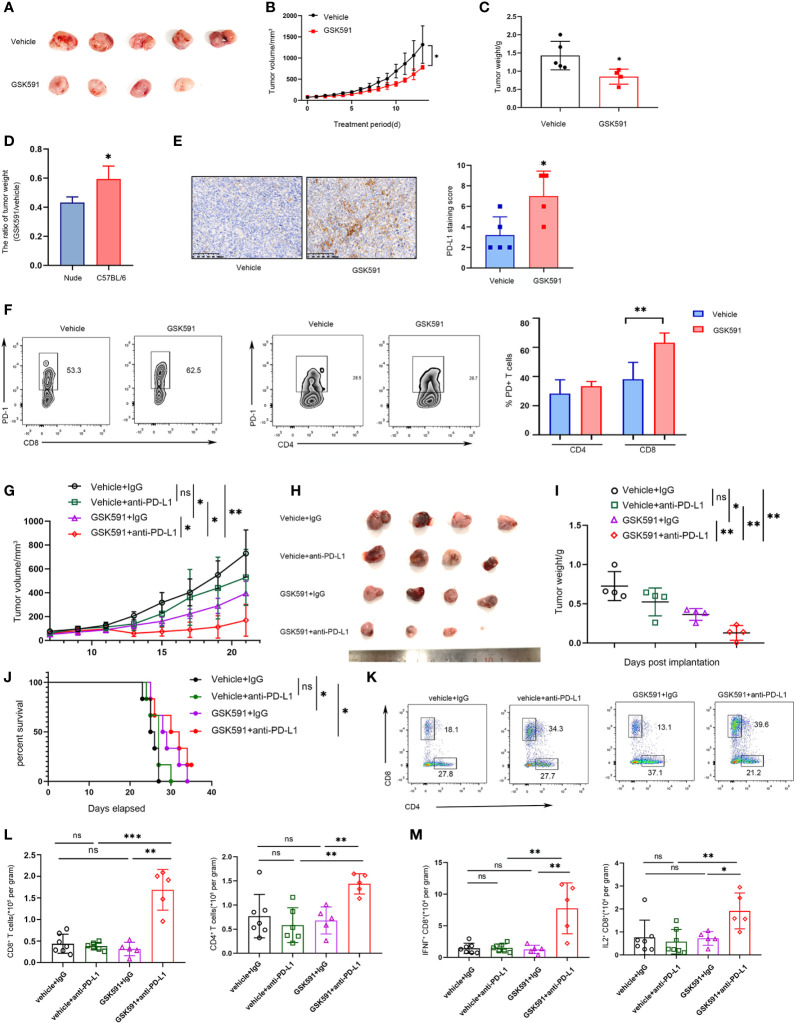
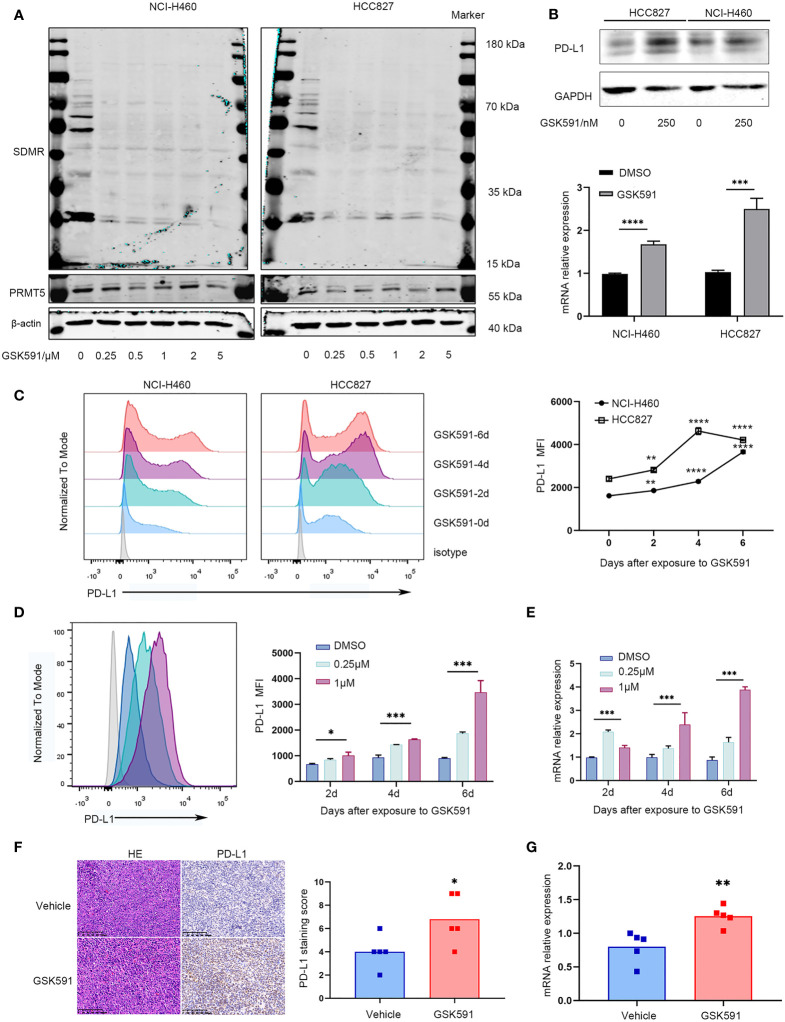
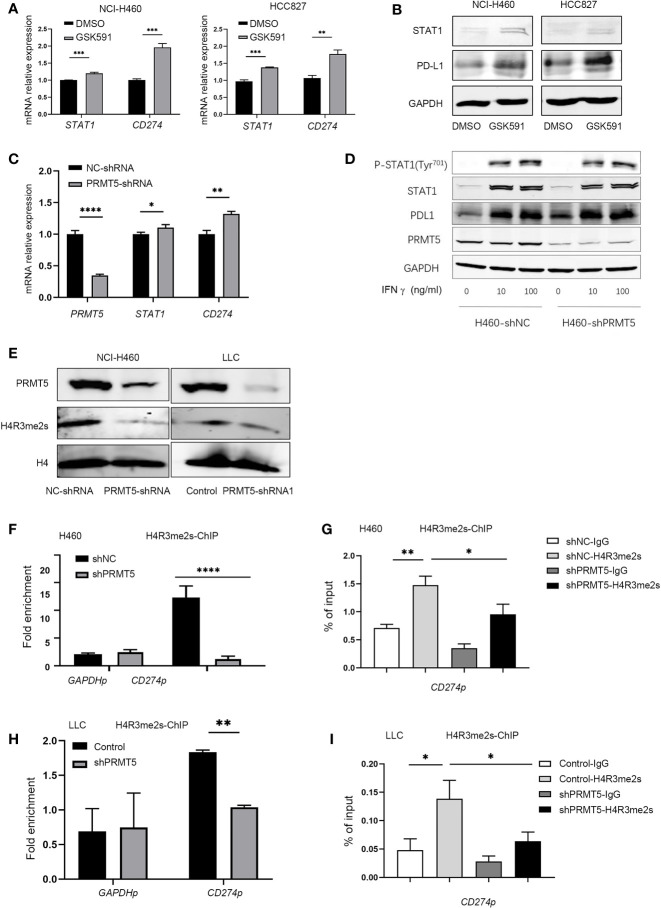
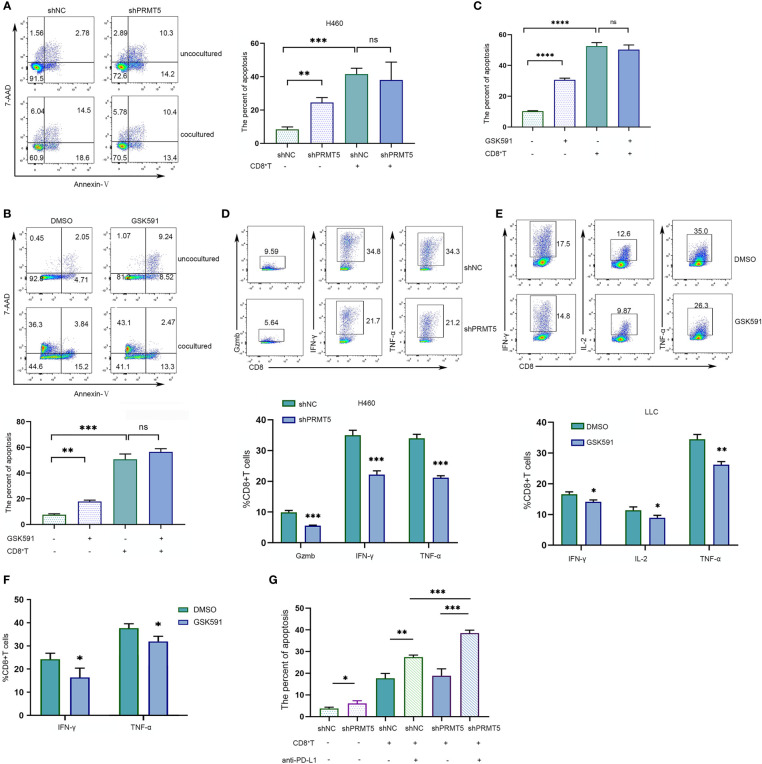
Protein arginine transferase 5 (PRMT5) has been implicated as an important modulator of tumorigenesis as it promotes tumor cell proliferation, invasion, and metastasis. Studies have largely focused on PRMT5 regulating intrinsic changes in tumors; however, the effects of PRMT5 on the tumor microenvironment and particularly immune cells are largely unknown. Here we found that targeting PRMT5 by genetic or pharmacological inhibition reduced lung tumor progression in immunocompromised mice; however, the effects were weakened in immunocompetent mice. PRMT5 inhibition not only decreased tumor cell survival but also increased the tumor cell expression of and , which activated the PD1/PD-L1 axis and eliminated CD8+T cell antitumor immunity. Mechanistically, PRMT5 regulated gene expression through symmetric dimethylation of histone H4R3, increased deposition of H3R4me2s on promoter loci, and inhibition of gene expression. Targeting PRMT5 reduced this inhibitory effect and promoted expression in lung cancer. However, PRMT5 inhibitors represent a double-edged sword as they may selectively kill cancer cells but may also disrupt the antitumor immune response. The combination of PRMT5 inhibition and ani-PD-L1 therapy resulted in an increase in the number and enhanced the function of tumor-infiltrating T cells. Our findings address an unmet clinical need in which combining PRMT5 inhibition with anti-PD-L1 therapy could be a promising strategy for lung cancer treatment.
蛋白质精氨酸甲基转移酶 5(PRMT5)作为一种重要的肿瘤发生调节剂,可促进肿瘤细胞增殖、侵袭和转移。研究主要集中在 PRMT5 调节肿瘤内在变化上;然而,PRMT5 对肿瘤微环境,特别是免疫细胞的影响在很大程度上是未知的。在这里,我们发现通过遗传或药理学抑制 PRMT5 可减少免疫缺陷小鼠肺部肿瘤的进展;然而,在免疫功能正常的小鼠中,效果减弱。PRMT5 抑制不仅降低了肿瘤细胞的存活率,而且增加了肿瘤细胞对 和 的表达,激活了 PD1/PD-L1 轴,消除了 CD8+T 细胞的抗肿瘤免疫。在机制上,PRMT5 通过组蛋白 H4R3 的对称二甲基化来调节 基因的表达,增加 H3R4me2s 在 启动子基因座上的沉积,并抑制 基因的表达。靶向 PRMT5 减少了这种抑制作用,并促进了肺癌中 的表达。然而,PRMT5 抑制剂是一把双刃剑,它们可能选择性地杀死癌细胞,但也可能破坏抗肿瘤免疫反应。PRMT5 抑制与抗 PD-L1 治疗的联合应用导致肿瘤浸润 T 细胞数量增加,并增强其功能。我们的研究结果满足了一种未满足的临床需求,即 PRMT5 抑制与抗 PD-L1 治疗联合应用可能是治疗肺癌的一种有前途的策略。