Zhongnan Hospital of Wuhan University, Institute of Hepatobiliary Diseases of Wuhan University, Transplant Center of Wuhan University, Wuhan, China.
National Quality Control Center for Donated Organ Procurement, Hubei Key Laboratory of Medical Technology on Transplantation, Hubei Clinical Research Center for Natural Polymer Biological Liver, Hubei Engineering Center of Natural Polymer-Based Medical Materials, Wuhan, China.
Front Immunol. 2022 Jan 17;12:767618. doi: 10.3389/fimmu.2021.767618. eCollection 2021.
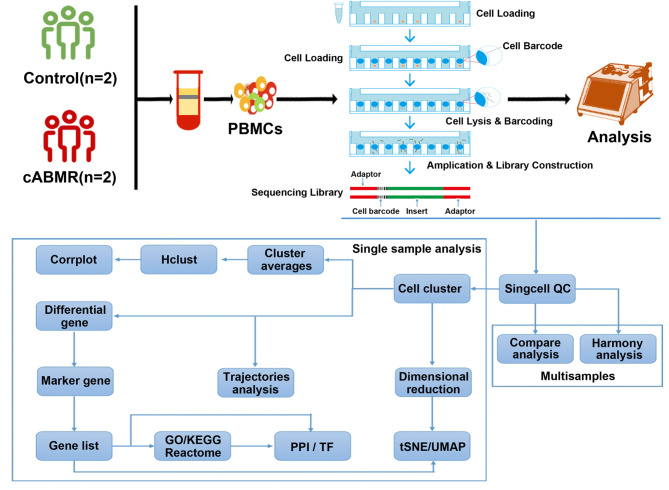
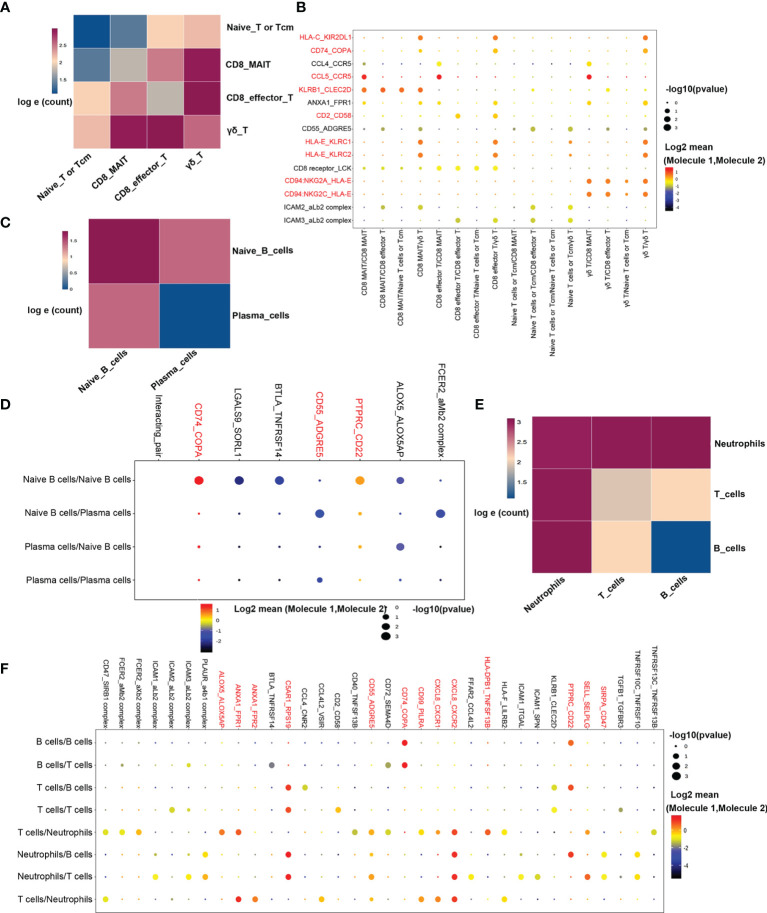
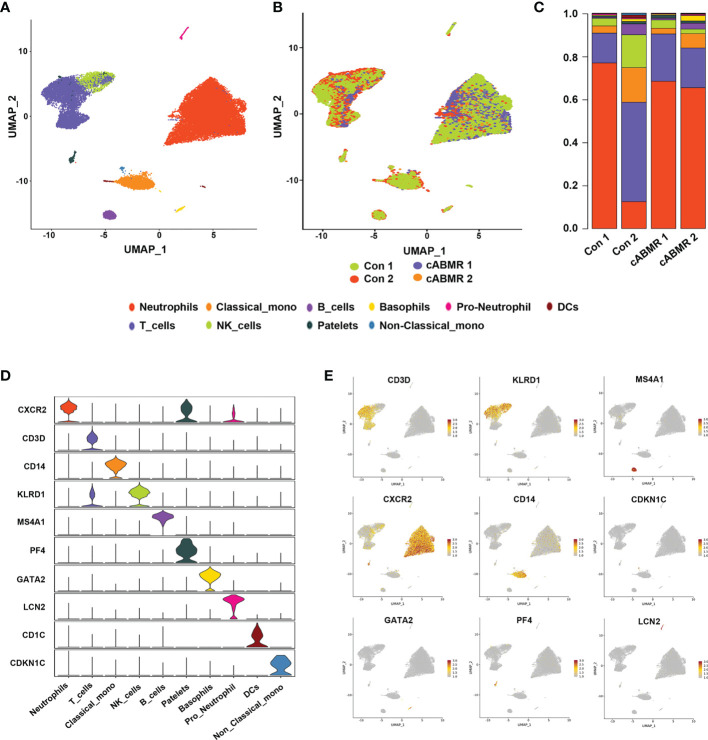
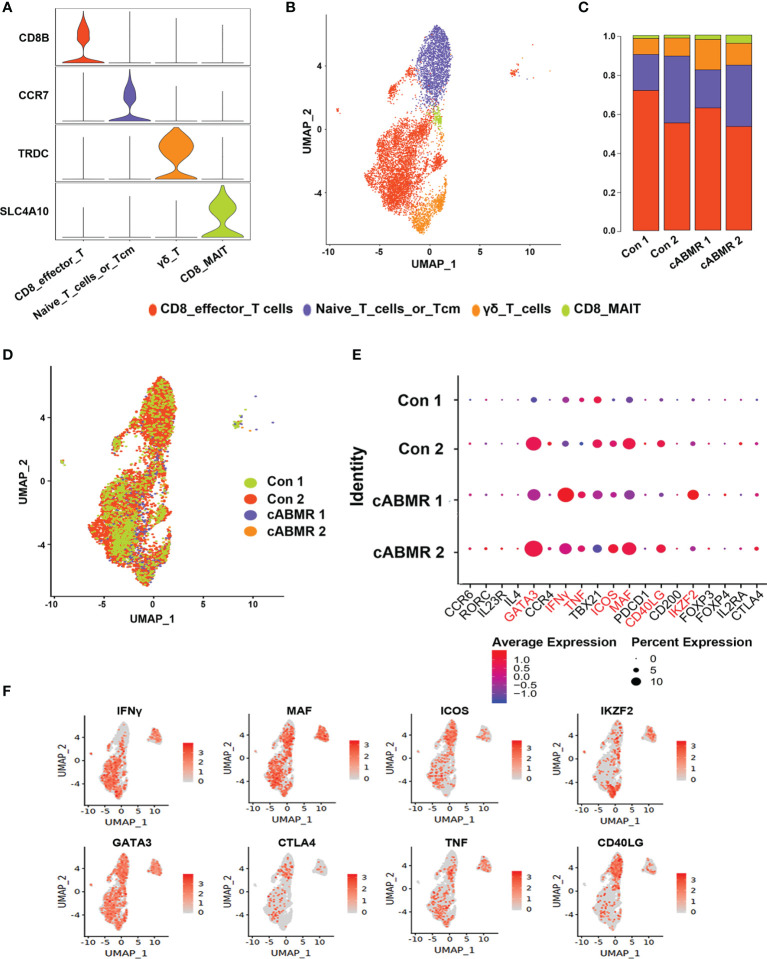
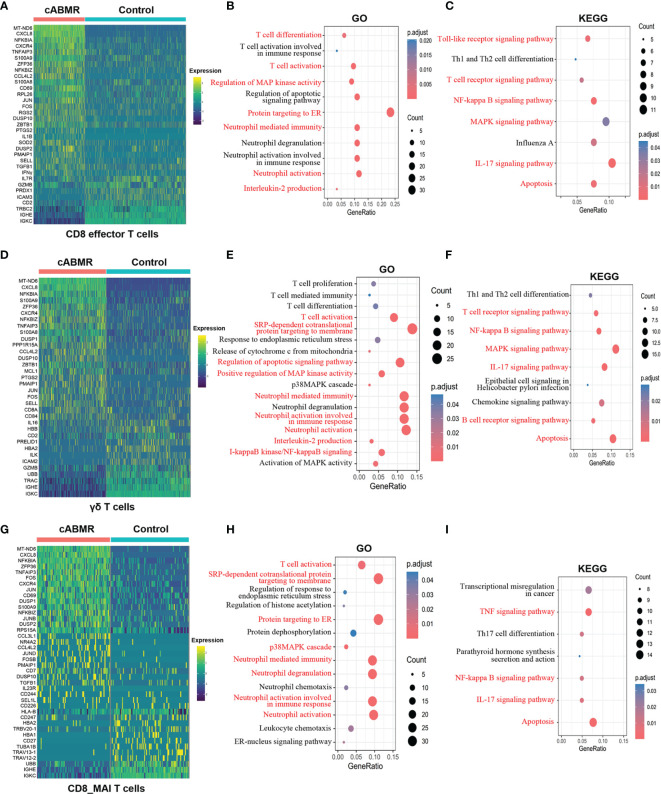
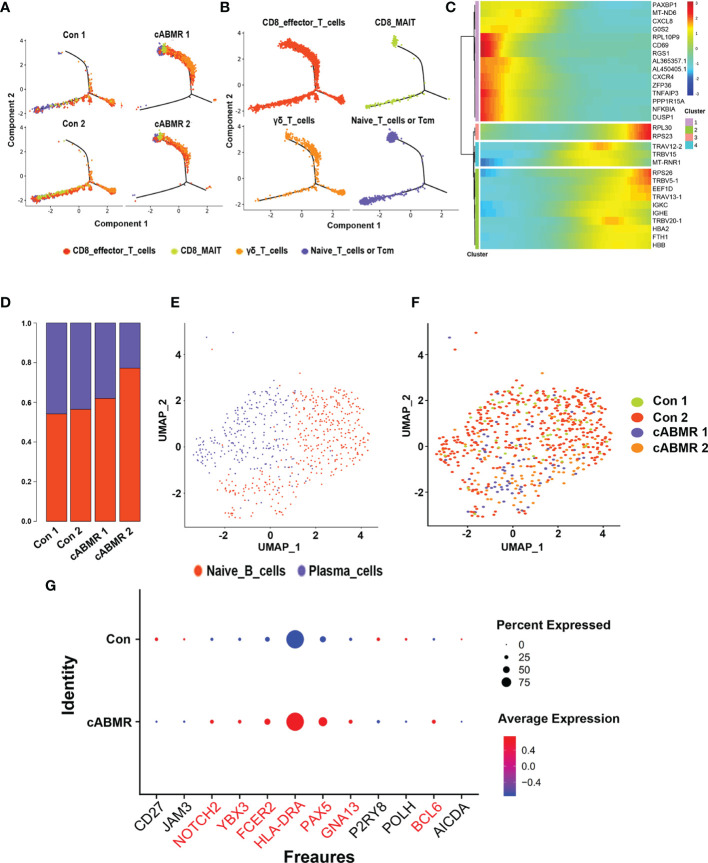
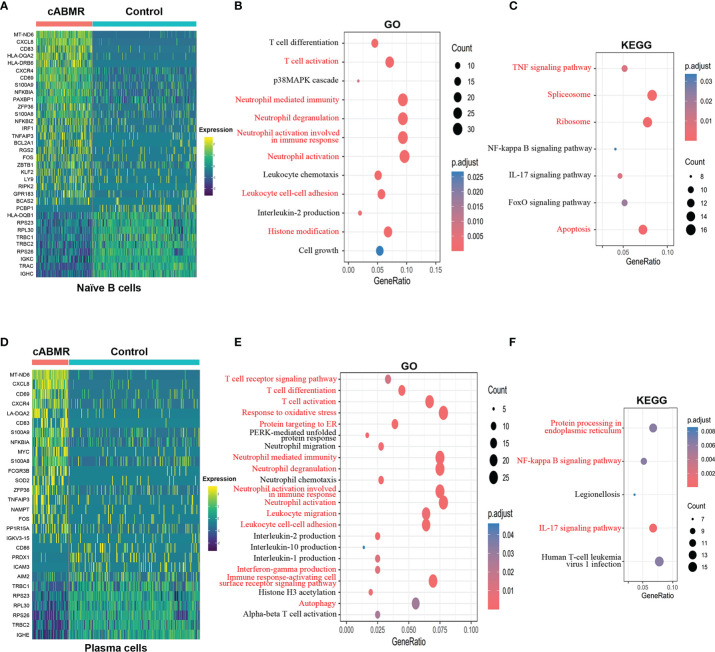
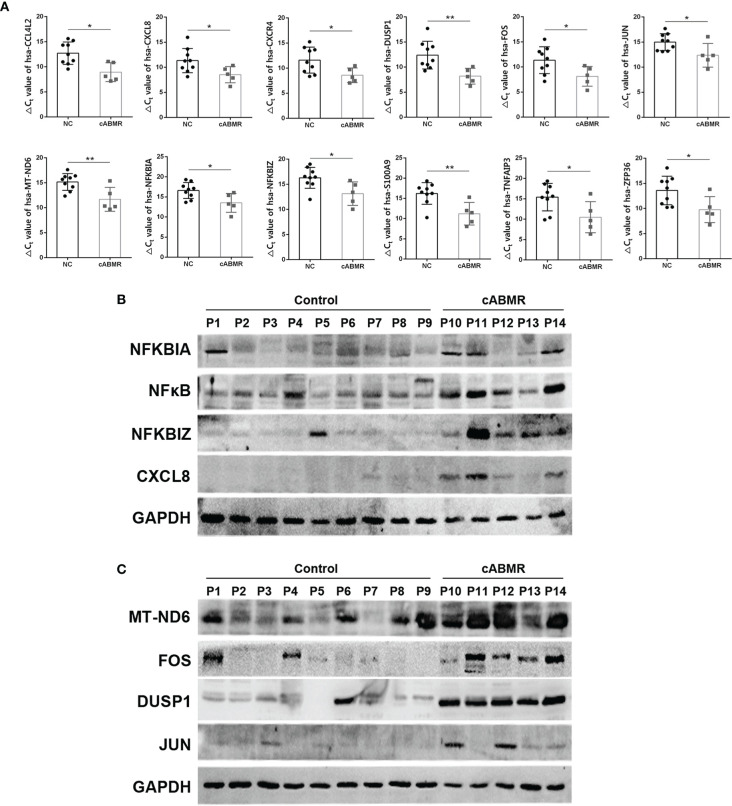
Renal transplantation is currently the most effective treatment for end-stage renal disease. However, chronic antibody-mediated rejection (cABMR) remains a serious obstacle for the long-term survival of patients with renal transplantation and a problem to be solved. At present, the role and mechanism underlying immune factors such as T- and B- cell subsets in cABMR after renal transplantation remain unclear. In this study, single-cell RNA sequencing (scRNA-seq) of peripheral blood monocytes (PBMCs) from cABMR and control subjects was performed to define the transcriptomic landscape at single-cell resolution. A comprehensive scRNA-seq analysis was performed. The results indicated that most cell types in the cABMR patients exhibited an intense interferon response and release of proinflammatory cytokines. In addition, we found that the expression of MT-ND6, CXCL8, NFKBIA, NFKBIZ, and other genes were up-regulated in T- and B-cells and these genes were associated with pro-inflammatory response and immune regulation. Western blot and qRT-PCR experiments also confirmed the up-regulated expression of these genes in cABMR. GO and KEGG enrichment analyses indicated that the overexpressed genes in T- and B-cells were mainly enriched in inflammatory pathways, including the TNF, IL-17, and Toll-like receptor signaling pathways. Additionally, MAPK and NF-κB signaling pathways were also involved in the occurrence and development of cABMR. This is consistent with the experimental results of Western blot. Trajectory analysis assembled the T-cell subsets into three differentiation paths with distinctive phenotypic and functional prog rams. CD8 effector T cells and γδ T cells showed three different differentiation trajectories, while CD8_MAI T cells and naive T cells primarily had two differentiation trajectories. Cell-cell interaction analysis revealed strong T/B cells and neutrophils activation in cABMR. Thus, the study offers new insight into pathogenesis and may have implications for the identification of novel therapeutic targets for cABMR.
肾移植是目前治疗终末期肾病的最有效方法。然而,慢性抗体介导的排斥反应(cABMR)仍然是肾移植患者长期生存的严重障碍,也是亟待解决的问题。目前,肾移植后 T 细胞和 B 细胞亚群等免疫因子在 cABMR 中的作用和机制尚不清楚。本研究通过对 cABMR 患者和对照者外周血单核细胞(PBMCs)进行单细胞 RNA 测序(scRNA-seq),以定义单细胞分辨率下的转录组图谱。进行了全面的 scRNA-seq 分析。结果表明,cABMR 患者的大多数细胞类型表现出强烈的干扰素反应和促炎细胞因子的释放。此外,我们发现 MT-ND6、CXCL8、NFKBIA、NFKBIZ 等基因在 T 细胞和 B 细胞中的表达上调,这些基因与促炎反应和免疫调节有关。Western blot 和 qRT-PCR 实验也证实了这些基因在 cABMR 中的上调表达。GO 和 KEGG 富集分析表明,T 细胞和 B 细胞中过度表达的基因主要富集在炎症途径中,包括 TNF、IL-17 和 Toll 样受体信号通路。此外,MAPK 和 NF-κB 信号通路也参与了 cABMR 的发生和发展。这与 Western blot 的实验结果一致。轨迹分析将 T 细胞亚群组装成具有独特表型和功能程序的三个分化路径。CD8 效应 T 细胞和 γδ T 细胞显示出三种不同的分化轨迹,而 CD8_MAI T 细胞和幼稚 T 细胞主要有两种分化轨迹。细胞-细胞相互作用分析显示 cABMR 中 T/B 细胞和中性粒细胞强烈激活。因此,该研究为发病机制提供了新的见解,并可能为 cABMR 的新型治疗靶点的识别提供依据。