Shu Hongyang, Peng Yizhong, Hang Weijian, Li Na, Zhou Ning, Wang Dao Wen
1Division of Cardiology, Department of Internal Medicine, Tongji Hospital, Tongji Medical College, Huazhong University of Science and Technology, Wuhan 430000, China.
2Hubei Key Laboratory of Genetics and Molecular Mechanism of Cardiologic Disorders, Huazhong University of Science and Technology, Wuhan 430000, China.
Aging Dis. 2022 Feb 1;13(1):232-245. doi: 10.14336/AD.2021.0710. eCollection 2022 Feb.
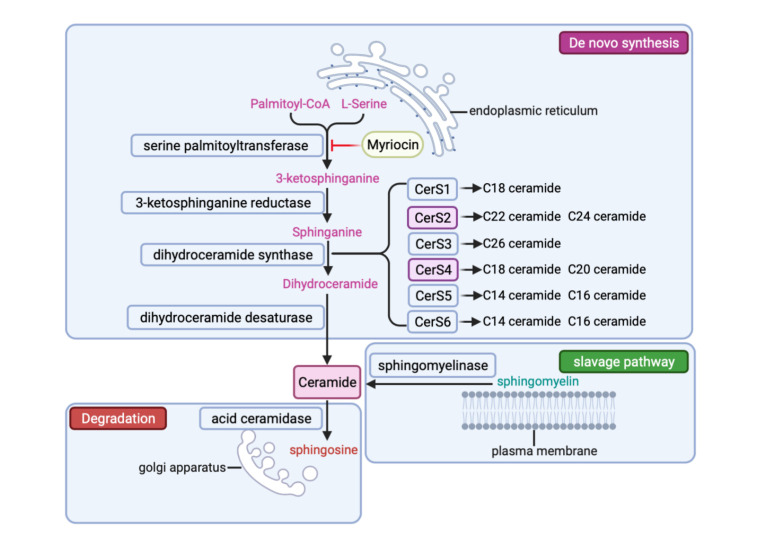
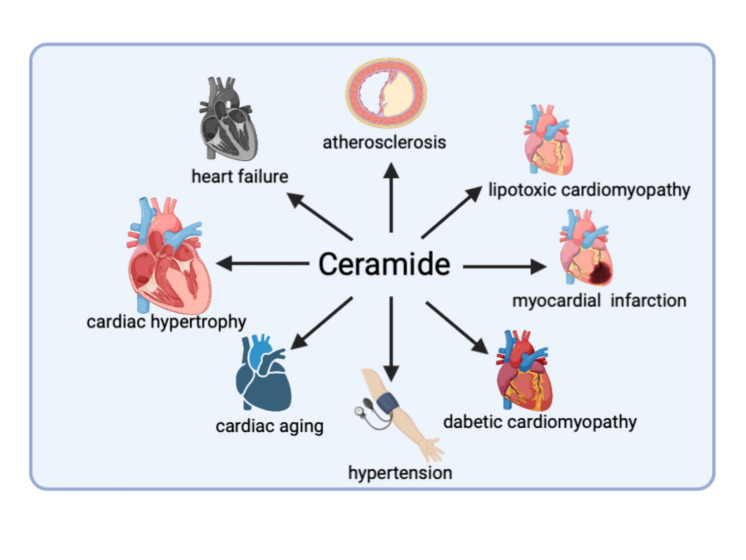
Ceramide is a core molecule of sphingolipid metabolism that causes selective insulin resistance and dyslipidemia. Research on its involvement in cardiovascular diseases has grown rapidly. In resting cells, ceramide levels are extremely low, while they rapidly accumulate upon encountering external stimuli. Recently, the regulation of ceramide levels under pathological conditions, including myocardial infarction, hypertension, and atherosclerosis, has drawn great attention. Increased ceramide levels are strongly associated with adverse cardiovascular risks and events while inhibiting the synthesis of ceramide or accelerating its degradation improves a variety of cardiovascular diseases. In this article, we summarize the role of ceramide in cardiovascular disease, investigate the possible application of ceramide as a new diagnostic biomarker and a therapeutic target for cardiovascular disorders, and highlight the remaining problems.
神经酰胺是鞘脂代谢的核心分子,可导致选择性胰岛素抵抗和血脂异常。关于其在心血管疾病中作用的研究发展迅速。在静息细胞中,神经酰胺水平极低,而在受到外部刺激时会迅速积累。最近,包括心肌梗死、高血压和动脉粥样硬化在内的病理条件下神经酰胺水平的调节受到了极大关注。神经酰胺水平升高与不良心血管风险和事件密切相关,而抑制神经酰胺的合成或加速其降解可改善多种心血管疾病。在本文中,我们总结了神经酰胺在心血管疾病中的作用,探讨了神经酰胺作为心血管疾病新诊断生物标志物和治疗靶点的可能应用,并强调了尚存的问题。