Gao Lipeng, Wang Tim Hua, Chen Champ Peng, Xiang Jan Jian, Zhao Xu-Bo, Gui Rong-Yin, Liao Xin-Hua
School of Life Sciences, Shanghai University, Shanghai, China.
Fujian Key Laboratory for Translational Research in Cancer and Neurodegenerative Diseases, Institute for Translational Medicine, Fujian Medical University, Fuzhou, China.
Transl Cancer Res. 2021 May;10(5):2219-2228. doi: 10.21037/tcr-20-3527.
Cyclooxygenase 2 (COX-2) is an inducible enzyme which promotes tumorigenesis in many types of cancers. Genetic knockout of COX-2 significantly suppresses the tumorigenesis of skin squamous cell carcinoma (SCC). However, COX-2 inhibitor treatment only showed mild to moderate inhibition on SCC in previous reports. The aim of this study is to solve this contradiction and to re-evaluate the therapeutic potential of targeting COX-2 in SCC.
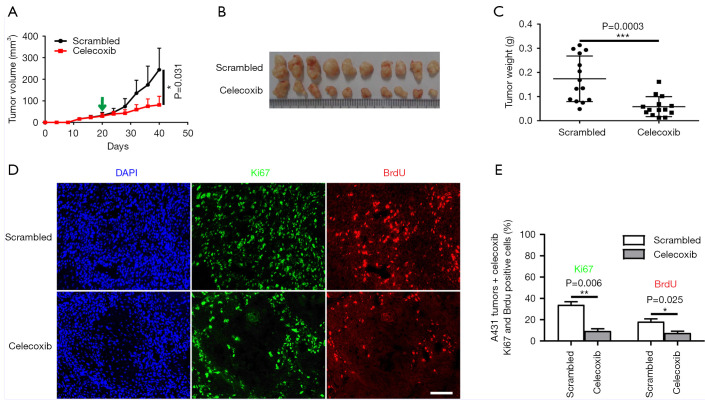
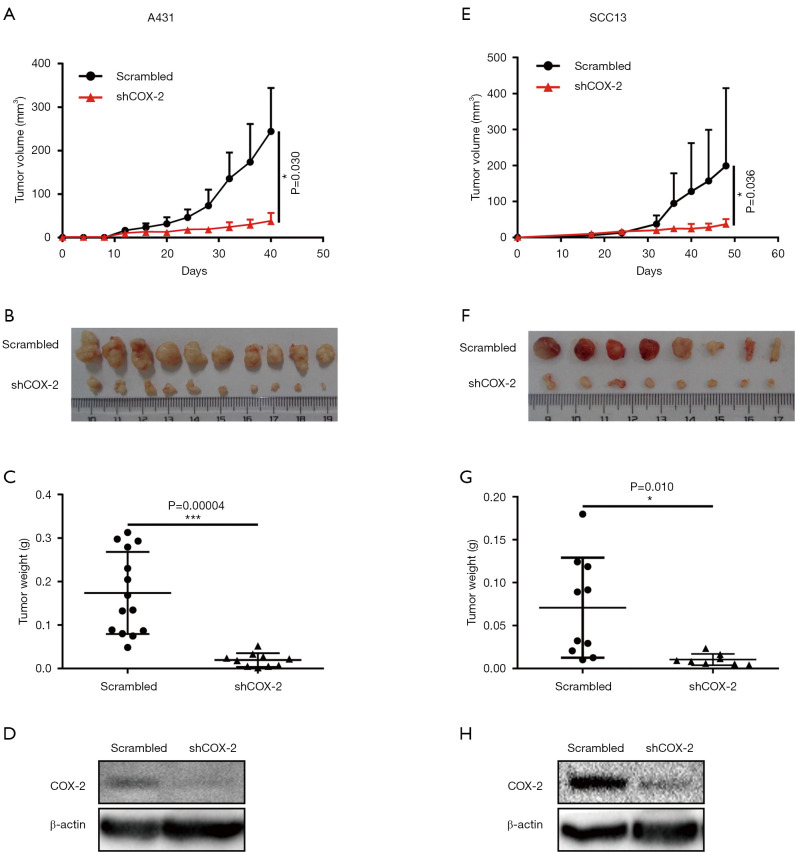
COX-2 was knocked down by shRNA in two different SCC cell lines, A431 and SCC-13. The cells proliferation and migration capacity were evaluated by cell growth curves and monolayer scratch assay, respectively. Cancer cells with COX-2 knockdown were also xenografted into Balb/c nude mice and tumor growth curves were recorded over time. In addition, we changed the drug administration route and intraperitoneally injected COX-2 inhibitor celecoxib into mice to evaluate its anti-cancer activity.
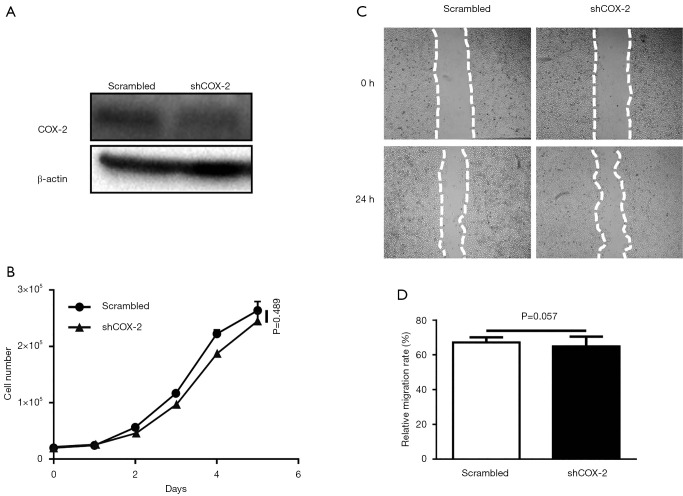
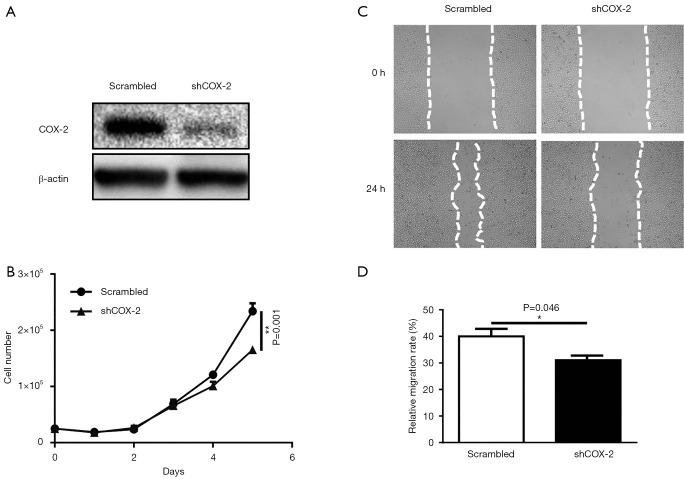
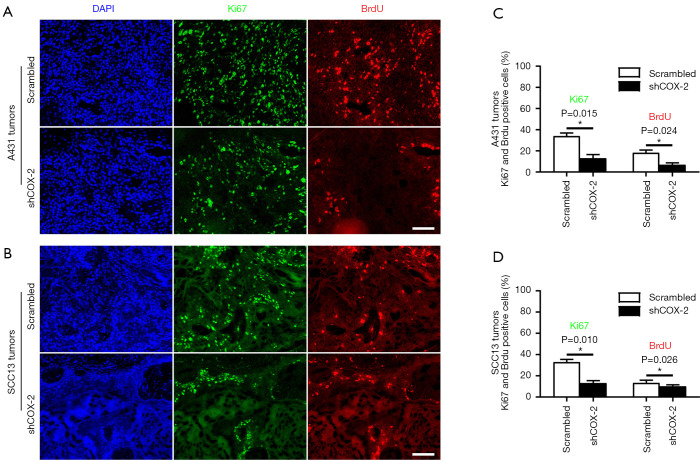
Knockdown of COX-2 exhibited mild or even no effect on cell proliferation and migration in two different SCC cell lines . However, when cancer cells were xenografted into nude mice, knockdown of COX-2 significantly suppressed proliferation of cancer cells in tumors. At last, intraperitoneal injection instead of oral administration of COX-2 inhibitor celecoxib potently suppressed tumor growth.
Our results indicate that COX-2 might impact on the interaction between cancer cells and surrounding microenvironments rather than on cancer cells directly, and demonstrate that targeting COX-2 is a very promising therapeutic approach for SCC treatment.
环氧化酶2(COX-2)是一种诱导性酶,在多种癌症中促进肿瘤发生。COX-2基因敲除可显著抑制皮肤鳞状细胞癌(SCC)的肿瘤发生。然而,在先前的报道中,COX-2抑制剂治疗仅对SCC表现出轻度至中度抑制作用。本研究的目的是解决这一矛盾,并重新评估靶向COX-2在SCC治疗中的潜力。
在两种不同的SCC细胞系A431和SCC-13中,通过短发夹RNA(shRNA)敲低COX-2。分别通过细胞生长曲线和单层划痕试验评估细胞增殖和迁移能力。将COX-2敲低的癌细胞也接种到Balb/c裸鼠体内,并随时间记录肿瘤生长曲线。此外,我们改变给药途径,给小鼠腹腔注射COX-2抑制剂塞来昔布以评估其抗癌活性。
在两种不同的SCC细胞系中,敲低COX-2对细胞增殖和迁移表现出轻度甚至无影响。然而,当将癌细胞接种到裸鼠体内时,敲低COX-2可显著抑制肿瘤中癌细胞的增殖。最后,腹腔注射而非口服COX-2抑制剂塞来昔布可有效抑制肿瘤生长。
我们的结果表明,COX-2可能影响癌细胞与周围微环境之间的相互作用,而不是直接影响癌细胞,并证明靶向COX-2是一种非常有前景的SCC治疗方法。