Liu Jie, Yan Jiajun, Mao Ruifang, Ren Guoping, Liu Xiaoyan, Zhang Yanling, Wang Jili, Wang Yan, Li Meiling, Qiu Qingchong, Wang Lin, Liu Guanfeng, Jin Shanshan, Ma Liang, Ma Yingying, Zhao Na, Zhang Hongwei, Lin Biaoyang
College of Life Science, Zhejiang University, Hangzhou 310027, China.
Systems Biology Division, Zhejiang-California International NanoSystems Institute (ZCNI), Zhejiang University, Hangzhou 310027, China.
Transl Cancer Res. 2020 Apr;9(4):2231-2242. doi: 10.21037/tcr.2020.03.31.
Prostate cancer (PCa) is a common type of malignancy, which represents one of the leading causes of death among men worldwide. Copy number variations (CNVs) and gene fusions play important roles in PCa and may serve as markers for the prognosis of this condition.
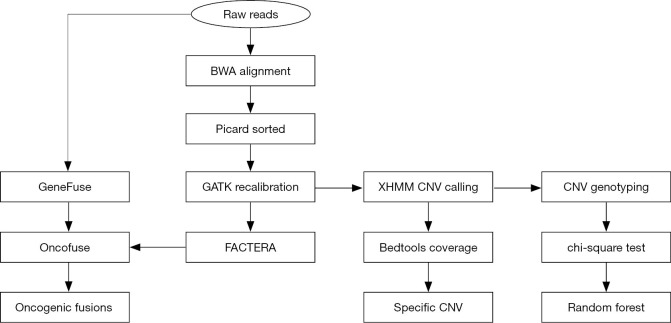
We have presently conducted an analysis of CNVs and gene fusions in PCa, using whole exome sequencing (WES) data of primary tumors. For this, a cohort of 74 PCa patients, including 30 recurrent and 44 non-recurrent cases, were assessed during 5 years of follow-up.
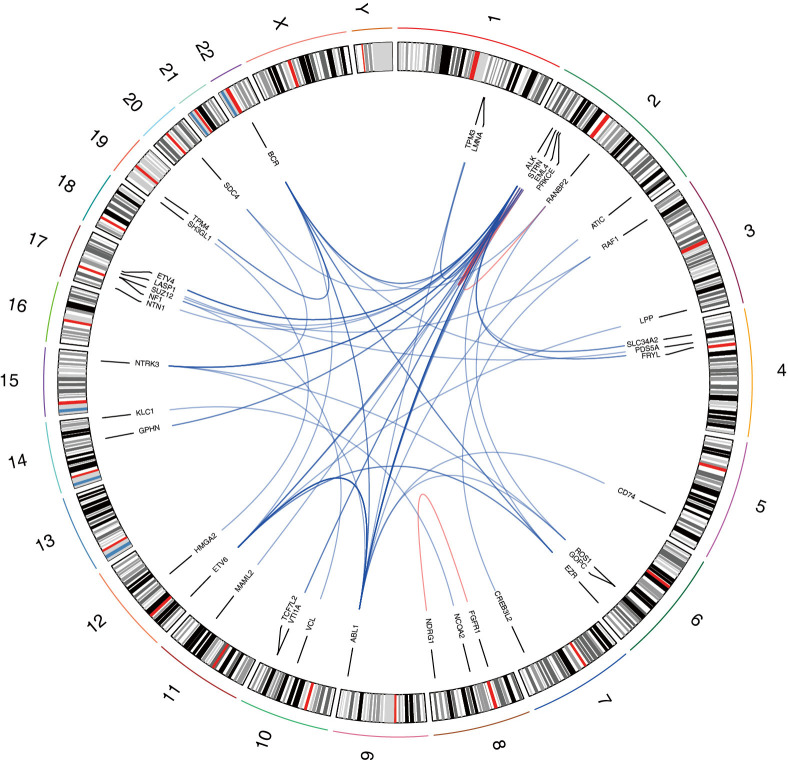
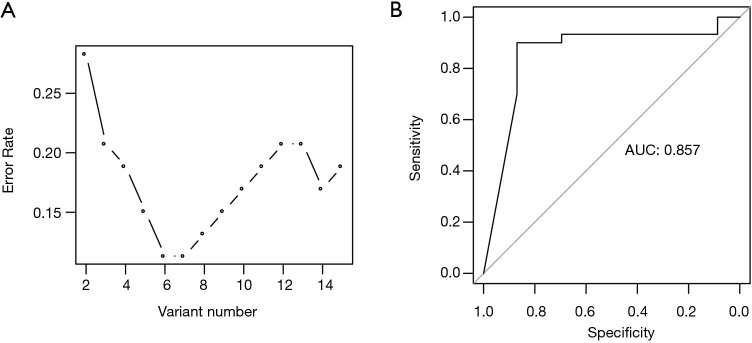
We have identified 66 CNVs that were specific to the primary tumor tissues from the recurrent PCa group. Most of duplicated genomic regions were located in 8q2, suggesting that this chromosomal region could be important for the prognosis of PCa. Meanwhile, we have developed a random forest model, using six selected CNVs, with an accuracy near 90% for predicting PCa recurrence according to a 10-fold cross validation. In addition, we have detected 16 recurrent oncogenic gene fusions in PCa. Among these, (ALK receptor tyrosine kinase)-involved fusions were the most common type of gene fusion (n=7). Four of these fusions (i.e., , , , ) were previously identified in other cancer types, while the remaining three gene fusions (, , and ) were here identified.
Our findings expand the current understanding in regard to prostate carcinogenesis. Current data might be further used for assay development as well as to predict PCa recurrence, using primary tissues.
前列腺癌(PCa)是一种常见的恶性肿瘤类型,是全球男性主要死因之一。拷贝数变异(CNV)和基因融合在前列腺癌中起重要作用,可能作为该疾病预后的标志物。
我们目前利用原发性肿瘤的全外显子测序(WES)数据,对前列腺癌中的CNV和基因融合进行了分析。为此,在5年随访期间评估了一组74例前列腺癌患者,包括30例复发患者和44例未复发患者。
我们在复发前列腺癌组的原发性肿瘤组织中鉴定出66个特异性CNV。大多数重复的基因组区域位于8q2,表明该染色体区域可能对前列腺癌的预后很重要。同时,我们使用六个选定的CNV开发了一个随机森林模型,根据10倍交叉验证,预测前列腺癌复发的准确率接近90%。此外,我们在前列腺癌中检测到16种复发性致癌基因融合。其中,涉及ALK受体酪氨酸激酶的融合是最常见的基因融合类型(n = 7)。这些融合中的四种(即,,,)先前在其他癌症类型中已被鉴定,而其余三种基因融合(,,和)在此处被鉴定。
我们的发现扩展了目前对前列腺癌发生的认识。当前数据可能进一步用于检测方法的开发以及利用原发性组织预测前列腺癌复发。