Department of Biomaterial Sciences, Graduate School of Agricultural and Life Sciences, The University of Tokyo, Bunkyo-ku, Tokyo, Japan.
Department of Molecular Sciences, Swedish University of Agricultural Sciences, Uppsala, Sweden.
J Biol Chem. 2022 Mar;298(3):101670. doi: 10.1016/j.jbc.2022.101670. Epub 2022 Feb 1.
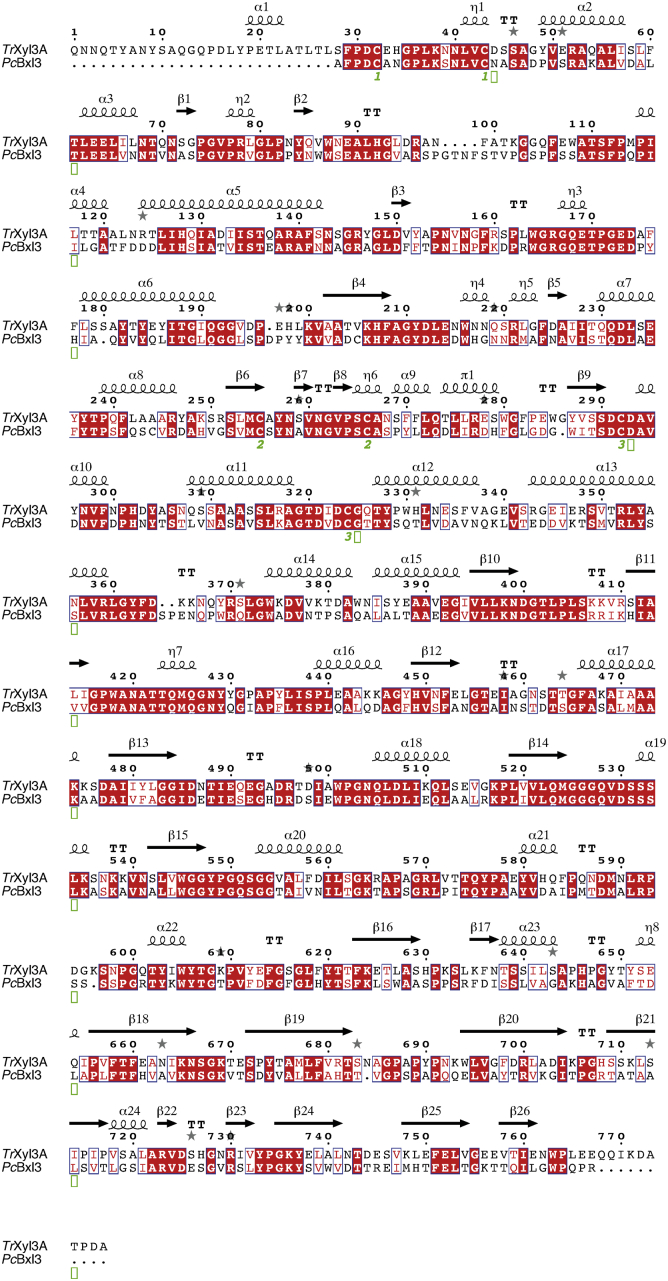
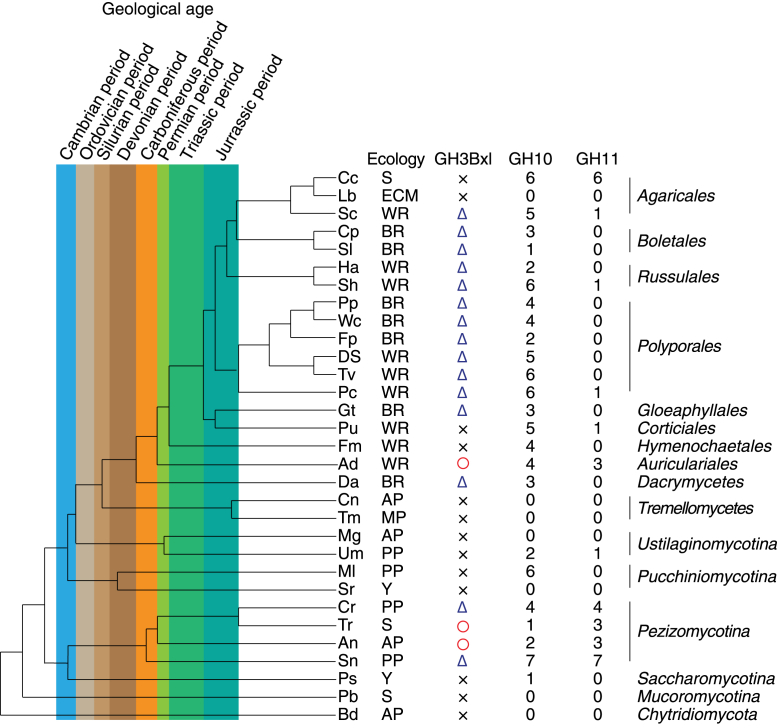
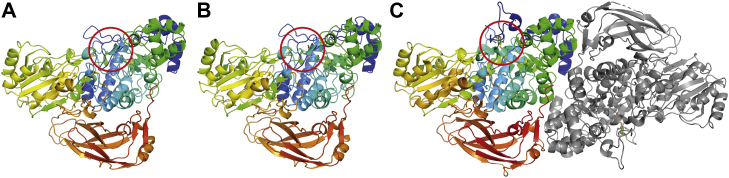
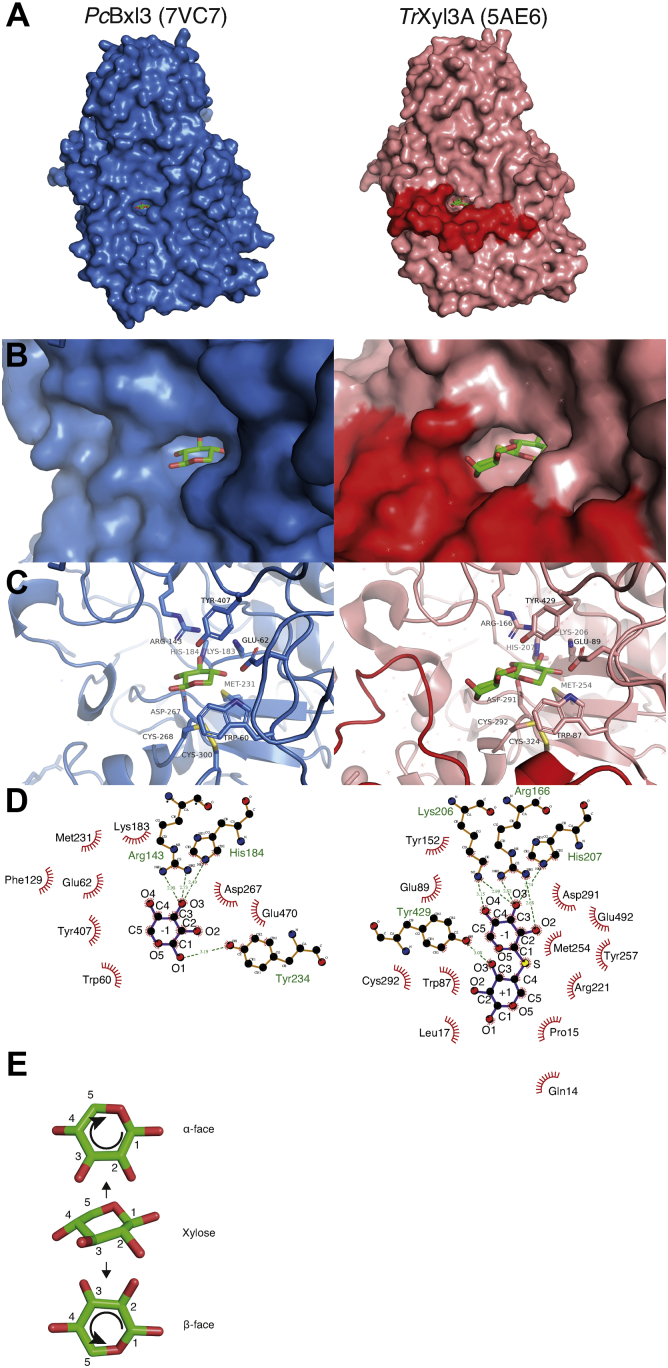
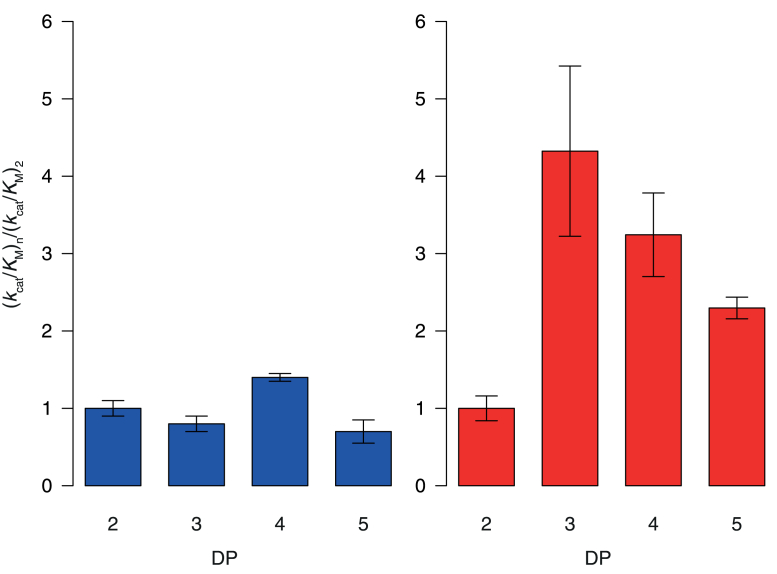
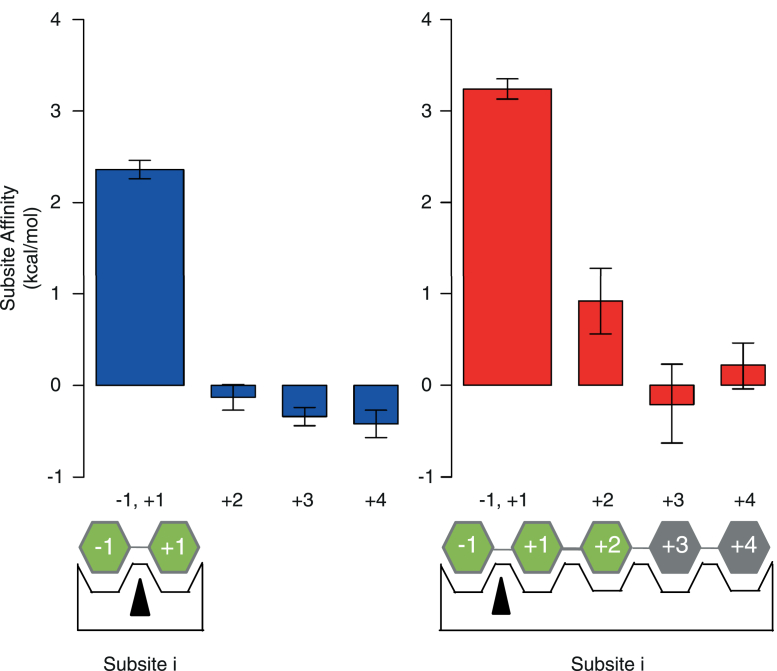
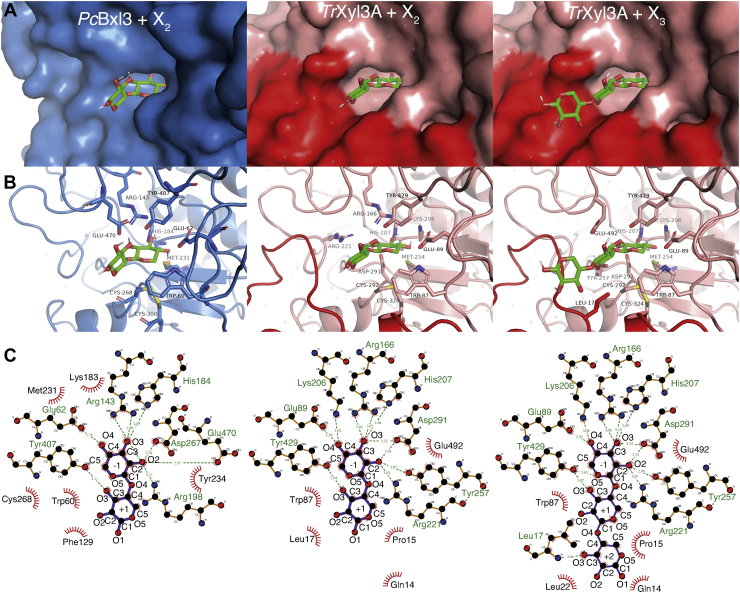
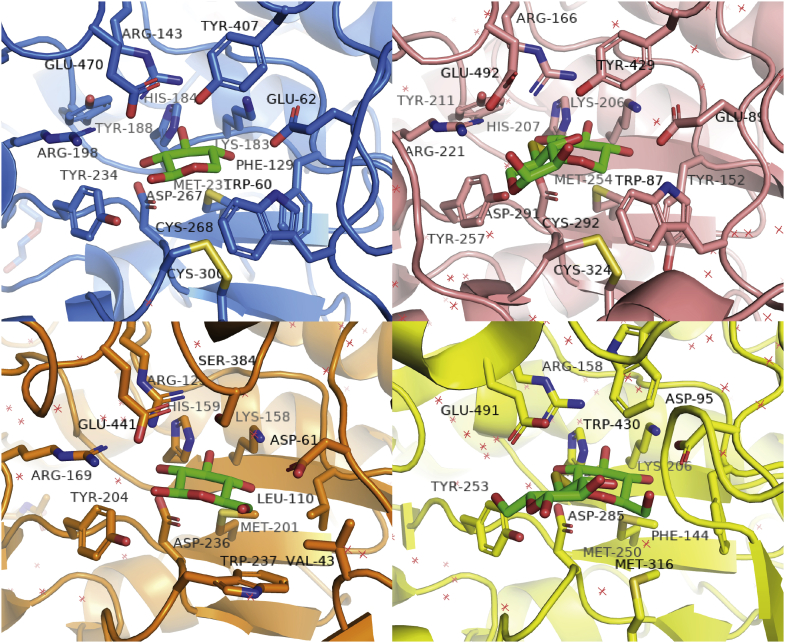
Xylan is the most common hemicellulose in plant cell walls, though the structure of xylan polymers differs between plant species. Here, to gain a better understanding of fungal xylan degradation systems, which can enhance enzymatic saccharification of plant cell walls in industrial processes, we conducted a comparative study of two glycoside hydrolase family 3 (GH3) β-xylosidases (Bxls), one from the basidiomycete Phanerochaete chrysosporium (PcBxl3), and the other from the ascomycete Trichoderma reesei (TrXyl3A). A comparison of the crystal structures of the two enzymes, both with saccharide bound at the catalytic center, provided insight into the basis of substrate binding at each subsite. PcBxl3 has a substrate-binding pocket at subsite -1, while TrXyl3A has an extra loop that contains additional binding subsites. Furthermore, kinetic experiments revealed that PcBxl3 degraded xylooligosaccharides faster than TrXyl3A, while the K values of TrXyl3A were lower than those of PcBxl3. The relationship between substrate specificity and degree of polymerization of substrates suggested that PcBxl3 preferentially degrades xylobiose (X), while TrXyl3A degrades longer xylooligosaccharides. Moreover, docking simulation supported the existence of extended positive subsites of TrXyl3A in the extra loop located at the N-terminus of the protein. Finally, phylogenetic analysis suggests that wood-decaying basidiomycetes use Bxls such as PcBxl3 that act efficiently on xylan structures from woody plants, whereas molds use instead Bxls that efficiently degrade xylan from grass. Our results provide added insights into fungal efficient xylan degradation systems.
木聚糖是植物细胞壁中最常见的半纤维素,但木聚糖聚合物的结构在不同植物物种之间有所不同。在这里,为了更好地了解真菌木聚糖降解系统,这些系统可以在工业过程中增强植物细胞壁的酶解糖化,我们对两种糖苷水解酶家族 3(GH3)β-木糖苷酶(Bxls)进行了比较研究,一种来自担子菌 Phanerochaete chrysosporium(PcBxl3),另一种来自子囊菌 Trichoderma reesei(TrXyl3A)。对两种酶的晶体结构进行比较,两种酶都在催化中心结合了糖,这为每个亚基结合底物提供了深入的了解。PcBxl3 在亚基-1 处具有底物结合口袋,而 TrXyl3A 具有包含额外结合亚基的额外环。此外,动力学实验表明,PcBxl3 比 TrXyl3A 更快地降解木二糖寡糖,而 TrXyl3A 的 K 值低于 PcBxl3。底物特异性与底物聚合度之间的关系表明,PcBxl3 优先降解木二糖(X),而 TrXyl3A 降解更长的木二糖寡糖。此外,对接模拟支持 TrXyl3A 额外环中存在扩展的正亚基。最后,系统发育分析表明,木质素降解担子菌使用 PcBxl3 等 Bxls,这些酶能有效作用于木质植物的木聚糖结构,而真菌则使用能有效降解草类木聚糖的 Bxls。我们的研究结果为真菌高效木聚糖降解系统提供了更多的见解。