Ma Wenjuan, Wang Yanling, Zhang Rongxin, Yang Fan, Zhang Duo, Huang Menggui, Zhang Lin, Dorsey Jay F, Binder Zev A, O'Rourke Donald M, Fraietta Joseph A, Gong Yanqing, Fan Yi
Department of Radiation Oncology, University of Pennsylvania, Philadelphia, PA, USA.
State Key Laboratory of Oncology in South China and Collaborative Innovation Center for Cancer Medicine, Sun Yat-sen University Cancer Center, Guangzhou, China.
Nat Cancer. 2021 Jan;2(1):83-97. doi: 10.1038/s43018-020-00147-8. Epub 2020 Nov 30.
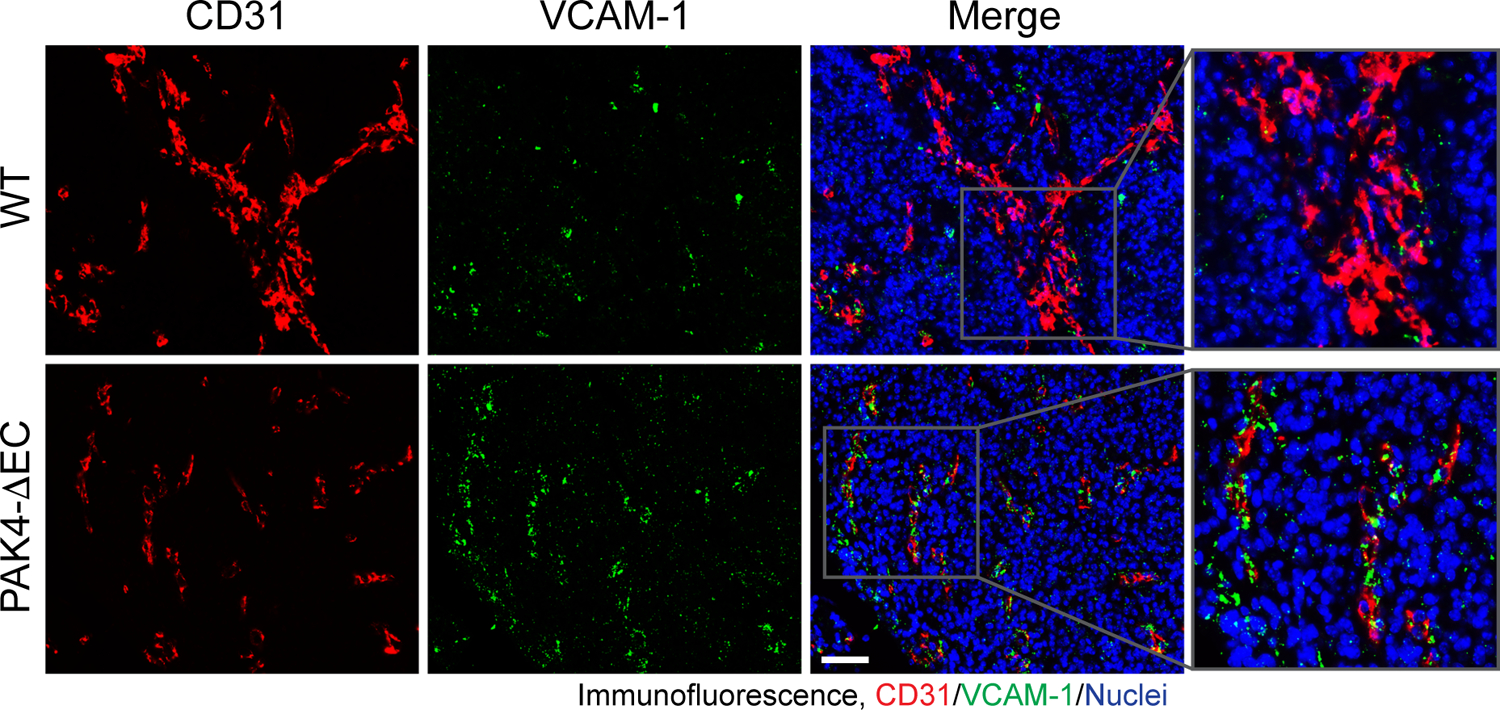
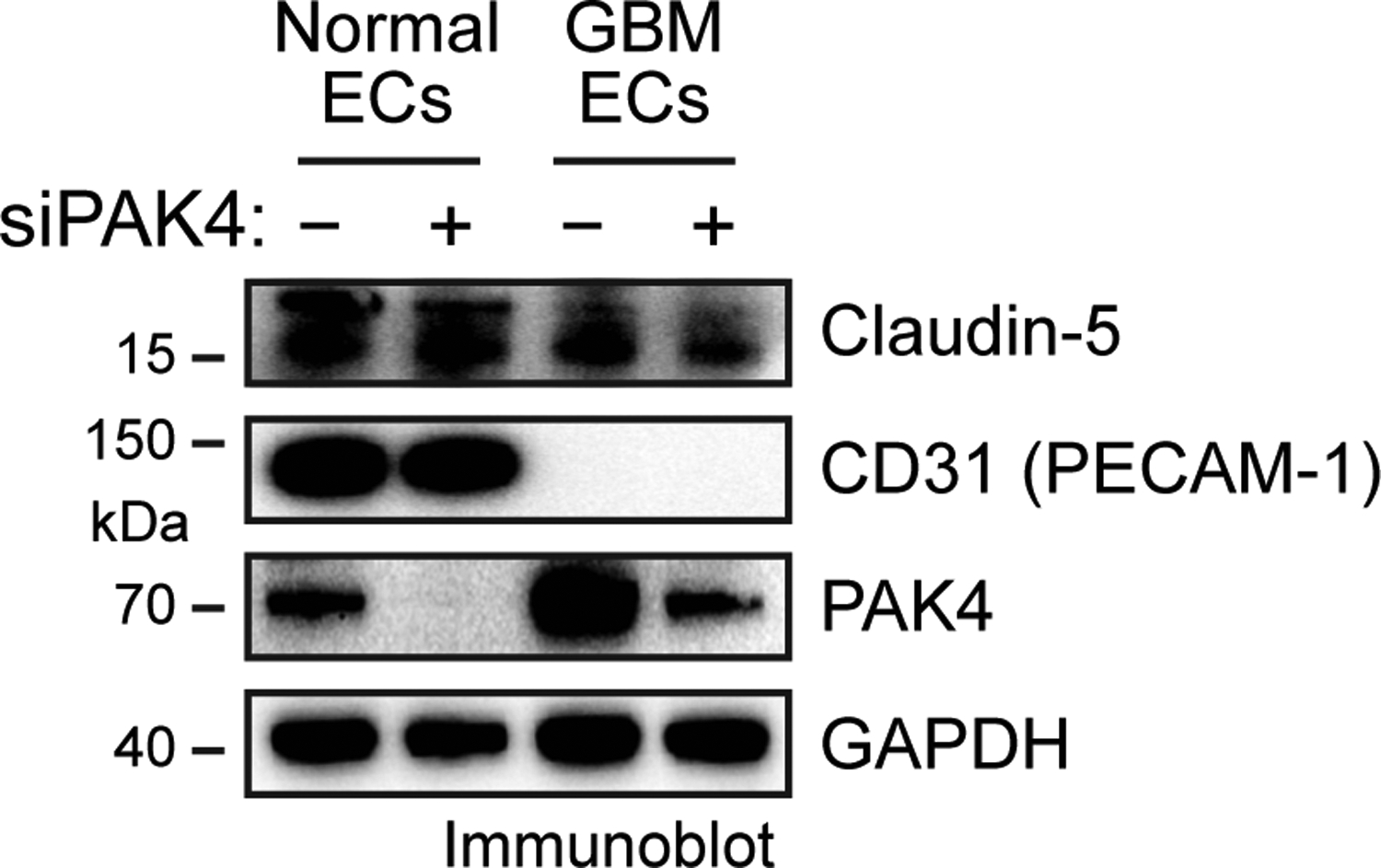
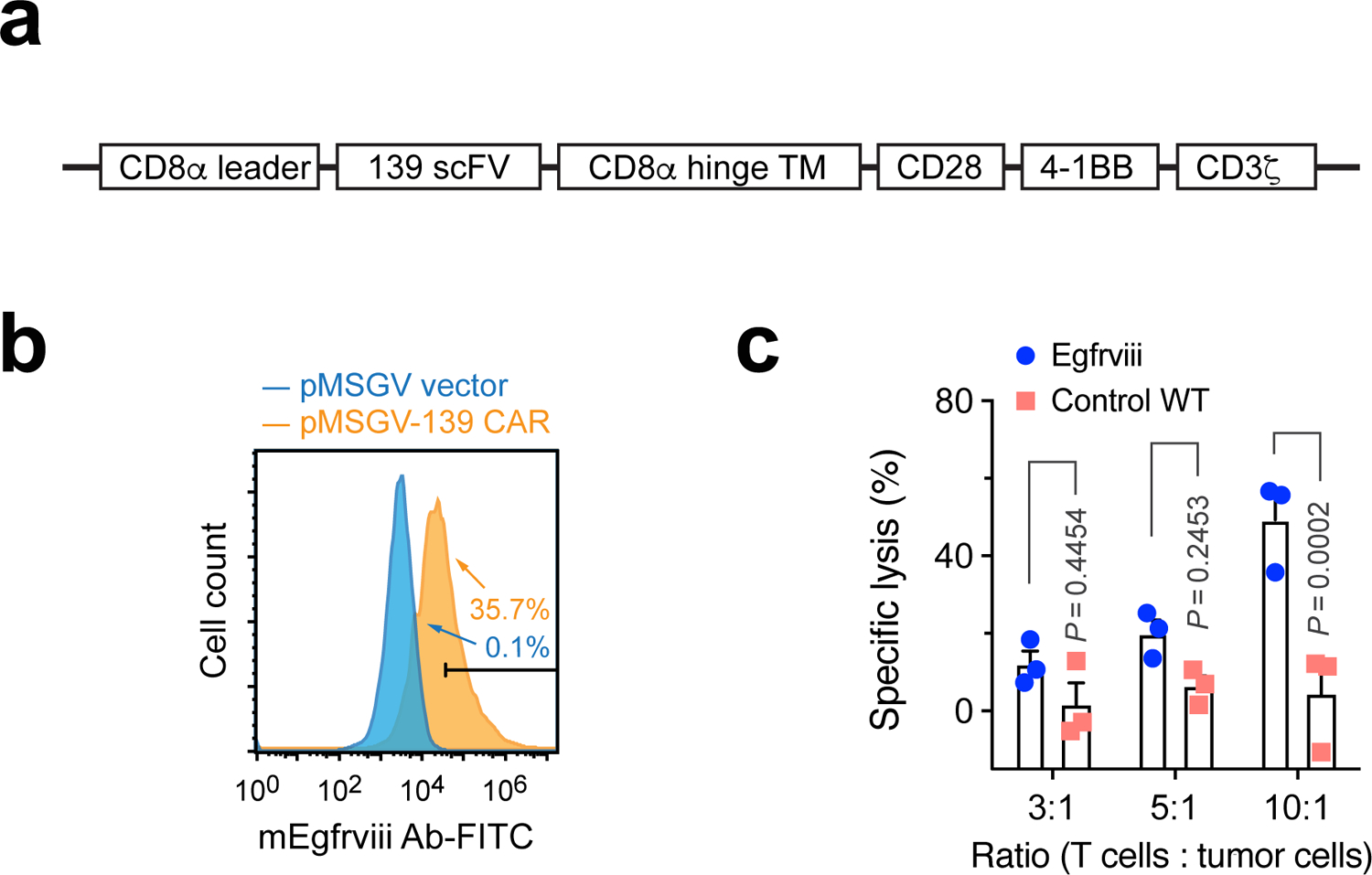
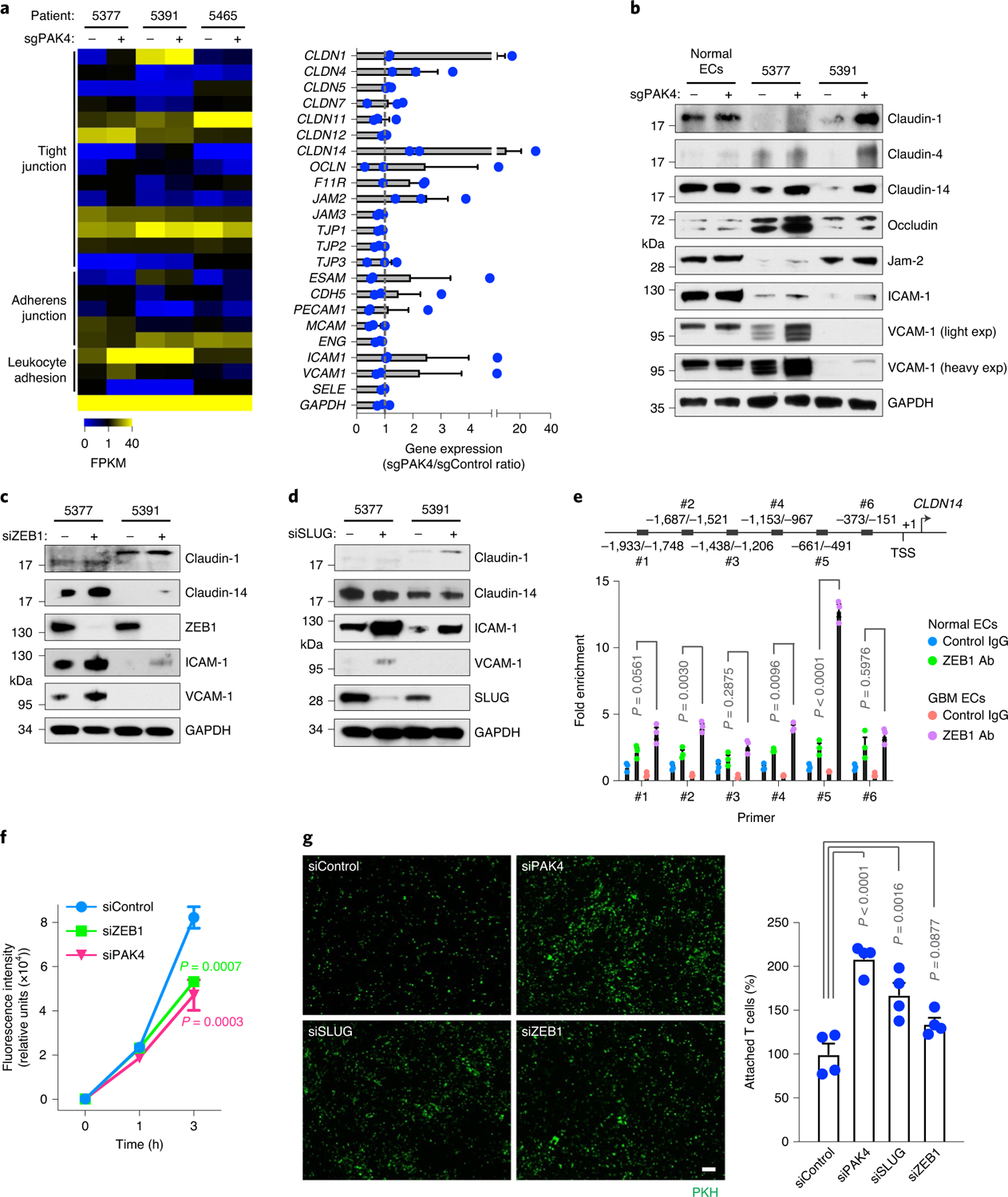
Malignant solid tumors are characterized by aberrant vascularity that fuels the formation of an immune-hostile microenvironment and induces resistance to immunotherapy. Vascular abnormalities may be driven by pro-angiogenic pathway activation and genetic reprogramming in tumor endothelial cells (ECs). Here, our kinome-wide screening of mesenchymal-like transcriptional activation in human glioblastoma (GBM)-derived ECs identifies p21-activated kinase 4 (PAK4) as a selective regulator of genetic reprogramming and aberrant vascularization. PAK4 knockout induces adhesion protein re-expression in ECs, reduces vascular abnormalities, improves T cell infiltration and inhibits GBM growth in mice. Moreover, PAK4 inhibition normalizes the tumor vascular microenvironment and sensitizes GBM to chimeric antigen receptor-T cell immunotherapy. Finally, we reveal a MEF2D/ZEB1- and SLUG-mediated mechanism by which PAK4 reprograms the EC transcriptome and downregulates claudin-14 and VCAM-1 expression, enhancing vessel permeability and reducing T cell adhesion to the endothelium. Thus, targeting PAK4-mediated EC plasticity may offer a unique opportunity to recondition the vascular microenvironment and strengthen cancer immunotherapy.
恶性实体瘤的特征是血管异常,这为免疫敌对微环境的形成提供了养分,并诱导对免疫疗法产生抗性。血管异常可能由肿瘤内皮细胞(ECs)中的促血管生成途径激活和基因重编程驱动。在这里,我们对人胶质母细胞瘤(GBM)来源的ECs进行的全激酶组间充质样转录激活筛选确定p21激活激酶4(PAK4)是基因重编程和异常血管生成的选择性调节因子。PAK4基因敲除可诱导ECs中黏附蛋白重新表达,减少血管异常,改善T细胞浸润,并抑制小鼠GBM生长。此外,抑制PAK4可使肿瘤血管微环境正常化,并使GBM对嵌合抗原受体T细胞免疫疗法敏感。最后,我们揭示了一种由MEF2D/ZEB1和SLUG介导的机制,通过该机制PAK4对EC转录组进行重编程,并下调claudin-14和VCAM-1的表达,增强血管通透性并减少T细胞与内皮的黏附。因此,靶向PAK4介导的EC可塑性可能为重塑血管微环境和加强癌症免疫疗法提供独特的机会。