Wellcome Centre for Cell-Matrix Research, Division of Cell-Matrix Biology and Regenerative Medicine, School of Biological Sciences, Faculty of Biology, Medicine and Health, University of Manchester, Manchester Academic Health Science Centre, Manchester M13 9PT, UK.
Wellcome Centre for Cell-Matrix Research, Division of Cell-Matrix Biology and Regenerative Medicine, School of Biological Sciences, Faculty of Biology, Medicine and Health, University of Manchester, Manchester Academic Health Science Centre, Manchester M13 9PT, UK; Department of Biochemistry, Faculty of Science, University of Tabuk, Tabuk, Saudi Arabia.
Matrix Biol. 2022 Mar;107:24-39. doi: 10.1016/j.matbio.2022.01.005. Epub 2022 Feb 3.
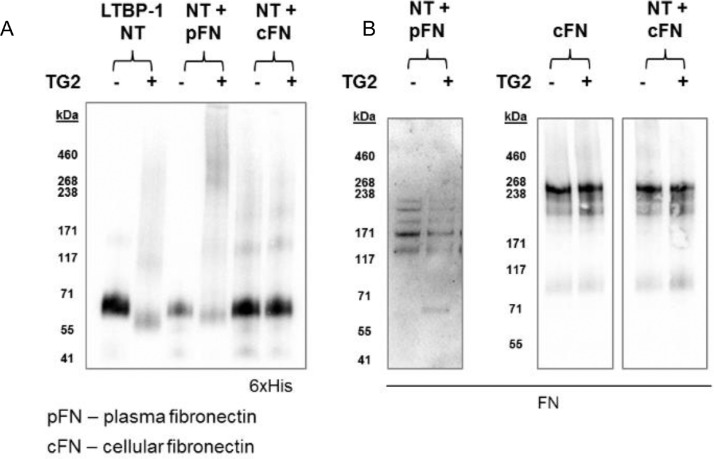
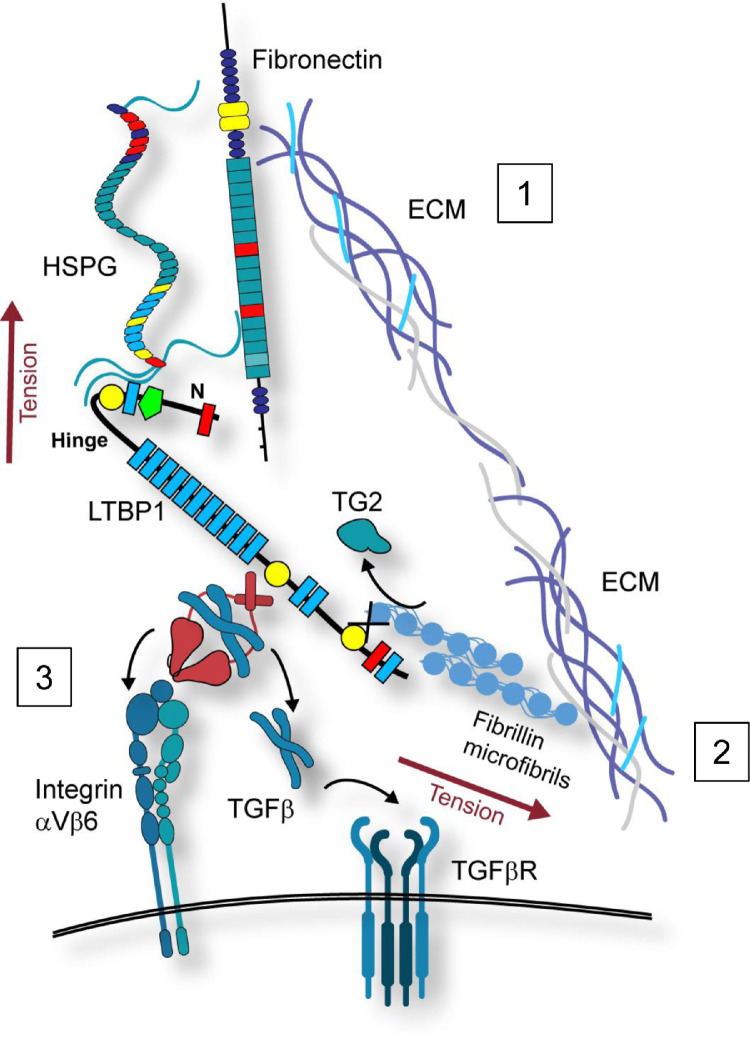
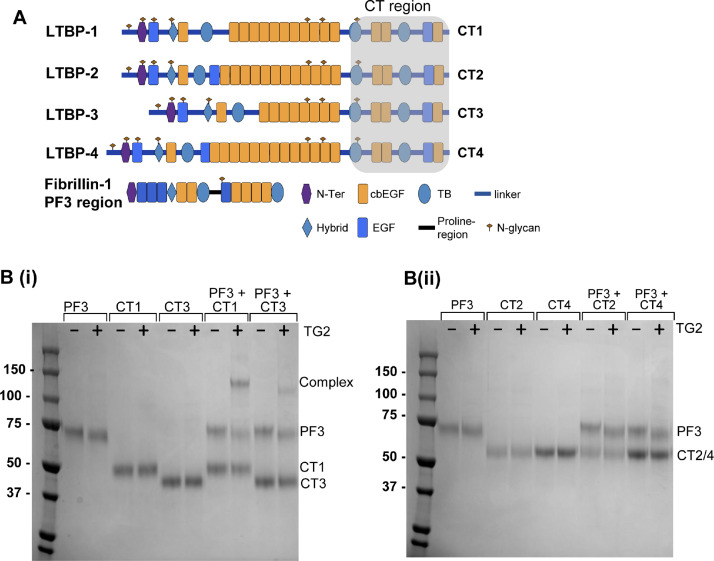
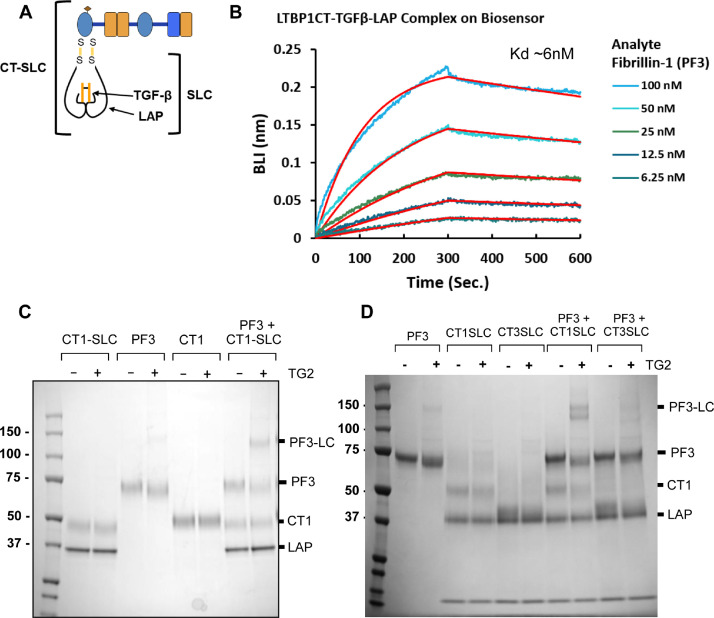
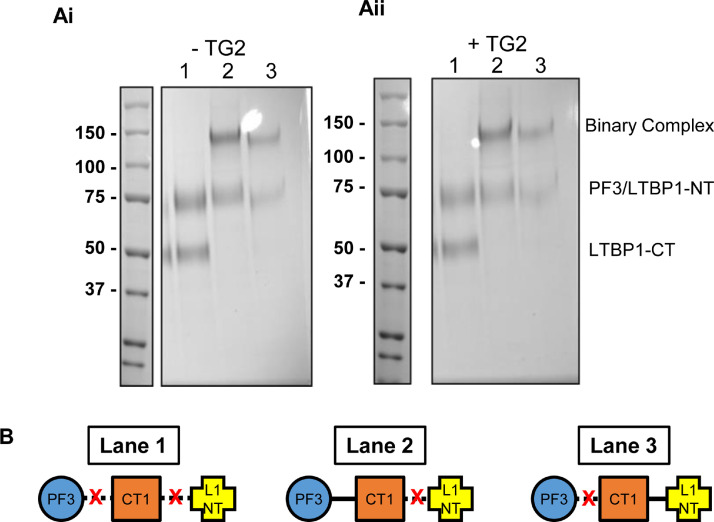
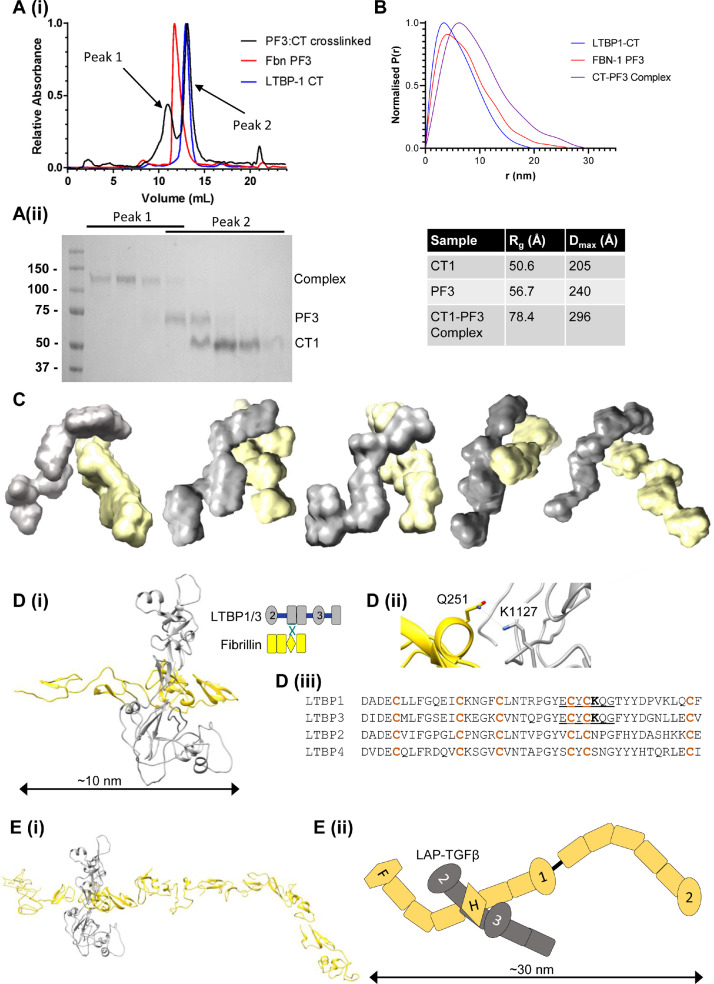
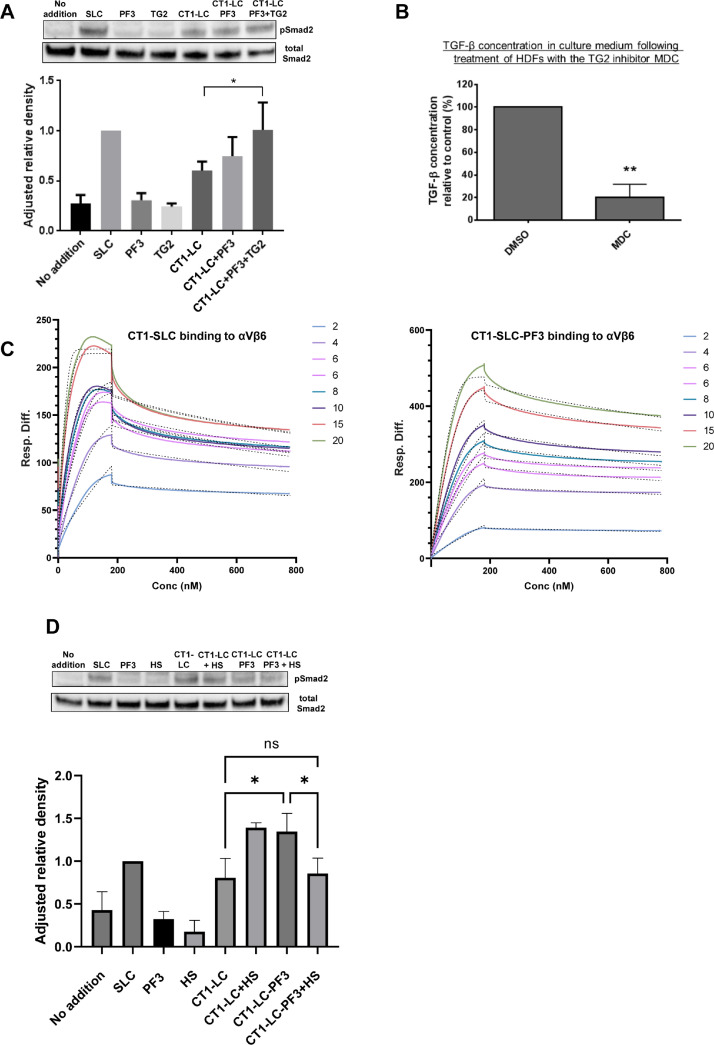
TGFβ superfamily members are potent growth factors in the extracellular matrix with essential roles in all aspects of cellular behaviour. Latent TGFβ binding proteins (LTBPs) are co-expressed with TGFβ, essential for correct folding and secretion of the growth factor, to form large latent complexes. These large latent complexes bind extracellular proteins such as fibrillin for sequestration of TGFβ in the matrix, essential for normal tissue function, and dysregulated TGFβ signalling is a hallmark of many fibrillinopathies. Transglutaminase-2 (TG2) cross-linking of LTBPs is known to play a role in TGFβ activation but the underlying molecular mechanisms are not resolved. Here we show that fibrillin is a matrix substrate for TG2 and that TG2 cross-linked complexes can be formed between fibrillin and LTBP-1 and -3, and their latent TGFβ complexes. The structure of the fibrillin-LTBP1 complex shows that the two elongated proteins interact in a perpendicular arrangement which would allow them to form distal interactions between the matrix and the cell surface. Formation of the cross-link with fibrillin does not change the interaction between latent TGFβ and integrin αVβ6 but does increase TGFβ activation in cell-based assays. The activating effect may be due to direction of the latent complexes to the cell surface by fibrillin, as competition with heparan sulphate can ameliorate the activating effect. Together, these data support that TGFβ activation can be enhanced by covalent tethering of LTBPs to the matrix via fibrillin.
TGFβ 超家族成员是细胞外基质中的有效生长因子,在细胞行为的各个方面都具有重要作用。潜伏 TGFβ 结合蛋白(LTBPs)与 TGFβ 共同表达,对于生长因子的正确折叠和分泌至关重要,以形成大的潜伏复合物。这些大的潜伏复合物与细胞外蛋白(如原纤维蛋白)结合,将 TGFβ 隔离在基质中,这对于正常组织功能是必要的,而失调的 TGFβ 信号是许多原纤维蛋白病的标志。已知转谷氨酰胺酶-2(TG2)交联 LTBPs 在 TGFβ 激活中起作用,但潜在的分子机制尚未解决。在这里,我们表明原纤维蛋白是 TG2 的基质底物,并且 TG2 交联的复合物可以在原纤维蛋白和 LTBP-1 和 -3 及其潜伏 TGFβ 复合物之间形成。原纤维蛋白-LTBP1 复合物的结构表明,这两个长形蛋白以垂直方式相互作用,这将允许它们在基质和细胞表面之间形成远端相互作用。与原纤维蛋白形成交联不会改变潜伏 TGFβ 和整合素 αVβ6 之间的相互作用,但会增加细胞基础测定中的 TGFβ 激活。激活效应可能是由于原纤维蛋白将潜伏复合物定向到细胞表面,因为与肝素硫酸盐的竞争可以改善激活效应。总之,这些数据支持通过原纤维蛋白将 LTBPs 共价连接到基质上可以增强 TGFβ 的激活。