Department of Reproductive Center, the First Affiliated Hospital of Shantou University Medical College, No. 57 Changping Road, Jinping District, Shantou, Guangdong, 515041, People's Republic of China.
Mol Med. 2022 Feb 5;28(1):17. doi: 10.1186/s10020-022-00446-z.
Maternal obesity impairs embryonic developmental potential and significantly increases the risks of metabolic disorders in offspring. However, the epigenetic transmission mechanism of maternal metabolic abnormalities is still poorly understood.
We established an obesity model in female mice by high-fat diet (HFD) feeding. The effects of the HFD on the developmental potential of oocytes and embryos, the metabolic phenotype, and epigenetic modifications were investigated. The efficacy of metformin administration was assessed. Finally, the regulatory pathway of epigenetic remodeling during zygotic genome activation (ZGA) was explored.
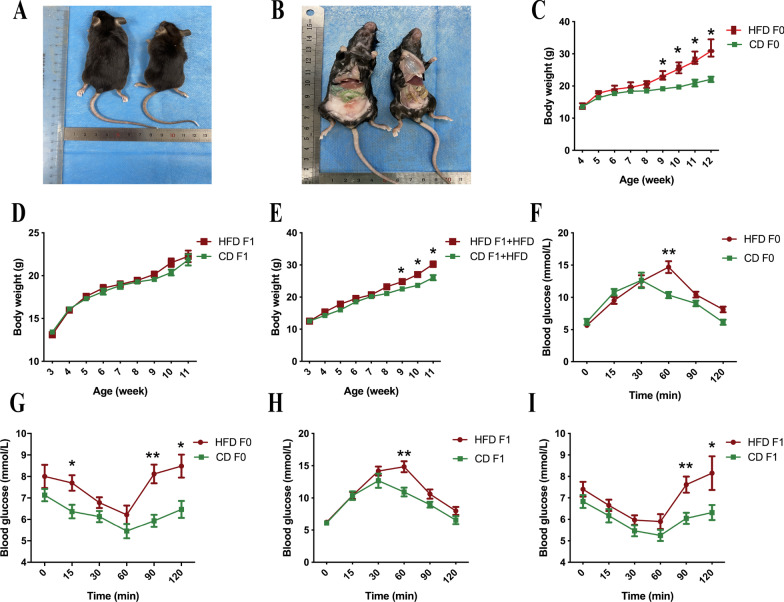
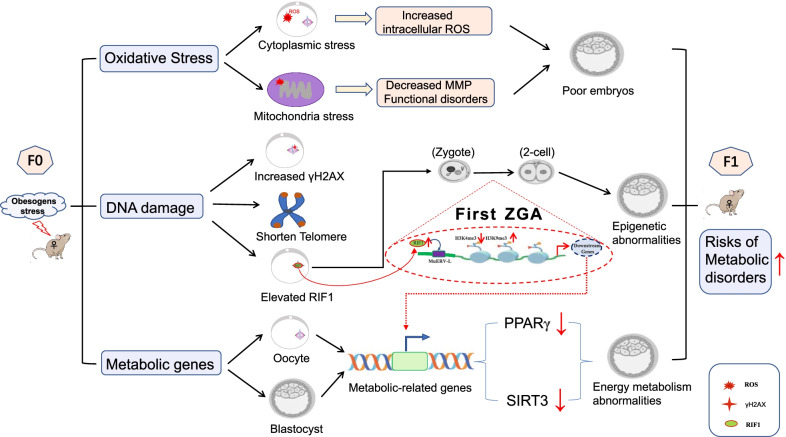
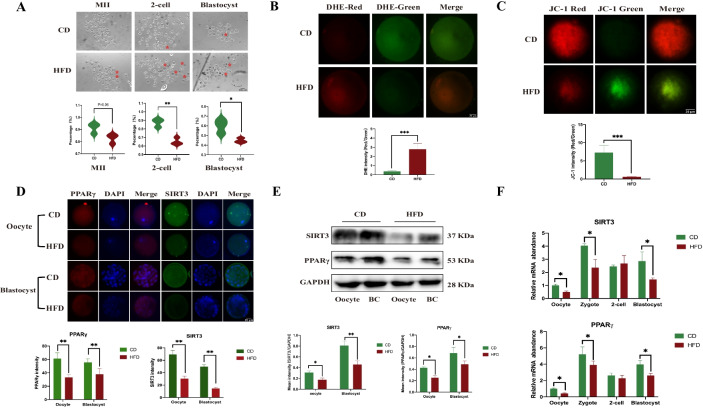
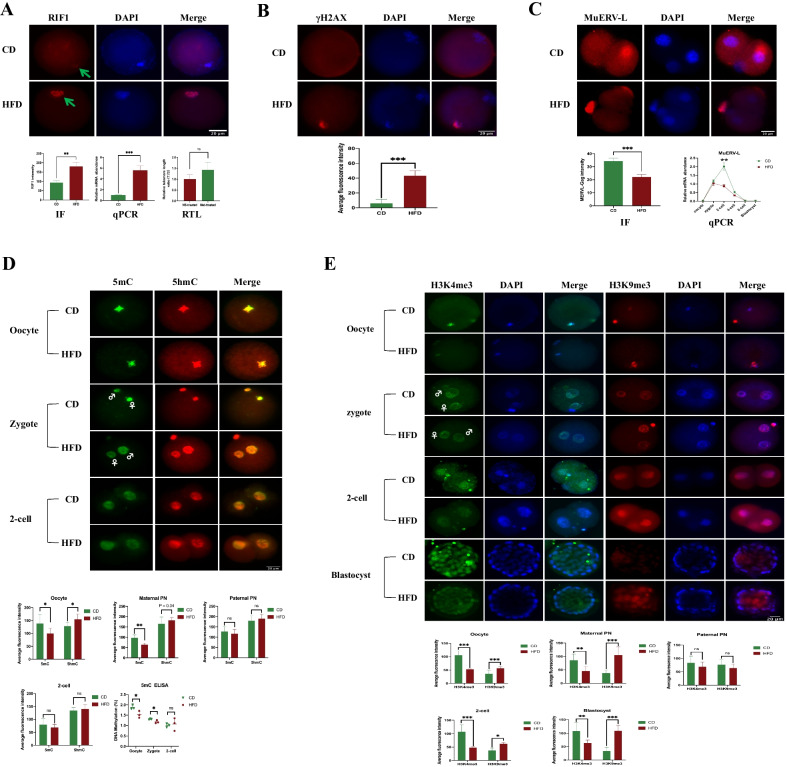
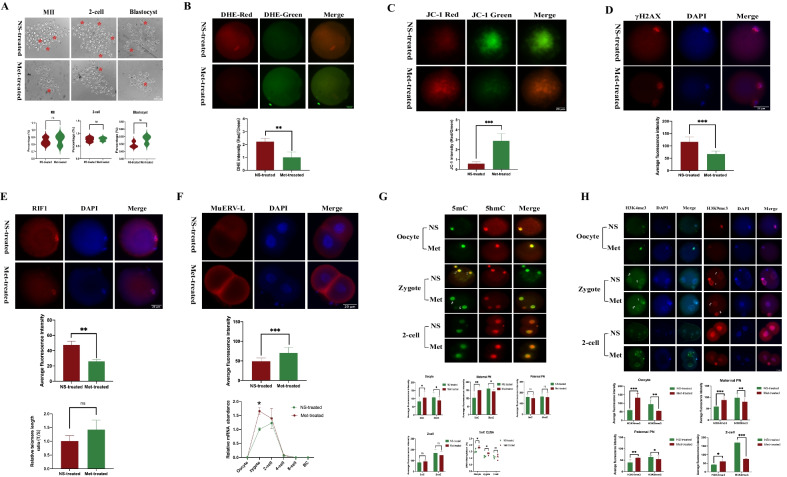
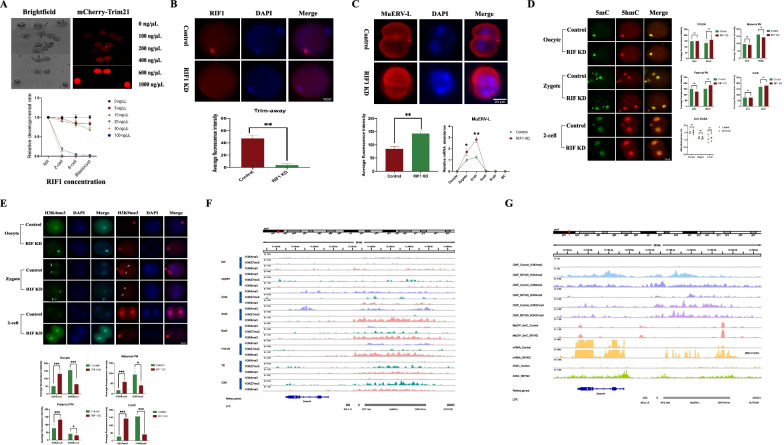
Maternal HFD consumption significantly impaired glucose tolerance and increased the risk of metabolic disorders in F0 and F1 mice. Maternal HFD consumption also decreased embryonic developmental potential, increased reactive oxygen species (ROS) and γH2AX levels, and reduced the mitochondrial membrane potential (MMP) within oocytes, causing high levels of oxidative stress damage and DNA damage. Starting with this clue, we observed significantly increased RIF1 levels and shortened telomeres in obese mice. Moreover, significant abnormal DNA methylation and histone modification remodeling were observed during ZGA in obese mice, which may be coregulated by RIF1 and the ZGA marker gene MuERV-L. Metformin treatment reduced RIF1 levels, and partially improved ZGA activation status by rescuing epigenetic modification remodeling in oocytes and preimplantation embryos of obese mice. RIF1 knockdown experiments employing Trim-Away methods showed that RIF1 degradation altered the H3K4me3 and H3K9me3 enrichment and then triggered the MuERV-L transcriptional activation. Moreover, ChIP-seq data analysis of RIF1 knockouts also showed that RIF1 mediates the transcriptional regulation of MuERV-L by changing the enrichment of H3K4me3 and H3K9me3 rather than by altered DNA methylation.
Elevated RIF1 in oocytes caused by maternal obesity may mediate abnormal embryonic epigenetic remodeling and increase metabolic risk in offspring by regulating histone modifications on MuERV-L, which can be partially rescued by metformin treatment.
母体肥胖会损害胚胎的发育潜能,并显著增加后代代谢紊乱的风险。然而,母体代谢异常的表观遗传传递机制仍知之甚少。
我们通过高脂肪饮食(HFD)喂养建立了雌性小鼠的肥胖模型。研究了 HFD 对卵母细胞和胚胎发育潜能、代谢表型和表观遗传修饰的影响,并评估了二甲双胍给药的疗效。最后,探索了合子基因组激活(ZGA)过程中表观遗传重塑的调节途径。
母体 HFD 摄入显著损害了 F0 和 F1 小鼠的葡萄糖耐量,并增加了代谢紊乱的风险。母体 HFD 摄入还降低了胚胎发育潜能,增加了活性氧(ROS)和 γH2AX 水平,并降低了卵母细胞中的线粒体膜电位(MMP),导致高水平的氧化应激损伤和 DNA 损伤。由此线索出发,我们观察到肥胖小鼠中 RIF1 水平显著升高,端粒缩短。此外,在肥胖小鼠的 ZGA 过程中观察到明显的异常 DNA 甲基化和组蛋白修饰重塑,这可能由 RIF1 和 ZGA 标记基因 MuERV-L 共同调控。二甲双胍治疗降低了 RIF1 水平,并通过挽救肥胖小鼠卵母细胞和着床前胚胎中的表观遗传修饰重塑,部分改善了 ZGA 激活状态。采用 Trim-Away 方法的 RIF1 敲降实验表明,RIF1 降解改变了 H3K4me3 和 H3K9me3 的富集,进而触发了 MuERV-L 的转录激活。此外,RIF1 敲除的 ChIP-seq 数据分析还表明,RIF1 通过改变 H3K4me3 和 H3K9me3 的富集来调节 MuERV-L 的转录调控,而不是通过改变 DNA 甲基化。
母体肥胖引起的卵母细胞中 RIF1 的升高可能通过调节 MuERV-L 上的组蛋白修饰来介导胚胎异常的表观遗传重塑,并增加后代的代谢风险,二甲双胍治疗可部分挽救这种情况。