Department of Immunology, School of Medicine, Isfahan University of Medical Sciences, Isfahan, Iran.
Department of Immunology, School of Medicine, Shiraz University of Medical Sciences, Shiraz, Iran.
Front Immunol. 2022 Jan 20;12:785946. doi: 10.3389/fimmu.2021.785946. eCollection 2021.
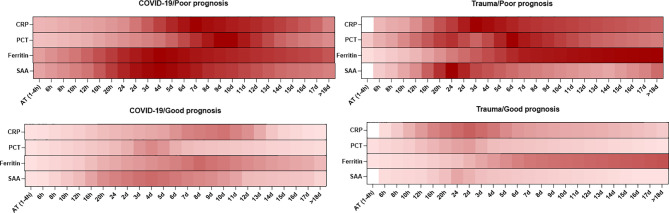
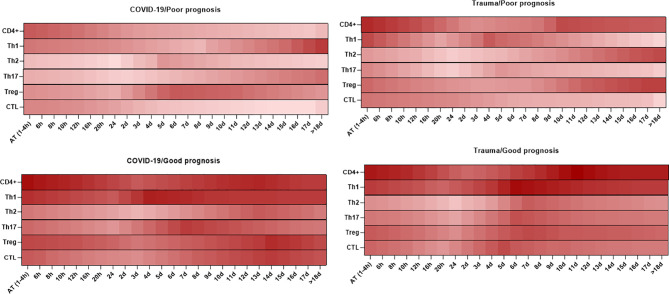
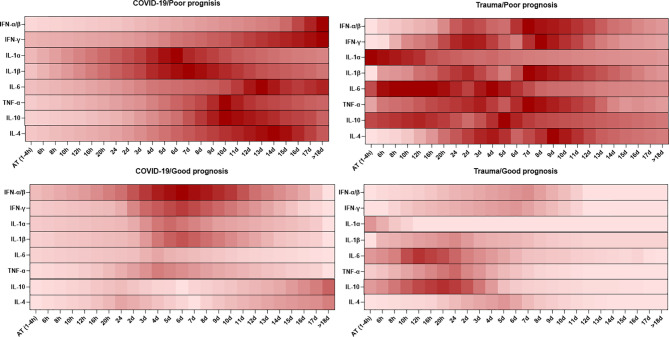
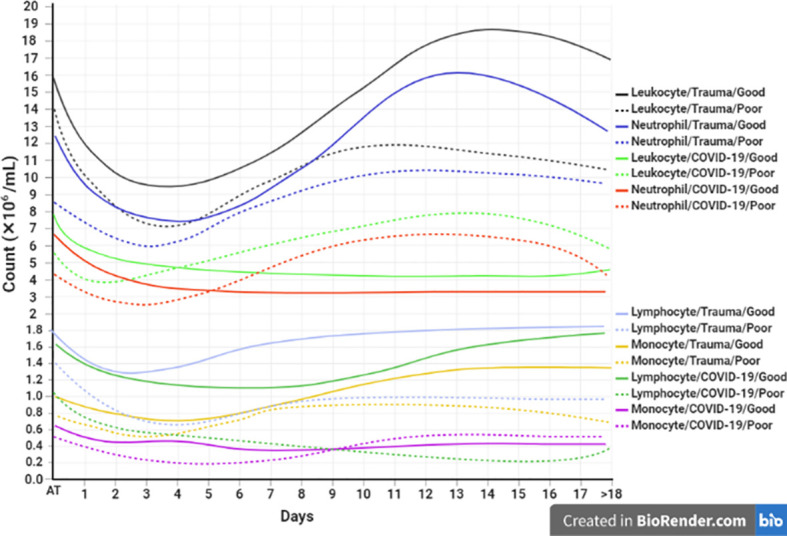
Although cellular and molecular mediators of the immune system have the potential to be prognostic indicators of disease outcomes, temporal interference between diseases might affect the immune mediators, and make them difficult to predict disease complications. Today one of the most important challenges is predicting the prognosis of COVID-19 in the context of other inflammatory diseases such as traumatic injuries. Many diseases with inflammatory properties are usually polyphasic and the kinetics of inflammatory mediators in various inflammatory diseases might be different. To find the most appropriate evaluation time of immune mediators to accurately predict COVID-19 prognosis in the trauma environment, researchers must investigate and compare cellular and molecular alterations based on their kinetics after the start of COVID-19 symptoms and traumatic injuries. The current review aimed to investigate the similarities and differences of common inflammatory mediators (C-reactive protein, procalcitonin, ferritin, and serum amyloid A), cytokine/chemokine levels (IFNs, IL-1, IL-6, TNF-α, IL-10, and IL-4), and immune cell subtypes (neutrophil, monocyte, Th1, Th2, Th17, Treg and CTL) based on the kinetics between patients with COVID-19 and trauma. The mediators may help us to accurately predict the severity of COVID-19 complications and follow up subsequent clinical interventions. These findings could potentially help in a better understanding of COVID-19 and trauma pathogenesis.
虽然免疫系统的细胞和分子介质具有预测疾病结果的潜力,但疾病之间的时间干扰可能会影响免疫介质,使其难以预测疾病并发症。如今,最重要的挑战之一是在创伤等其他炎症性疾病的背景下预测 COVID-19 的预后。许多具有炎症特性的疾病通常是多相的,各种炎症性疾病中炎症介质的动力学可能不同。为了找到最适合评估免疫介质的时间,以准确预测创伤环境中 COVID-19 的预后,研究人员必须根据 COVID-19 症状和创伤开始后炎症介质的动力学,调查和比较细胞和分子变化。本综述旨在根据 COVID-19 患者和创伤患者之间的动力学,研究常见炎症介质(C 反应蛋白、降钙素原、铁蛋白和血清淀粉样蛋白 A)、细胞因子/趋化因子水平(IFNs、IL-1、IL-6、TNF-α、IL-10 和 IL-4)以及免疫细胞亚型(中性粒细胞、单核细胞、Th1、Th2、Th17、Treg 和 CTL)的异同。这些介质可能有助于我们准确预测 COVID-19 并发症的严重程度,并跟踪后续的临床干预措施。这些发现可能有助于更好地理解 COVID-19 和创伤的发病机制。