F De Castro Paula, Minko Sergiy, Vinokurov Vladimir, Cherednichenko Kirill, Shchukin Dmitry G
Leitat Technological Center, C/Innovació 2, 08225, Terrassa, Barcelona Spain.
Department of Chemistry, University of Georgia, 0305 Dawson Hall, Athens, Georgia 30602, United States.
ACS Appl Energy Mater. 2021 Nov 22;4(11):12789-12797. doi: 10.1021/acsaem.1c02170. Epub 2021 Oct 29.
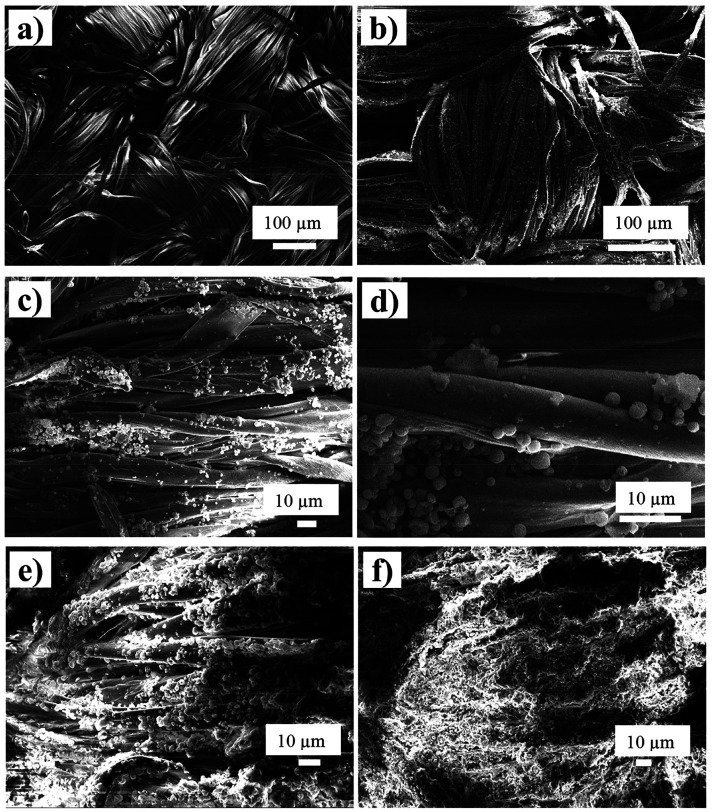
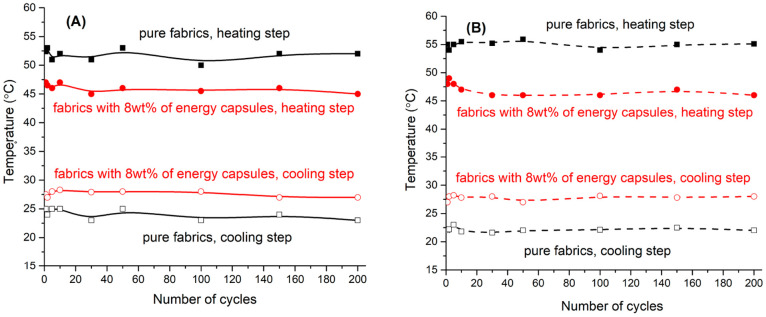
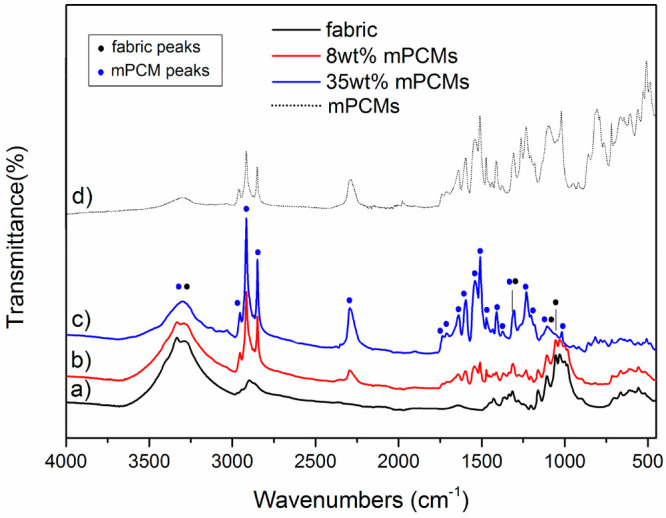
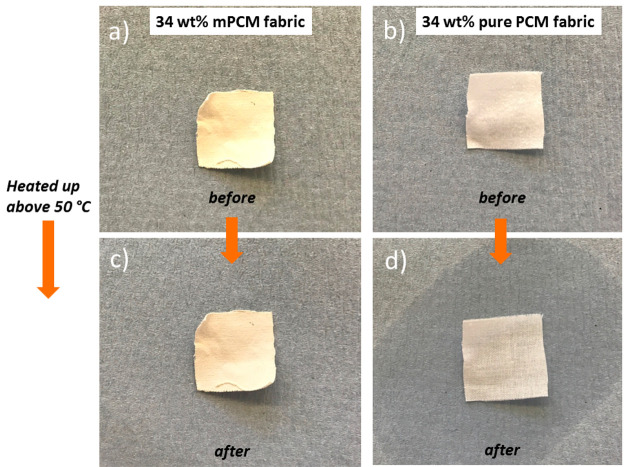
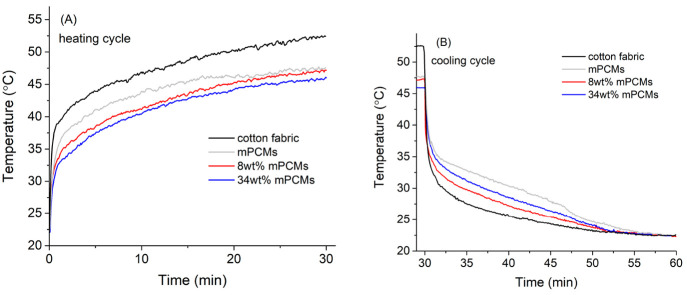
Microcapsules loaded with n-docosane as phase change material (mPCMs) for thermal energy storage with a phase change transition temperature in the range of 36-45 °C have been employed to impregnate cotton fabrics. Fabrics impregnated with 8 wt % of mPCMs provided 11 °C of temperature buffering effect during heating. On the cooling step, impregnated fabrics demonstrated 6 °C temperature increase for over 100 cycles of switching on/off of the heating source. Similar thermoregulating performance was observed for impregnated fabrics stored for 4 years (1500 days) at room temperature. Temperature buffering effect increased to 14 °C during heating cycle and temperature increase effect reached 9 °C during cooling cycle in the aged fabric composites. Both effects remained stable in aged fabrics for more than 100 heating/cooling cycles. Our study demonstrates high potential use of the microencapsulated n-docosane for thermal management applications, including high-technical textiles, footwear materials, and building thermoregulating covers and paints with high potential for commercial applications.
已采用负载正二十二烷作为相变材料(微胶囊相变材料)的微胶囊进行热能储存,其相变转变温度范围为36 - 45°C,并将其用于浸渍棉织物。浸渍了8 wt%微胶囊相变材料的织物在加热过程中提供了11°C的温度缓冲效果。在冷却阶段,浸渍织物在加热源开启/关闭超过100个循环的过程中温度升高了6°C。对于在室温下储存4年(1500天)的浸渍织物,也观察到了类似的温度调节性能。在老化的织物复合材料中,加热循环期间温度缓冲效果增加到14°C,冷却循环期间温度升高效果达到9°C。在老化织物中,这两种效果在超过100个加热/冷却循环中都保持稳定。我们的研究表明,微胶囊化正二十二烷在热管理应用中具有很高的潜在用途,包括高科技纺织品、鞋类材料以及具有商业应用潜力的建筑温度调节覆盖物和涂料。